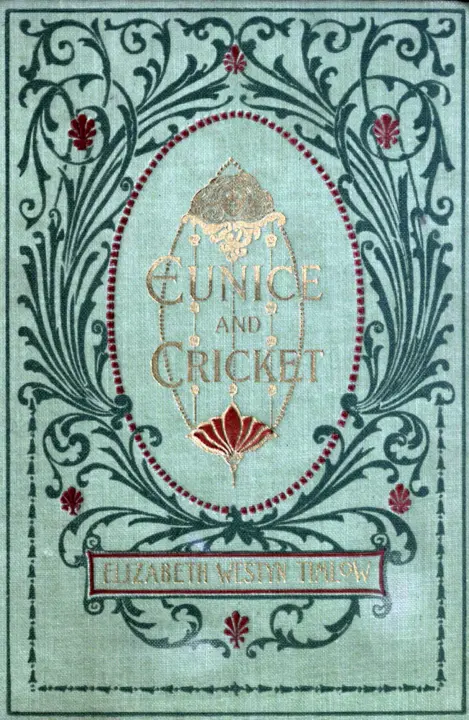
Eunice and Cricket
Elizabeth Weston Timlow
THE CLASSIC COLLECTION · 1896
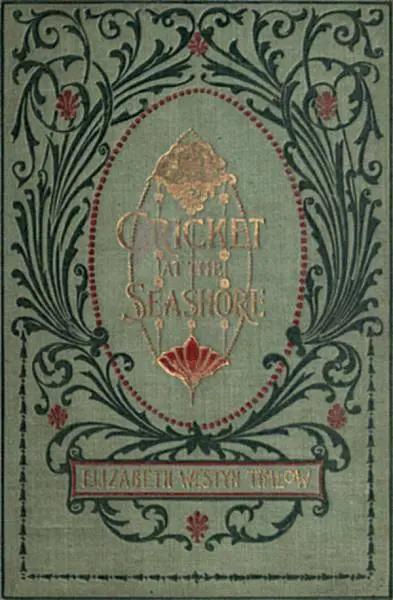
"Cricket at the Seashore" by Elizabeth Weston Timlow is a children's novel written in the late 19th century. The story revolves around the youthful adventures of Cricket and her siblings as they spend a summer at their family's seaside home. The narrative captures the essence of childhood curiosity, playfulness, and the strong bonds of family and friendship. The opening of the book introduces the main characters, particularly Cricket, who is energetic and eager to explore. We find her planning a treasure hunt to locate a money bag her mother buried long ago. Alongside her sister Eunice, Cricket engages in various summer activities, including swimming and playing. The chapter portrays whimsical interactions among the children, highlighting Cricket's spirited nature and her interactions with Old Billy, a beloved family figure. The stage is set for delightful summer escapades, full of mischief, laughter, and discoveries that promise to unfold in the days ahead.
Introduction adapted from the source catalogue; source summaries may be automatically generated.
Free to read · English · 63,449 words · No account needed
MAKE TIME FOR A GOOD BOOK
On by default. Untick to stop anonymous reading totals. Each page counts after 10 seconds in view. How this works.
Anonymous counting is on unless you have switched it off.
"I am very glad it wasn't. But we were well-trained girls in those days, and rarely thought of grumbling at anything our teachers did. We might not like them, but I don't remember talking about them much.
"'We are waiting,' she said, again, after a moment.
"'I can't tell you before the class,' I repeated, obstinately. 'But I'll tell you by yourself. I'm ashamed I said it, anyway.'
"Perhaps Phoebe had noticed me glance at her, or perhaps she knew, more than we realized, that we sometimes made fun of her untidiness, for she suddenly said, good-naturedly:
"'Do tell what it is, if it's anything about me, I sha'n't care. I'd much rather go home and get my dinner.'
"'Was it about Phoebe?' asked Miss Abbie, instantly.
"To this point-blank question, I had to say 'Yes.'
"'Tell it,' urged Phoebe, good-naturedly.
"'Well, then,' I began, desperately,--but I could not say it. I hesitated, and then added, quickly:
"'I said I wondered how Phoebe Dawson always managed to keep herself
looking so nice!'
"A little surprised look, then a laugh, went around the class. Every one knew that I was not speaking the truth, and I dare say Miss Abbie knew it herself. She cast a very sharp glance at me, but, nevertheless, dismissed the class. Every one surrounded me in the cloak-room, laughing, and teasing me about what I had said. But I only waited till Miss Sarah was at liberty, and then I went to her and told her the story. I was very angry, and in a state of great indignation against Miss Abbie, and finally I burst out with, 'She made me tell that lie, herself!'
"'Hush! my dear!' Miss Sarah said, gravely. 'If you think, you will see that the trouble was that your sense of politeness was stronger than your sense of truth. Again, if you hadn't broken the rule about whispering in class in the first place, nothing would have happened. So I think we won't blame Miss Abbie. I will tell her about it myself, and nothing more will be said about it to you.'
"I thought Miss Sarah was very good and kind, but my conscience troubled me very much. Phoebe Dawson, too, made me feel thoroughly ashamed of myself. When she came to school the next day she brought me this lovely string of beads, which she said her uncle had brought her home from India.
Your reading position is saved on this browser. Take it to another device with a library code. Reading pages adapt to text, rather than matching a printed edition.
Elizabeth Weston Timlow
BEHIND THE BOOK
This eBook is for the use of anyone anywhere in the United States and most other parts of the world at no cost and with almost no restrictions whatsoever. You may copy it, give it away or re-use it under the terms of the Project Gutenberg License included with this eBook or online at www.gutenberg.org. If you are not located in the United States, you will have to check the laws of the country where you are located before using this eBook. Read the source licence.
The original source file, including credits and licence, is retained by this library. Request an original-format copy at no charge. Please include the book title and Project Gutenberg identifier #24513.
KEEP YOUR CURIOSITY GOING
Coulson Kernahan

Maurice Baring
Frances Wright
Cécile Tormay

Frederic Jesup Stimson

W. H. P. (William Henry Pope) Jarvis