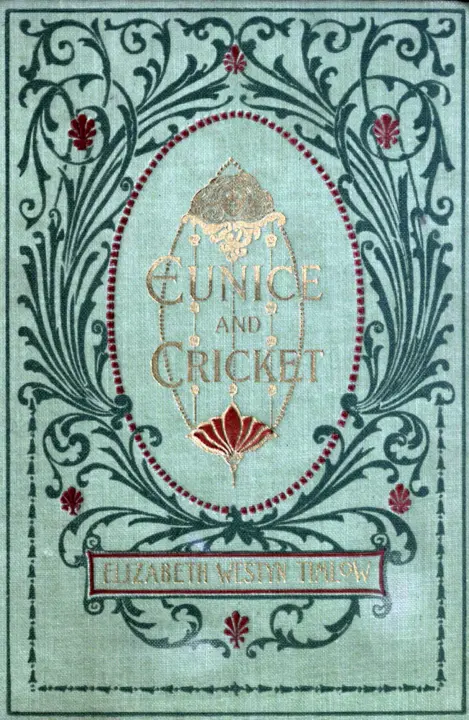
Eunice and Cricket
Elizabeth Weston Timlow
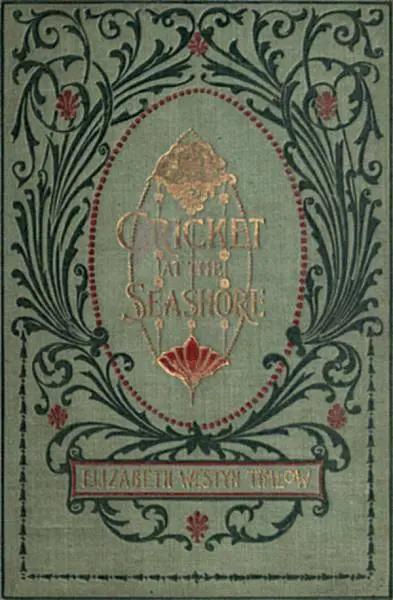
THE CLASSIC COLLECTION · 1896
"Cricket at the Seashore" by Elizabeth Weston Timlow is a children's novel written in the late 19th century. The story revolves around the youthful adventures of Cricket and her siblings as they spend a summer at their family's seaside home. The narrative captures the essence of childhood curiosity, playfulness, and the strong bonds of family and friendship. The opening of the book introduces the main characters, particularly Cricket, who is energetic and eager to explore. We find her planning a treasure hunt to locate a money bag her mother buried long ago. Alongside her sister Eunice, Cricket engages in various summer activities, including swimming and playing. The chapter portrays whimsical interactions among the children, highlighting Cricket's spirited nature and her interactions with Old Billy, a beloved family figure. The stage is set for delightful summer escapades, full of mischief, laughter, and discoveries that promise to unfold in the days ahead.
Introduction adapted from the source catalogue; source summaries may be automatically generated.
Free to read · English · 63,449 words · No account needed
MAKE TIME FOR A GOOD BOOK
On by default. Untick to stop anonymous reading totals. Each page counts after 10 seconds in view. How this works.
Anonymous counting is on unless you have switched it off.
"When Donald can't find anything that he's gone and lost himself," went on Cricket, still addressing the sky, "he always says he wishes the girls would let his things alone. Boys are the funniest."
"If they're any funnier than girls, I'll eat my boots," said Archie, firing green apples at a mark. "Girls are so finicky. There's Edna, squeals if you touch her. If I give her hair just one little yank, you would think I'd pulled her scalp off. If I give Will a good punch"--illustrating with a resounding whack--"he doesn't squeal."
"No, but he hits back," said Cricket, laughing, as Will levelled Archie, by a vigorous thump. "If Edna should hit you a few times like that, you wouldn't tease her so."
"And she's always so careful of her clothes," went on Archie, ignoring this point; "can't do this, because she'll spoil her apron, can't do that, because she'll muss her hair."
"Boys ar'n't talked to about their clothes as girls are," said Cricket, with a sigh. "If you just heard 'Liza talk when we tear our clothes! She has to mend them. Wouldn't I be happy if I could go around all the time in my gymnasium suit. I feel so light and airy."
"And girls are so affected," pursued Archie. "You wouldn't walk with us yesterday coming home from church, and why not? 'Cause you had your best bonnet on, and you carried your head too high. So affected!"
"It wasn't affectedness, it was got-to-do-it-ness," said Cricket, stoutly. "If you had to go to church with a great, big, flappy, floppy hat on, that joggled your ears all the time, 'cause the roses were so heavy, and if you had to be careful to keep your pink organdie clean for next Sunday, and if you had a teasy cousin, who, likely as not, would take hold of your arm, and crunch your sleeves all down, most probably you'd have walked all by yourself, too, and tried to keep yourself respectable so 'Liza wouldn't scold. But you're a boy," finished Cricket, with a burst of envy, "and so you don't bother about clothes. And, anyway, boys will never admit they're to blame about anything," returning suddenly to the original charge.
"Because they never are, of course," answered Archie, turning a back somersault. "It's always somebody else's fault."
"Did you hear auntie tell that funny story about Archie, last night,
Will?" asked Cricket.
"Funny story about me, miss? There never was any funny story about me."
Your reading position is saved on this browser. Take it to another device with a library code. Reading pages adapt to text, rather than matching a printed edition.
Elizabeth Weston Timlow
BEHIND THE BOOK
This eBook is for the use of anyone anywhere in the United States and most other parts of the world at no cost and with almost no restrictions whatsoever. You may copy it, give it away or re-use it under the terms of the Project Gutenberg License included with this eBook or online at www.gutenberg.org. If you are not located in the United States, you will have to check the laws of the country where you are located before using this eBook. Read the source licence.
The original source file, including credits and licence, is retained by this library. Request an original-format copy at no charge. Please include the book title and Project Gutenberg identifier #24513.
KEEP YOUR CURIOSITY GOING
Coulson Kernahan

Maurice Baring
Frances Wright
Cécile Tormay

Frederic Jesup Stimson

W. H. P. (William Henry Pope) Jarvis