My Memory of Gladstone
Goldwin Smith
THE CLASSIC COLLECTION · 1892
"Cowper" by Goldwin Smith is a biographical exploration written in the late 19th century. The book delves into the life of William Cowper, an influential English poet known for his poignant contributions to the literary world between the time of Alexander Pope and the Romantic poets that followed, such as Wordsworth and Byron. It examines Cowper's role in shaping poetry towards greater authenticity and emotional depth while also highlighting his connections to the Evangelical movement, as well as his mental health struggles and personal relationships. The opening of the book introduces Cowper's early life, emphasizing his privileged background and the significant losses he faced, particularly the death of his mother at a young age. It outlines the harsh realities of his childhood experiences, including his time at boarding school, the bullying he endured, and his struggle with mental illness later in life. The passage also foreshadows Cowper's eventual retreat into a life of literary seclusion and highlights his early friendships and influences, setting the stage for a deeper examination of his poetic works and the profound impact of his personal challenges on his creative expression.
Introduction adapted from the source catalogue; source summaries may be automatically generated.
Free to read · English · 36,773 words · No account needed
MAKE TIME FOR A GOOD BOOK
On by default. Untick to stop anonymous reading totals. Each page counts after 10 seconds in view. How this works.
Anonymous counting is on unless you have switched it off.
For though thou gladly wouldst fulfil
The same kind office for me still,
Thy sight now seconds not thy will,
My Mary!
But well thou play'dst the housewife's part,
And all thy threads with magic art,
Have wound themselves about this heart,
My Mary!
Thy indistinct expressions seem
Like language utter'd in a dream:
Yet me they charm, whate'er the theme,
My Mary!
Thy silver locks, once auburn bright,
Are still more lovely in my sight
Than golden, beams of orient light,
My Mary!
For could I view nor them nor thee,
What sight worth seeing could I see P
The sun would rise in vain for me,
My Mary!
Partakers of thy sad decline,
Thy hands their little force resign;
Yet gently press'd, press gently mine,
My Mary!
Such feebleness of limbs thou provest,
That now at every step thou movest,
Upheld by two; yet still thou lovest,
My Mary!
And still to love, though press'd with ill,
In wintry age to feel no chill,
With me is to be lovely still,
My Mary!
But ah! by constant heed I know,
How oft the sadness that I show
Transforms thy smiles to looks of woe,
My Mary!
And should my future lot be cast
With much resemblance of the past,
Thy worn-out heart will break at last,
My Mary!
Even love, at least the power of manifesting love, began to betray its mortality. She who had been so devoted, became, as her mind failed, exacting, and instead of supporting her partner, drew him down. He sank again into the depth of hypochondria. As usual, his malady took the form of religious horrors, and he fancied that he was ordained to undergo severe penance for his sins. Six days he sat motionless and silent, almost refusing to take food. His physician suggested, as the only chance of arousing him, that Mrs. Unwin should be induced, if possible, to invite him to go out with her; with difficulty she was made to understand what they wanted her to do; at last she said that it was a fine morning, and she should like a walk. Her partner at once rose and placed her arm in his. Almost unconsciously, she had rescued him from the evil spirit for the last time. The pair were in doleful plight. When their minds failed they had fallen in a miserable manner under the influence of a man named Teedon, a schoolmaster crazed with self-conceit, at whom Cowper in his saner mood had laughed, but whom he now treated as a spiritual oracle, and a sort of medium of communication with the spirit-world, writing down the nonsense which the charlatan talked. Mrs. Unwin, being no longer in a condition to control the expenditure, the housekeeping, of course, went wrong; and at the same time her partner lost the protection of the love-inspired tact by which she had always contrived to shield his weakness and to secure for him, in spite of his eccentricities, respectful treatment from his neighbours. Lady Hesketh's health had failed, and she had been obliged to go to Bath. Hayley now proved himself no mere lion-hunter, but a true friend. In conjunction with Cowper's relatives, he managed the removal of the pair from Weston to Mundsley, on the coast of Norfolk, where Cowper seemed to be soothed by the sound of the sea, then to Dunham Lodge, near Swaffham, and finally (in 1796) to East Dereham, where, two months after their arrival, Mrs. Unwin died. Her partner was barely conscious of his loss. On the morning of her death he asked the servant "whether there was life above stairs?" On being taken to see the corpse, he gazed at it for a moment, uttered one passionate cry of grief, and never spoke of Mrs. Unwin more. He had the misfortune to survive her three years and a half, during which relatives and friends were kind, and Miss Perowne partly filled, the place of Mrs. Unwin. Now and then, there was a gleam of reason and faint revival of literary faculty, but composition was confined to Latin verse or translation, with one memorable and almost awful exception. The last original poem written by Cowper was The Castaway, founded on an incident in Anson's Voyage.
Your reading position is saved on this browser. Take it to another device with a library code. Reading pages adapt to text, rather than matching a printed edition.
Goldwin Smith
Goldwin Smith
Goldwin Smith
Goldwin Smith
BEHIND THE BOOK
This eBook is for the use of anyone anywhere in the United States and most other parts of the world at no cost and with almost no restrictions whatsoever. You may copy it, give it away or re-use it under the terms of the Project Gutenberg License included with this eBook or online at www.gutenberg.org. If you are not located in the United States, you will have to check the laws of the country where you are located before using this eBook. Read the source licence.
The original source file, including credits and licence, is retained by this library. Request an original-format copy at no charge. Please include the book title and Project Gutenberg identifier #12772.
KEEP YOUR CURIOSITY GOING
John L. Ransom
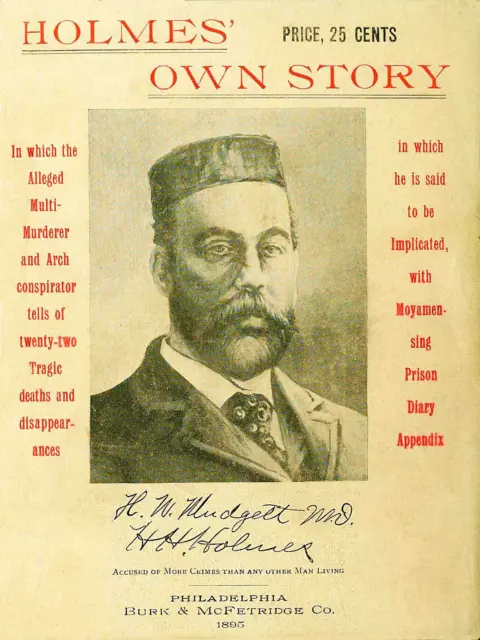
Herman W. Mudgett
Harriet Monroe
Daniel Dulany Addison
Charles Lanman
Harold Rosher