THE CLASSIC COLLECTION✦Excursion to the Orkney IslandsCLASSIC FREE BOOKS
Excursion to the Orkney Islands
Jacob Abbott
THE CLASSIC COLLECTION · 1842
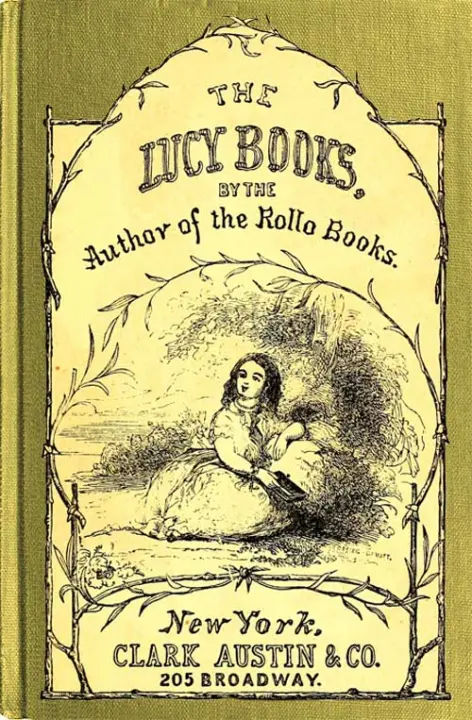
"Cousin Lucy's Conversations" by Jacob Abbott is a children's book written in the mid-19th century. This work introduces young readers to the character of Lucy, who engages in a series of imaginative dialogues and activities, often in the company of her brother, Royal, and their friend, Miss Anne. The book captures the essence of childhood experiences, exploring themes of learning, play, and family interaction. The opening portion of "Cousin Lucy's Conversations" introduces Lucy as she enjoys a game of pretend school, showcasing her creativity and playfulness. Her interaction with Royal, who finds amusement in her attempts to maintain order, highlights the sibling dynamic and elements of lighthearted teasing. As the narrative progresses, Miss Anne encourages Lucy to organize her "treasury" of toys, prompting lessons about responsibility and tidiness. These early conversations establish a foundation for Lucy's character development and the educational undertones that Abbott weaves throughout the book.
Introduction adapted from the source catalogue; source summaries may be automatically generated.
Free to read · English · 33,603 words · No account needed
MAKE TIME FOR A GOOD BOOK
On by default. Untick to stop anonymous reading totals. Each page counts after 10 seconds in view. How this works.
Anonymous counting is on unless you have switched it off.
Lucy looked at it very carefully, but she could not see that there was
any difference.
“Now,” continued Miss Anne, “I must begin to draw the well; and I must have it at just the right distance from the post.”
Then Miss Anne put down her pencil very near to the post, and asked Lucy if she thought that that was about right.
“O no,” said Lucy, “that is a great deal too near.”
Miss Anne then moved the point of her pencil off almost to the end of
the paper.
“Would that be right?” said Miss Anne.
“O no; that is too far.”
“But it is not so far as it is in reality, on the ground, from the post
to the well.”
“No,” said Lucy, “but you are not going to have the picture so large as
the real well.”
“That is it, exactly,” said Miss Anne. “The picture itself is all going to be smaller than the reality; and the drawing of the well must be just as much smaller than the real well, as the drawing of the post is than the real post. Then it is all in proportion.”
“Now,” said Miss Anne, “I will move my pencil up nearer, and you may tell me when it is too far off, and when it is too near, for the proper place for me to draw the side of the well. Is that right?” she added, after placing the point of the pencil in a new position.
“That is too near,” said Lucy.
“And that?” said Miss Anne.
“That is about right,” said Lucy.
“Look again, carefully.”
“Hark! what’s that?” said Lucy.
“It sounds like thunder,” said Miss Anne; “but I rather think it is only a wagon going over the bridge.”
A few minutes afterwards, however, the sound was repeated, louder and more distinct than before, and Miss Anne said it was thunder, and that they must go home, or that they should get caught in a shower. They looked around, and saw that there were some large, dark-looking clouds rising in the west; and Miss Anne said that they must put away their things, and go home as fast as they could.
“But, Miss Anne,” said Lucy, “it is a great way home. I am afraid it will rain on us before we get there.”
“Why, if we can get across the bridge,” said Miss Anne, “we can go into some of the houses.”
“Are there no houses before we come to the bridge?” asked Lucy.
“No,” said Miss Anne; “but I think we shall have time to go farther
than that.”
Your reading position is saved on this browser. Take it to another device with a library code. Reading pages adapt to text, rather than matching a printed edition.
Jacob Abbott

Jacob Abbott

Jacob Abbott

Jacob Abbott
BEHIND THE BOOK
This eBook is for the use of anyone anywhere in the United States and most other parts of the world at no cost and with almost no restrictions whatsoever. You may copy it, give it away or re-use it under the terms of the Project Gutenberg License included with this eBook or online at www.gutenberg.org. If you are not located in the United States, you will have to check the laws of the country where you are located before using this eBook. Read the source licence.
The original source file, including credits and licence, is retained by this library. Request an original-format copy at no charge. Please include the book title and Project Gutenberg identifier #50793.
KEEP YOUR CURIOSITY GOING
Coulson Kernahan

Maurice Baring
Frances Wright
Cécile Tormay

Frederic Jesup Stimson

W. H. P. (William Henry Pope) Jarvis