THE CLASSIC COLLECTION✦Excursion to the Orkney IslandsCLASSIC FREE BOOKS
Excursion to the Orkney Islands
Jacob Abbott
THE CLASSIC COLLECTION · 1842
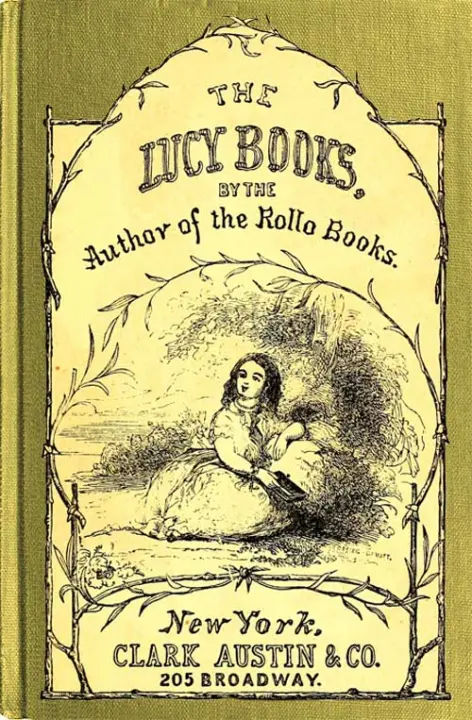
"Cousin Lucy's Conversations" by Jacob Abbott is a children's book written in the mid-19th century. This work introduces young readers to the character of Lucy, who engages in a series of imaginative dialogues and activities, often in the company of her brother, Royal, and their friend, Miss Anne. The book captures the essence of childhood experiences, exploring themes of learning, play, and family interaction. The opening portion of "Cousin Lucy's Conversations" introduces Lucy as she enjoys a game of pretend school, showcasing her creativity and playfulness. Her interaction with Royal, who finds amusement in her attempts to maintain order, highlights the sibling dynamic and elements of lighthearted teasing. As the narrative progresses, Miss Anne encourages Lucy to organize her "treasury" of toys, prompting lessons about responsibility and tidiness. These early conversations establish a foundation for Lucy's character development and the educational undertones that Abbott weaves throughout the book.
Introduction adapted from the source catalogue; source summaries may be automatically generated.
Free to read · English · 33,603 words · No account needed
MAKE TIME FOR A GOOD BOOK
On by default. Untick to stop anonymous reading totals. Each page counts after 10 seconds in view. How this works.
Anonymous counting is on unless you have switched it off.
“Then,” said Lucy, “whenever I want to play with her, I shall have to go away up garret, to get all her things.”
“Very well; you can do just as you think best.”
“Well, would you?” asked Lucy.
“I should, myself, if I were in your case; and only keep such things in my treasury as are neat, and whole, and in good order.”
“But I play with old Margaret a great deal,--almost every day,” said
Lucy.
“Perhaps, then, you had better not carry her away. Do just which you think you shall like best.”
Lucy began to walk towards the door. She moved quite slowly, because she was uncertain whether to carry her old doll up stairs or not. Presently she turned around again, and said,
“Well, Miss Anne, which would you do?”
“I have told you that I should carry her up stairs; but I’ll tell you what you can do. You can play that she has gone away on a visit; and so let her stay up garret a few days, and then, if you find you cannot do without her, you can make believe that you must send for her to come home.”
“So I can,” said Lucy; “that will be a good plan.”
Lucy went immediately to the treasury, and took old Margaret out, and everything that belonged to her. This almost made a basket full, and she carried it off up stairs. Then she came back, and got another basket full, and another, until at last she had removed nearly half of the things; and then she thought that there would be plenty of room to keep the rest in order. And every basket full which she had carried up, she had always brought first to Miss Anne, to let her look over the things, and see whether they had better all go. Sometimes Lucy had got something in her basket which Miss Anne thought had better remain, and be kept in the treasury; and some of the things Miss Anne said were good for nothing at all, and had better be burnt, or thrown away, such as old papers, and some shapeless blocks, and broken bits of china ware. At last the work was all done, the basket put away, and Lucy came and sat down by Miss Anne.
“Well, Lucy,” said Miss Anne, “you have been quite industrious and
persevering.”
Lucy did not know exactly what Miss Anne meant by these words; but she knew by her countenance and her tone of voice, that it was something in her praise.
“But perhaps you do not know what I mean, exactly,” she added.
“No, not exactly,” said Lucy.
Your reading position is saved on this browser. Take it to another device with a library code. Reading pages adapt to text, rather than matching a printed edition.
Jacob Abbott

Jacob Abbott

Jacob Abbott

Jacob Abbott
BEHIND THE BOOK
This eBook is for the use of anyone anywhere in the United States and most other parts of the world at no cost and with almost no restrictions whatsoever. You may copy it, give it away or re-use it under the terms of the Project Gutenberg License included with this eBook or online at www.gutenberg.org. If you are not located in the United States, you will have to check the laws of the country where you are located before using this eBook. Read the source licence.
The original source file, including credits and licence, is retained by this library. Request an original-format copy at no charge. Please include the book title and Project Gutenberg identifier #50793.
KEEP YOUR CURIOSITY GOING
Coulson Kernahan

Maurice Baring
Frances Wright
Cécile Tormay

Frederic Jesup Stimson

W. H. P. (William Henry Pope) Jarvis