THE CLASSIC COLLECTION✦Excursion to the Orkney IslandsCLASSIC FREE BOOKS
Excursion to the Orkney Islands
Jacob Abbott
THE CLASSIC COLLECTION · 1842
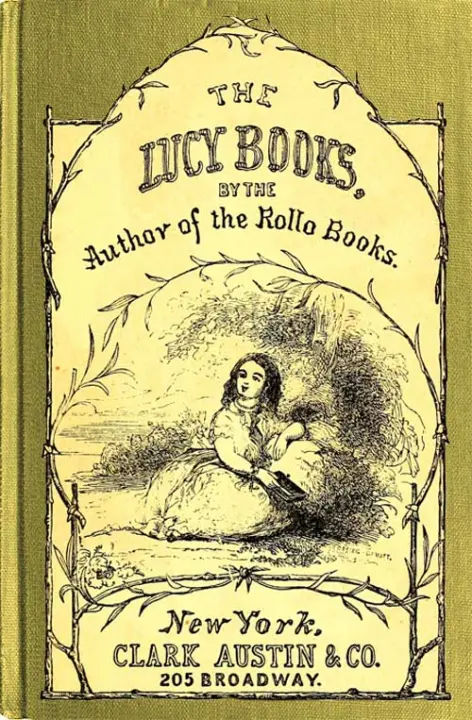
"Cousin Lucy's Conversations" by Jacob Abbott is a children's book written in the mid-19th century. This work introduces young readers to the character of Lucy, who engages in a series of imaginative dialogues and activities, often in the company of her brother, Royal, and their friend, Miss Anne. The book captures the essence of childhood experiences, exploring themes of learning, play, and family interaction. The opening portion of "Cousin Lucy's Conversations" introduces Lucy as she enjoys a game of pretend school, showcasing her creativity and playfulness. Her interaction with Royal, who finds amusement in her attempts to maintain order, highlights the sibling dynamic and elements of lighthearted teasing. As the narrative progresses, Miss Anne encourages Lucy to organize her "treasury" of toys, prompting lessons about responsibility and tidiness. These early conversations establish a foundation for Lucy's character development and the educational undertones that Abbott weaves throughout the book.
Introduction adapted from the source catalogue; source summaries may be automatically generated.
Free to read · English · 33,603 words · No account needed
MAKE TIME FOR A GOOD BOOK
On by default. Untick to stop anonymous reading totals. Each page counts after 10 seconds in view. How this works.
Anonymous counting is on unless you have switched it off.
“It is not always so with boys, at any rate,” said Miss Anne. “And that makes me think of a curious thing that happened once. A little boy, whom I knew, had a beautiful picture-book spoiled by a little gray dog, in a very singular way.”
“How was it?” said Royal.
“Tell us, Miss Anne,” said Lucy; “tell us all about it.”
“Well, this boy’s father bought him a very beautiful picture-book, with colored pictures in it, and brought it home, and gave it to him. And the next day the little gray dog spoiled it entirely.”
“How?” said Lucy.
“Guess.”
“Why, he bit it, and tore it to pieces with his teeth, I suppose,” said
Lucy.
“No,” said Miss Anne.
“Then he must have trampled on it with his muddy feet,” said Royal.
“No,” said Miss Anne, “it could not be in any such way, for it was not
a live dog.”
“Not a live dog!” said Lucy.
“No, it was a little glass dog,--gray glass; only he had black ears and
tail.”
“I don’t see how he could spoil a book,” said Royal.
“He did,” answered Miss Anne.
“The book gave Joseph a great deal of pleasure before the dog came, and after that, it was good for nothing to him.”
“Joseph?” said Royal; “who was he?”
“Why, he was the little boy that had the book. Didn’t I tell you his
name before?”
“No,” said Royal; “but tell us how the dog spoiled the book.”
“Why, you must understand,” said Miss Anne, “that Joseph had a little sister at home, named Mary; and when their father brought home the book to Joseph, he had nothing for Mary. But the next day, he was in a toy-shop, and he saw this little glass dog, and he thought that it would be a very pretty little present for Mary. So he bought it, and carried it home to her.”
“Well, Miss Anne, tell on,” said Lucy, when she found that Miss Anne paused, as if she was not going to say anything more.
“Why, that is about all,” said Miss Anne, “only that he gave the dog to
Mary.”
“But you said that the dog spoiled Joseph’s book.”
“So it did. You see, when Joseph came to see the dog, he wanted it himself, so much that he threw his book down upon the floor, and came begging for the dog; and he could not take any pleasure at all in the book after that.”
“Is that all?” said Royal; “I supposed it was going to be something different from that.”
“Then you don’t think it is much of a story!”
Your reading position is saved on this browser. Take it to another device with a library code. Reading pages adapt to text, rather than matching a printed edition.
Jacob Abbott

Jacob Abbott

Jacob Abbott

Jacob Abbott
BEHIND THE BOOK
This eBook is for the use of anyone anywhere in the United States and most other parts of the world at no cost and with almost no restrictions whatsoever. You may copy it, give it away or re-use it under the terms of the Project Gutenberg License included with this eBook or online at www.gutenberg.org. If you are not located in the United States, you will have to check the laws of the country where you are located before using this eBook. Read the source licence.
The original source file, including credits and licence, is retained by this library. Request an original-format copy at no charge. Please include the book title and Project Gutenberg identifier #50793.
KEEP YOUR CURIOSITY GOING
Coulson Kernahan

Maurice Baring
Frances Wright
Cécile Tormay

Frederic Jesup Stimson

W. H. P. (William Henry Pope) Jarvis