THE CLASSIC COLLECTION✦Excursion to the Orkney IslandsCLASSIC FREE BOOKS
Excursion to the Orkney Islands
Jacob Abbott
THE CLASSIC COLLECTION · 1842
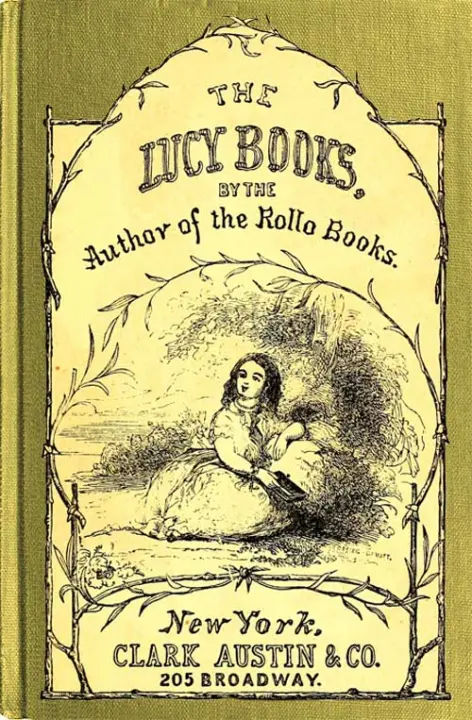
"Cousin Lucy's Conversations" by Jacob Abbott is a children's book written in the mid-19th century. This work introduces young readers to the character of Lucy, who engages in a series of imaginative dialogues and activities, often in the company of her brother, Royal, and their friend, Miss Anne. The book captures the essence of childhood experiences, exploring themes of learning, play, and family interaction. The opening portion of "Cousin Lucy's Conversations" introduces Lucy as she enjoys a game of pretend school, showcasing her creativity and playfulness. Her interaction with Royal, who finds amusement in her attempts to maintain order, highlights the sibling dynamic and elements of lighthearted teasing. As the narrative progresses, Miss Anne encourages Lucy to organize her "treasury" of toys, prompting lessons about responsibility and tidiness. These early conversations establish a foundation for Lucy's character development and the educational undertones that Abbott weaves throughout the book.
Introduction adapted from the source catalogue; source summaries may be automatically generated.
Free to read · English · 33,603 words · No account needed
MAKE TIME FOR A GOOD BOOK
On by default. Untick to stop anonymous reading totals. Each page counts after 10 seconds in view. How this works.
Anonymous counting is on unless you have switched it off.
“O, we caught them,” said Lucy; “we caught them. I told you, Royal, that perhaps we should catch some.”
“How did they get here?” said Royal. “It is some of father’s sly work, I know. Do you know, Miss Anne, how they came here?”
“Let us see how many chickens there are,” said Miss Anne. “One, two, three,”--and so she went on counting up to thirteen.
“Thirteen,” said Lucy; “only think! More than Joanna’s, isn’t it, Royal? Thirteen is more than eleven, isn’t it?”
“Yes, two more,” said Royal; “but, Miss Anne, don’t you know how they
came here?”
Miss Anne looked rather sly, but did not answer. She said to Lucy,
“Well, Lucy, let us go and see your garden.”
Lucy did not now care so much about her garden; she was more interested in the chickens; however, they all went to look at it, and Miss Anne praised it very highly. She said the flowers looked beautifully.
“And now, Miss Anne,” said Lucy, “whenever I want any flowers, I can come out here and gather them out of my garden.”
“Yes,” said Miss Anne, “as long as they last.”
“O, they will last all the time,” said Lucy.
“Will they?” said Miss Anne, rather doubtfully.
“Yes,” said Lucy; “I am going to water them.”
“That will help,” replied Miss Anne, “I have no doubt.”
“I can keep them fresh as long as I want to, in that way,” said Lucy.
“Royal said so.”
“Did you, Royal?” asked Miss Anne.
“No,” said Royal. “I said that they would keep fresh as long as she
watered them.”
“That wasn’t quite honest, was it, Royal? for they won’t keep fresh
more than two days.”
“Well,” said Royal, “and she won’t have patience to water them more
than one day.”
“That’s equivocation,” said Miss Anne.
“Equivocation?” repeated Royal; “what do you mean by that?”
“It is when anything you say has two senses, and it is true in one sense, and not true in another; and you mean to have any person understand it in the sense in which it is not true.”
“What do you mean by that?” said Lucy.
“Why, I will give you an example. Once there was a boy who told his brother William, that there was a black dog up in the garret, and William ran up to see. His brother came up behind him, and, when they opened the garret door, he pointed to an old andiron, such as are called dogs, and said, ‘See! there he is, standing on three legs.’”
Your reading position is saved on this browser. Take it to another device with a library code. Reading pages adapt to text, rather than matching a printed edition.
Jacob Abbott

Jacob Abbott

Jacob Abbott

Jacob Abbott
BEHIND THE BOOK
This eBook is for the use of anyone anywhere in the United States and most other parts of the world at no cost and with almost no restrictions whatsoever. You may copy it, give it away or re-use it under the terms of the Project Gutenberg License included with this eBook or online at www.gutenberg.org. If you are not located in the United States, you will have to check the laws of the country where you are located before using this eBook. Read the source licence.
The original source file, including credits and licence, is retained by this library. Request an original-format copy at no charge. Please include the book title and Project Gutenberg identifier #50793.
KEEP YOUR CURIOSITY GOING
Coulson Kernahan

Maurice Baring
Frances Wright
Cécile Tormay

Frederic Jesup Stimson

W. H. P. (William Henry Pope) Jarvis