A Little Queen of Hearts: An International Story
Ruth Ogden
THE CLASSIC COLLECTION · 1891
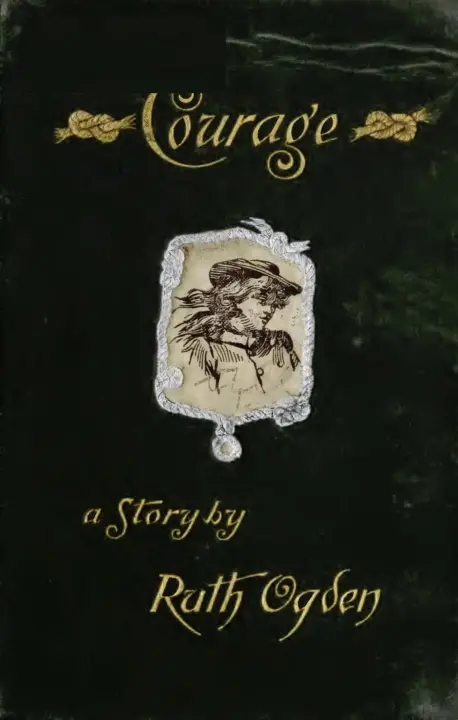
"Courage" by Ruth Ogden is a children's novel written in the late 19th century. The story follows a little girl named Courage Masterson who grapples with love, loss, and resilience as she navigates her early life. Orphaned at a young age, Courage finds herself cared for by a kind woman named Mary Duff, while her father, Hugh, attempts to mourn the death of his wife and raise their daughter. As the story unfolds, we see Courage's journey of growing up, marked by her unique name and the expectations it carries. At the start of the book, the narrative introduces Courage as a charming but neglected child, struggling to understand her unusual name. As she matures, she longs for connection and stability, particularly seeking out her friend Larry, who represents a father figure in her life. The opening chapters highlight key aspects of her life: her father's sorrow and commitment to work, her fondness for Larry, and the sudden loss of her father which further amplifies her solitude. Courage's unique character and experiences set the stage for her adventures and challenges ahead, instilling in her a profound sense of bravery that resonates throughout the story.
Introduction adapted from the source catalogue; source summaries may be automatically generated.
Free to read · English · 19,137 words · No account needed
MAKE TIME FOR A GOOD BOOK
On by default. Untick to stop anonymous reading totals. Each page counts after 10 seconds in view. How this works.
Anonymous counting is on unless you have switched it off.
“Oh, Sylvia, how could you?” was all she found words to say. Poor Sylvia, never more surprised in her life, stood aghast for a moment, looking most beseechingly to Larry. Then a possibility dawned upon her.
“Am it dem posies, Miss Courage?” and the question let the light in on Larry's bewildered mind.
“Of course I mean the flowers,” said Courage, laying one hand caressingly on a poor little dismantled plant. “You have not left a single one, and I wouldn't have had you pick them for all the world.”
“But I was 'bliged to, Miss Courage,” with all the aplomb of a conscientious performance of duty.
“Obliged to?” and then it seemed to occur simultaneously to Larry and Courage that they had possibly secured the services of a veritable little lunatic.
“Yes, Miss Courage; hab you neber hearn tell of a kitchen garden?”
“Never,” said Courage; and now she and Larry exchanged glances as to the certainty of Sylvia's mental condition.
“Well, I'se a kitchen-garden grajate,” Sylvia announced with no little
pride.
“Bless my stars! if you're not a stark little idiot,” muttered Larry under his breath, but fortunately Sylvia was too absorbed to hear.
“Well, dere ain't much you kin tell a kitchen-garden grajate,” she continued complacently, “'bout setting tables and sich like. Dere's questions and answers 'bout eberyting, you know, an' when Miss Sylvester ses, 'What must yer hab in de middle ob de table?' the answer is, 'Fruit or flowers so as there wasn't no fruit, why--” and Sylvia, pausing abruptly, gave a little shrug of her shoulders, and with a grandiloquent gesture, pointed to the geraniums, as though further words were superfluous.
“Oh, I didn't understand,” said Courage, for both she and Larry were beginning to comprehend the situation, and a little later on, when they had had time to realize more fully the careful arrangement of the table, to say nothing of the tempting dishes themselves, they were ready to pronounce the little lunatic of a few moments previous a veritable treasure. The ham was done “to a turn;” the fried potatoes were deliciously crisp; dainty little biscuits fairly melted in your mouth; the coffee was perfection, and Sylvia sat beaming and radiant, for there was no lack of openly expressed appreciation.
“What did you say you were, Sylvia?” asked Courage during the progress
of the meal.
“Oh, I didn't say I was nuffin 't all,” nervously fearing that in some unconscious way she might again have offended her new little mistress.
“Yes, you did, don't you know?” pretending not to notice the nervousness. “It was something nice to be; it began with kitchen.”
Your reading position is saved on this browser. Take it to another device with a library code. Reading pages adapt to text, rather than matching a printed edition.
BEHIND THE BOOK
This eBook is for the use of anyone anywhere in the United States and most other parts of the world at no cost and with almost no restrictions whatsoever. You may copy it, give it away or re-use it under the terms of the Project Gutenberg License included with this eBook or online at www.gutenberg.org. If you are not located in the United States, you will have to check the laws of the country where you are located before using this eBook. Read the source licence.
The original source file, including credits and licence, is retained by this library. Request an original-format copy at no charge. Please include the book title and Project Gutenberg identifier #51924.
KEEP YOUR CURIOSITY GOING
Coulson Kernahan

Maurice Baring
Frances Wright
Cécile Tormay

Frederic Jesup Stimson

W. H. P. (William Henry Pope) Jarvis