THE CLASSIC COLLECTION✦An outlaw’s diary: the CommuneCLASSIC FREE BOOKS
An outlaw’s diary: the Commune
Cécile Tormay
THE CLASSIC COLLECTION · 1889
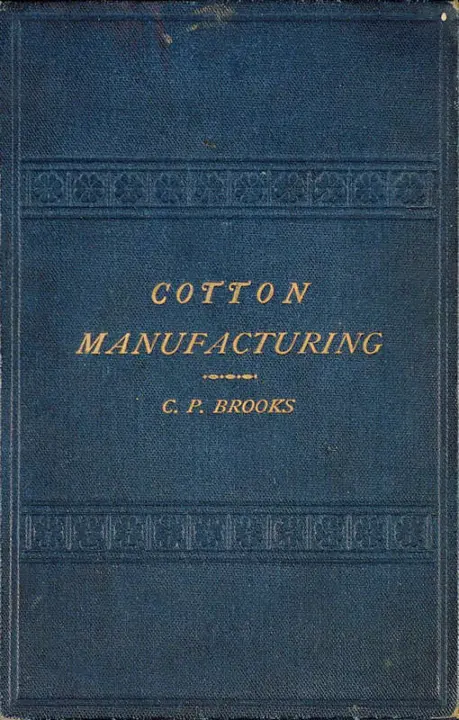
"Cotton Manufacturing" by Christopher Parkinson Brooks is a technical manual written in the late 19th century. The book serves as a comprehensive guide for practitioners in the cotton industry, detailing the processes involved in cotton manufacturing from raw material to finished fabric. It focuses on various aspects of cotton weaving and spinning, highlighting the advancements in machinery and techniques relevant to the industry at that time. The opening of the book sets the stage by discussing the necessity for accessible literature on cotton manufacturing due to the few existing references that cover the entire range of processes comprehensively. The author emphasizes the importance of practical knowledge and technical skills for workers in the cotton industry and outlines the structure of the book, which includes a thorough exploration of different techniques, machinery, and historical context. Brooks also hints at the transformation of the cotton trade, introducing discussions on supply and demand, and the significance of education in improving the workforce's competence in this evolving field.
Introduction adapted from the source catalogue; source summaries may be automatically generated.
Free to read · English · 50,550 words · No account needed
MAKE TIME FOR A GOOD BOOK
On by default. Untick to stop anonymous reading totals. Each page counts after 10 seconds in view. How this works.
Anonymous counting is on unless you have switched it off.
=Bevel=--A cog wheel, having the teeth set at an angle with the shaft on which it moves, but in the some plane, unless a skew-gear bevel.
=Bitting=--Drawing in additional ends at the side of healds and reeds in case of a wider warp having to be used.
=Bobbin=--A flanged wooden cylinder.
=Borders=--The stripe running along the side of a piece of cloth--formed either by different colour, counts of yarn, or weave, from the centre.
=Box Motion=--Arrangement for operating the shuttle boxes in
check weaving.
=Bracket=--An attachment bolted to a framing for the support of
other apparatus.
=Cam or Camb=--A plate revolving on a shaft, having its circumference other than circular, thus giving a reciprocating motion to any lever actuated by it.--Applied in some districts to the shedding tappets and picking plates.
=Cellulose=--A botanical term referring to an organic substance of which the cotton fibre principally consists, and being composed of six atoms of carbon with five of water, or C{6}H{10}O{5}.
=Cloth=--The technical name for woven cotton fabrics: although cloth is the popular name for woollen and worsted fabrics, and cotton is usually called calico, or some such name, yet in the trade the name of cloth is always given to cotton goods.
=Compass Board=--Another name for the cumber board.
=Cop=--The cylindrical coil of yarn formed at the mule, or, in the case of two-fold yarn, at the twiner.
=Cord=--The bands used in attaching the healds to the heald-rollers, or lambs--i.e., heald cords; also a very coarse thread, used as a heading or stripe border; a name given to a cloth bearing a stripe, formed by using cord warp yarn; and also a contraction of corduroy.
=Counts=--A system of indicating the fineness of yarn, written by placing ’s after the figures signifying the number of hanks per lb.--thus, “40’s”; otherwise, grist or numbers.
=Cover=--A name given to the downy appearance of cloth or yarn.
=Cross-band=--Sometimes applied to yarns spun twist-way, in contradistinction to open-band.
=Cross-border=--A heading to a piece of cloth or handkerchief,
either formed by coloured or other weft, or by a change in the
pattern.
=Cumber Board=--The perforated frame for the guidance of the harness in the jacquard or some dobby shedding motions.
=Cutting=--The severance of the pile warp or pile weft in a fabric which requires the slitting of some filament, so as to produce a nap, formed by short threads presenting their section on the face of the cloth.
=Cut=--A length of warp required to weave a piece of cloth;
also the piece when woven.
Your reading position is saved on this browser. Take it to another device with a library code. Reading pages adapt to text, rather than matching a printed edition.
BEHIND THE BOOK
This eBook is for the use of anyone anywhere in the United States and most other parts of the world at no cost and with almost no restrictions whatsoever. You may copy it, give it away or re-use it under the terms of the Project Gutenberg License included with this eBook or online at www.gutenberg.org. If you are not located in the United States, you will have to check the laws of the country where you are located before using this eBook. Read the source licence.
The original source file, including credits and licence, is retained by this library. Request an original-format copy at no charge. Please include the book title and Project Gutenberg identifier #57681.
KEEP YOUR CURIOSITY GOING
Cécile Tormay

Moritz Busch
John L. Ransom
Frances Wright
Cécile Tormay

Mabel Potter Daggett