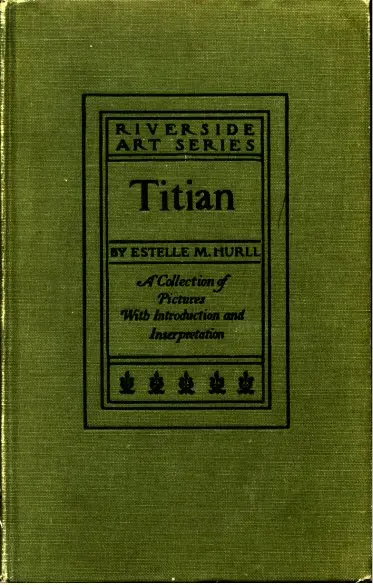
Titian: a collection of fifteen pictures and a portrait of the painter
Estelle M. (Estelle May) Hurll
THE CLASSIC COLLECTION · 1901
"Correggio" by Estelle M. Hurll is a collection of art descriptions and interpretations written in the early 20th century. The book focuses on the life and works of the Italian Renaissance painter Correggio (Antonio Allegri), aiming to familiarize the public with his masterpieces, particularly highlighting the selections of his frescoes and easel paintings primarily from European galleries. The opening of the work sets a scholarly tone, starting with a preface that addresses the lesser-known status of Correggio's art compared to other Italian masters, explaining that most of his treasures remain undiscovered by many art enthusiasts. Hurll emphasizes the significance of Correggio's unique approach to color and chiaroscuro, stating that these elements were pivotal in his artistic success. The introduction provides insights into Correggio's character as an artist and highlights the technical qualities that defined his style, such as his joyfulness and preference for vibrant, youthful subjects, which establish the groundwork for understanding the themes and techniques explored in the subsequent chapters detailing his notable paintings.
Introduction adapted from the source catalogue; source summaries may be automatically generated.
Free to read · English · 18,517 words · No account needed
MAKE TIME FOR A GOOD BOOK
On by default. Untick to stop anonymous reading totals. Each page counts after 10 seconds in view. How this works.
Anonymous counting is on unless you have switched it off.
A Dash ([=]) above the vowel denotes the long sound, as in f[=a]te, [=e]ve, t[=i]me, n[=o]te, [=u]se. A Dash and a Dot ([.=]) above the vowel denote the same sound, less prolonged. A Curve ([)]) above the vowel denotes the short sound, as in [)a]dd, [)e]nd, [)i]ll, [)o]dd, [)u]p.
A Dot ([.]) above the vowel a denotes the obscure sound of a in p[.a]st, [.a]b[=a]te, Am[)e]ric[.a].
A Double Dot (¨) above the vowel a denotes the broad sound of a in
fäther, älms.
A Double Dot ([:]) below the vowel a denotes the sound of a in b[a:]ll.
A Wave (~) above the vowel e denotes the sound of e in h[~e]r.
A Circumflex Accent (^) above the vowel o denotes the sound of o in bôrn.
A dot (.) below the vowel u denotes the sound of u in the French language.
N indicates that the preceding vowel has the French nasal tone.
G and K denote the guttural sound of ch in the German language.
th denotes the sound of th in the, this.
ç sounds like s.
[-c] sounds like k.
[s.=] sounds like z.
[=g] is hard as in [=g]et.
[.g] is soft as in [.g]em.
Allegri (äl-l[=a]'gr[=e]).
Altius cæteris Dei patefecit arcana (äl't[=.e]-[)oo]s k[=i]'t[=.a]-r[=.e]s d[=a]'[=e] pä-t[=a]-f[=a]'-k[)i]t är-kä'nä).
Ambrose ([)a]m'br[=o]z).
Anacreon ([)a]n-[)a]k'r[=.e]-[)o]n).
Antonio (än-t[=o]'n[=e]-[=o]).
Apollo ([.a]-p[)o]l´l[=o]).
Aphrodite ([)a]f-r[=.o]-d[=i]'t[=e]).
Artemis (är't[=e]-m[)i]s).
Arimathea ([)A]r-[)i]-m[.a]-th[=e]´[.a]).
Athena ([)a]-th[=e]'n[.a]).
Augustine ([a:]'g[)u]s-t[=e]n).
Aurora ([a:]-r[=o]'r[.a]).
Austin ([a:]s't[)i]n).
Bayliss, Wyke (w[)i]k b[=a]'l[)i]s).
Bethlehem (B[)e]th'l[=e]h[)e]m).
Berenson (b[=a]'r[)e]n-s[)o]n).
Blashfield (bl[)a]sh'f[=e]ld).
Burckhardt (b[=oo]rk'härt).
Cæsar (s[=e]'z[.a]r).
candelabrum (k[)a]n-d[=.e]-l[=a]'br[)u]m).
Carthage (kär'th[=a]j).
Catherine (k[)a]th'[)e]r-[)i]n).
Caxton (k[)a]ks't[)u]n).
Cavaliere (kä-vä-l[=e]-[=a]'r[=.a]).
chiaroscuro (kyä-r[=.o]-sk[=oo]'r[=.o]).
Cicerone (ch[=e]-ch[=a]-r[=o]'n[=.a]).
Claudian (cl[a:]'d[)i]-[=.a]n).
Correggio (k[)o]r-r[)e]d'j[=o]).
Your reading position is saved on this browser. Take it to another device with a library code. Reading pages adapt to text, rather than matching a printed edition.
Estelle M. (Estelle May) Hurll
Estelle M. (Estelle May) Hurll
Estelle M. (Estelle May) Hurll
Estelle M. (Estelle May) Hurll
BEHIND THE BOOK
This eBook is for the use of anyone anywhere in the United States and most other parts of the world at no cost and with almost no restrictions whatsoever. You may copy it, give it away or re-use it under the terms of the Project Gutenberg License included with this eBook or online at www.gutenberg.org. If you are not located in the United States, you will have to check the laws of the country where you are located before using this eBook. Read the source licence.
The original source file, including credits and licence, is retained by this library. Request an original-format copy at no charge. Please include the book title and Project Gutenberg identifier #19143.
KEEP YOUR CURIOSITY GOING

Charles G. (Charles Griffith) Ross
Hannah Webster Foster

Emily Lawless
Edwin Hamlin Carr

Charles De Lano Hine
Andrew Ure