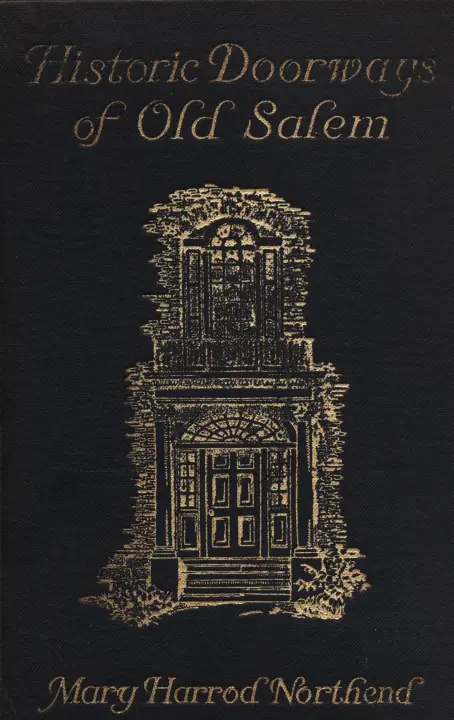
Historic doorways of Old Salem
Mary Harrod Northend
THE CLASSIC COLLECTION · 1912
"Colonial Homes and Their Furnishings" by Mary Harrod Northend is a historical account written in the early 20th century. The book delves into the architecture and furnishings of colonial-era homes, particularly in New England, showcasing the rich history and craftsmanship of that period. It aims to capture the beauty and significance of antiques, emphasizing their cultural value and the stories they hold. At the start of the book, the author expresses a deep fascination for colonial homes and their antique furnishings, sparked by her experiences exploring notable collections in Salem. She reflects on the enduring charm of these old houses, which often display signs of their age yet speak to a rich heritage. The opening portion introduces the evolution of colonial architecture and touches upon specific notable homes, discussing their historical significance and unique features. Northend sets the tone for a detailed exploration of various elements that define colonial interiors, beginning with the structure and ambiance of the period's residences.
Introduction adapted from the source catalogue; source summaries may be automatically generated.
Free to read · English · 51,094 words · No account needed
MAKE TIME FOR A GOOD BOOK
On by default. Untick to stop anonymous reading totals. Each page counts after 10 seconds in view. How this works.
Anonymous counting is on unless you have switched it off.
All things colonial, whether house or accessory, are distinctive, and to the designers and craftsmen of that period the world owes a debt that no amount of tribute can ever wholly repay. Colonial is synonymous of the best, and objects created during its influence are always of a higher degree of perfection than the best of other periods. Looking about for a reason for this, we are confronted with the realization that the work of that time was carefully planned and carefully finished, craftsmen giving to their output the best their brains could devise, and allowing no reason, however urgent, to interfere with the completion of a certain object as they had originally planned it to be. Therein lies the real reason of the superiority of things colonial. Later-day artisans sacrificed quality to quantity; they complied with the demand of public opinion, and as that demand became more urgent, carelessness of detail became more marked. The simplicity of the colonial era gave way to the highly decorative and often ugly ornamentation characteristic of late nineteenth-century manufacture, and it was not until a few craftsmen found courage to revive colonial features that the beauty of that type of construction was truly appreciated. To-day, colonial influence is again dominant, and it is a relief to note that in modern homes it is usurping in favor its hitherto prized successors. It is only to be hoped that its influence will be lasting, for surely of all types it is the most worthy of emulation.
Abbot, General, 25.
house, 78, 109, 153.
Adam brothers, 98, 103, 128, 140, 215.
Adams, Abraham, 95, 138.
family, 95, 138.
John, 88.
the decorator, 69.
Albree, John, 152.
Alden, John, 111.
Allen, John Fiske, 51.
house, 51, 52.
of Lowestoft, 182.
Amesbury, Mass., 37.
Andirons, 67-69.
Andrews, John, 21, 101.
house, 13, 21, 84, 85.
"Angel Gabriel" (ship), 102.
Appleton, John, 163.
Architects, English, 8.
Architecture, Dutch, 2.
Gothic, 4.
Architrave, decoration of, 18.
Argand, Mons., 168.
Assembly house, 18, 24.
Atkinson collection, 200.
Ausberg, Germany, 212.
Austria, 197.
Bagnall, Benjamin, 147.
Samuel, 148.
Barcelona, Spain, 213.
Barnard, Dr. Thomas, 81.
Bartol, Dr. Cyrus, 81.
Bavaria, 196.
Bay of Biscay, 135.
Bedrooms, 122, 125.
Beds, accessories of, 124.
Adam, 128.
antique, 120.
bunk, 126, 127.
carved, 27.
Chippendale, 127, 128.
cupboard, 122, 126.
Egyptian, 121.
Field, 131.
Flemish, 121.
folding, 127.
four-poster, 123-131.
"Great Bed of Ware," 122, 123.
Greek, 121.
hangings, 124.
Hepplewhite, 128, 130.
inlaid, 128.
mahogany, 127.
oak, 122.
paneled, 127.
"Presse," 126, 127.
primeval, 121.
Queen Anne, 126.
Roman, 121.
Sheraton, 128.
"slaw-back," 127.
"Wild Bill" or one-poster, 126.
Benson house, 109.
Bigelow collection, 219.
Billingsley, William, 187.
roses, 187.
Bishop, Bridget, 26.
Black Point, Maine, 43.
Blankets, home-made, 124.
Bloor, Robert, 188.
Bohemia, 196, 197.
Boston, Mass., 5, 43, 71, 74, 147, 148, 149, 217, 219.
Bottles, 203, 205-209.
arched, 206.
bases of, 205.
calabash, 206.
canteen, 207.
circular, 206.
curio, 209.
decorated, 207-209.
designs on, 206.
flask, 207.
Jackson, 208.
Jenny Lind, 207.
Kossuth, 207.
liquor, 208.
Moses, 209.
oldest American, 207.
oval, 206.
rim of, 206.
Santa Claus, 209.
signs of age in, 205.
spherical, 206.
Taylor and Bragg, 207.
Venetian, 209.
Bow, England, 183, 186.
Bradford, Governor, quoted, 42.
Bricks, Dutch, 9.
gray-faced, 13, 14.
Briot, Francis, 212.
Bristol, R. I., 12, 60, 101, 131.
Brown Inn, 173.
Bumstead, 6, 80.
Byfield, Mass., 95, 126, 138, 173.
Your reading position is saved on this browser. Take it to another device with a library code. Reading pages adapt to text, rather than matching a printed edition.
Mary Harrod Northend
Mary Harrod Northend
Mary Harrod Northend
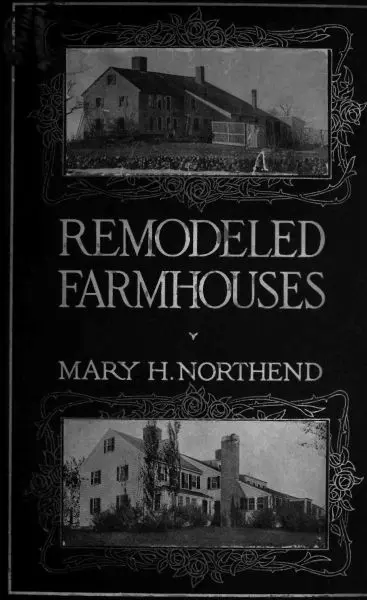
Mary Harrod Northend
BEHIND THE BOOK
This eBook is for the use of anyone anywhere in the United States and most other parts of the world at no cost and with almost no restrictions whatsoever. You may copy it, give it away or re-use it under the terms of the Project Gutenberg License included with this eBook or online at www.gutenberg.org. If you are not located in the United States, you will have to check the laws of the country where you are located before using this eBook. Read the source licence.
The original source file, including credits and licence, is retained by this library. Request an original-format copy at no charge. Please include the book title and Project Gutenberg identifier #34897.
KEEP YOUR CURIOSITY GOING
Cécile Tormay

Moritz Busch
John L. Ransom
Frances Wright
Cécile Tormay

Mabel Potter Daggett