THE CLASSIC COLLECTION✦An outlaw’s diary: the CommuneCLASSIC FREE BOOKS
An outlaw’s diary: the Commune
Cécile Tormay
THE CLASSIC COLLECTION · 1897
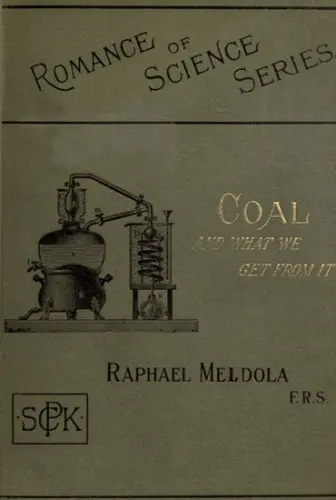
"Coal, and What We Get from It" by Raphael Meldola is a scientific publication written in the late 19th century. This work explores the complex relationship between coal and its various byproducts, particularly within the context of applied science and industrial chemistry. The book aims to demystify coal production and utilization, emphasizing the valuable products that can be derived from coal processing, including gas, tar, and ammonia. The opening of the book delves into the origins of coal, tracing its formation back to the Carboniferous period and explaining the geological processes that transformed ancient vegetation into coal deposits. Meldola discusses the significance of coal as a source of energy and its critical role in the industrial supremacy of nations, particularly in the realms of metallurgy, energy production, and chemical manufacturing. The chapter sets the stage for a deeper exploration of coal's applications, highlighting the interplay between natural resources and industrial innovation that characterizes the dawn of the modern chemical industry.
Introduction adapted from the source catalogue; source summaries may be automatically generated.
Free to read · English · 43,062 words · No account needed
MAKE TIME FOR A GOOD BOOK
On by default. Untick to stop anonymous reading totals. Each page counts after 10 seconds in view. How this works.
Anonymous counting is on unless you have switched it off.
Nietzki, azines, 109
Nietzki, Biebrich scarlet, 156
Nietzki, quinone, 191
Night blue, 106
Nigrosine, 121
Nitrification, 66
Nitrobenzene process, 91
Nitrosodimethylaniline, 111
Non-Carboniferous coal, 11
Number of compounds in tar, 81
Old Red Sandstone, coal in, 12
Oligocene brown coal, 12
Orthochromatic plates, 188
Oxazines, 162
Oxide of iron for gas purifying, 44
Paraffin oil and wax, 50
Patent fuel, 178
Perfumes, 185
Perkin, alizarin, 170
Perkin, discovers mauve, 74
Permanence of dyes, 198
Permian coal, 12
Persoz, phenol dye, 132
Pharmaceutical preparations, 178
Phenanthrene, 172
Phenols, 129
Phosgene dyes, 106
Phosphine, 94, 180
Photographic developers, 189
Phthaleins, 146
Phthalic acid, 143
Picric acid, 136
Pitch, 81, 176
Plants, growth of, 26
Ponceaux, 151
Primary azo-dyes, 156
Primuline, 160
Propiolic acid, 128
Purpurin, 169
Pyrazole, 183
Pyridine, 87
Pyridine bases, 179
Pyrogallol, 146
Quinaldine, 182
Quinic acid, 189
Quinoline, 180
Quinoline green, 182
Quinoline red, 188
Quinoline yellow, 182
Quinones, 172
Read Holliday's lamp, 72
Rectification of hydrocarbons, 84
Resorcinol, 145
Rhodamines, 148
Roccellin, 151
Roman coal-mining, 57
Rosaniline blues, 92
Rosaniline from rosolic acid, 133
Rosolic acid, 132
Runge, kyanol, 75
Runge, phenol in tar, 131
Saccharin, 186
Saffranine, 108
Salicylic acid, 134
Salicylic aldehyde, 185
Salols, 179
Schiendl, Magdala red, 149
Scotland, shale-oil industry, 53
Sea coal, 58
Secondary azo-dyes, 156
Shale, nature of, 51
Shale-oil industry, 50
Skraup, quinoline, 181
Sodium nitrite, 119
Solar energy, 28
Soluble blue, 93
Solvent naphtha, 86
Steam-engines, 20
Stilbene azo-dyes, 137
Structure of coal, 15
Sulphanilic acid, 150
Sulphuric acid, 45
Sunlight, source of energy in coal, 30
Surgery, antiseptic, 131
Tar distilling, 77
Tar, first utilization, 69
Tar from coke-ovens, 49
Tar, quantity obtained from coal, 45
Tartrazine, 184
Tertiary coal, 12
Thalline, 182
Thermifugine, 182
Thiazines, 113
Thiodiphenylamine, 113
Thiorubin, 160
Timber pickling, 70
Tolidine, 136
Toluene from tar, 81
Torbane Hill coal, 52
Transformation of wood into coal, 31
Triassic coal, 12
Trimethylamine, 99
Trinitrophenol, 136
Triphenylmethane, 97
Tubercle bacillus, 193
Turkey red, 170
Underclay, 13
Unverdorben, crystallin, 75
Uses of coal, 16
Vanillin, 185
Vegetable deposits, recent, 13
Verguin, red from aniline, 90
Victoria blue, 106
Victoria yellow, 137
Vinasse, 99
Vincent, methyl chloride, 100
Violaniline, 121
Wasteful use of coal, 32, 203
Water, composition of, 25
Water gas, 203
Watson, Bishop, coke-oven tar, 50
Watson, Bishop, distils coal, 37
Wealden iron industry, 17
Whitaker, W., coal in S.-E. England, 60
Winsor, promotes introduction of gas, 41
Witt, azines, 109
Witt, chrysoidine, 116
Witt, naphthol orange, 150
Wood vinegar, 64
Woody fibre, 26
Woulfe, picric acid, 136
Xylenes from tar, 81
Xylidine scarlet, 153
Young, James, burning-oil, 51
Ziegler, tartrazine, 184
Zinin, benzidam, 75
Richard Clay & Sons, Limited, London & Bungay.
Footnotes:
[1] "An experiment concerning the Spirit of Coals," Phil. Trans. (abridged), vol. viii. p. 295.
[2] Report of the Coal Commissioners (1866-71), vol. i.
[3] In a paper read before the Royal Statistical Society by Mr. Price-Williams in 1889, this author points out that, owing to the introduction of the Bessemer process and other economical improvements, the amount of coal used in the iron and steel manufacture had fallen in 1867 to about sixteen and a half per cent. of the total quantity raised.
[4] This remark does not apply to Great Britain; our Excise regulations have practically killed those branches of manufacture requiring the use of pure wood-spirit.
[5] Since the above was written, new synthetical processes for the production of indigo have been made known in Germany by Karl Heumann. Of the commercial aspect of these discoveries it is of course impossible at present to form an opinion.
Your reading position is saved on this browser. Take it to another device with a library code. Reading pages adapt to text, rather than matching a printed edition.
BEHIND THE BOOK
This eBook is for the use of anyone anywhere in the United States and most other parts of the world at no cost and with almost no restrictions whatsoever. You may copy it, give it away or re-use it under the terms of the Project Gutenberg License included with this eBook or online at www.gutenberg.org. If you are not located in the United States, you will have to check the laws of the country where you are located before using this eBook. Read the source licence.
The original source file, including credits and licence, is retained by this library. Request an original-format copy at no charge. Please include the book title and Project Gutenberg identifier #33165.
KEEP YOUR CURIOSITY GOING
Cécile Tormay

Moritz Busch
John L. Ransom
Frances Wright
Cécile Tormay

Mabel Potter Daggett