THE CLASSIC COLLECTION✦A dead man’s diaryCLASSIC FREE BOOKS
A dead man’s diary
Coulson Kernahan
THE CLASSIC COLLECTION · 1889
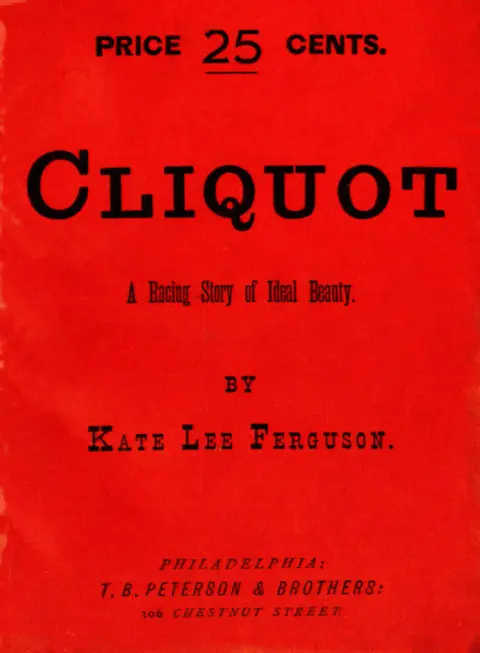
"Cliquot: A Racing Story of Ideal Beauty" by Kate Lee Ferguson is a romance novel likely written in the late 19th century. The story revolves around Neil Emory, a man with a troubled past, and his deep affections for Gwendoline Gwinn, juxtaposed against the backdrop of horse racing and a particularly dangerous stallion named Cliquot. As the plot unfolds, themes of love, ambition, and societal expectations are woven into a tapestry that includes elements of both personal struggle and the thrill of the racetrack. The opening of "Cliquot" introduces a riveting incident on the racetrack, where another jockey has been killed due to the violent behavior of the powerful stallion, Cliquot. Neil Emory, the horse's owner, grapples with the implications of this tragedy as he contemplates finding a new rider amidst a chaotic environment. The scene vividly depicts the tension and excitement of the racing world, while also hinting at Neil's complex emotions regarding his past and his feelings for Gwendoline. He is determined to win the upcoming race, not just for the financial stakes but also for personal redemption. The introduction sets the tone for a narrative rich in passionate love, fierce ambition, and the dangers of the sporting life.
Introduction adapted from the source catalogue; source summaries may be automatically generated.
Free to read · English · 37,818 words · No account needed
MAKE TIME FOR A GOOD BOOK
On by default. Untick to stop anonymous reading totals. Each page counts after 10 seconds in view. How this works.
Anonymous counting is on unless you have switched it off.
The soft fold of her dress under Neil’s foot caused him to look up. She saw him and put her hand out through the curtain.
“How d’ye do?” she said, in an indolent way.
He took the soft fingers, devoid of jewels, in his and smiled again.
A dark, stylish man was beside her, holding an ice. He brushed some crumbs of cake from his lap, looked up, scowled slightly and spilled the ice.
The girl laughed a little.
“Can I replace it?” asked Neil.
“Oh, no,” she said; “I am glad it’s gone that way! But do you think now that you could manage to procure for me a very small glass of champagne, with quantities of ice--quite a small glass, and mostly ice?”
This she rather murmured than said, leaning back and idly toying with a
gauze fan.
“I really don’t think I could,” replied Emory. “You see what a jam
there is.”
“I can!” exclaimed the young man beside her, springing to his feet, and before they could utter a word he was gone and Neil had taken his vacant place.
“It’s all an awful bore; don’t you think so?”
He looked at her and, perhaps, heard her, “I do not know.”
Oh! the white throat--the lovely jeweless throat and hands--the glorious violet eyes, that graceful drooping head, with its crown of waving, bronze-hued hair, those supple limbs, clad in a close-fitting robe of green silk!
“A bore! my God!” and the room grew dim, and the lights went out, while before his eyes a maddened crowd came, the dangling neck of a dead jockey rose, and a foam-covered, rearing steed stood, while there was a cry in Emory’s heart: “Cliquot, Cliquot, my beautiful, win for me or I perish!”
“See, I have brought the wine,” and young Clayton stood before them. The girl put the glass to her lips and slowly drank. When she had finished, she toyed with the ice at the bottom of the glass and looked lazier than ever.
“Would you like to dance?” asked Clayton. “I believe there is a band.”
“No,” she replied; “I never dance in a train. It coils about one’s feet so, or gets around a man’s limbs and I am constantly imagining that I am a serpent, coiling and uncoiling in an earthly paradise.”
“A very beautiful and telling comparison,” said Emory.
“But one I don’t like,” added Clayton, “for it leads a fellow to look upon Miss Gwinn as a temptress.”
“Well!” said the girl, with a rippling laugh, “is a little knowledge a
dangerous thing?”
Your reading position is saved on this browser. Take it to another device with a library code. Reading pages adapt to text, rather than matching a printed edition.
BEHIND THE BOOK
This eBook is for the use of anyone anywhere in the United States and most other parts of the world at no cost and with almost no restrictions whatsoever. You may copy it, give it away or re-use it under the terms of the Project Gutenberg License included with this eBook or online at www.gutenberg.org. If you are not located in the United States, you will have to check the laws of the country where you are located before using this eBook. Read the source licence.
The original source file, including credits and licence, is retained by this library. Request an original-format copy at no charge. Please include the book title and Project Gutenberg identifier #66587.
KEEP YOUR CURIOSITY GOING
Coulson Kernahan

Maurice Baring
Frances Wright
Cécile Tormay

Frederic Jesup Stimson

W. H. P. (William Henry Pope) Jarvis