THE CLASSIC COLLECTION✦A dead man’s diaryCLASSIC FREE BOOKS
A dead man’s diary
Coulson Kernahan
THE CLASSIC COLLECTION · 1889
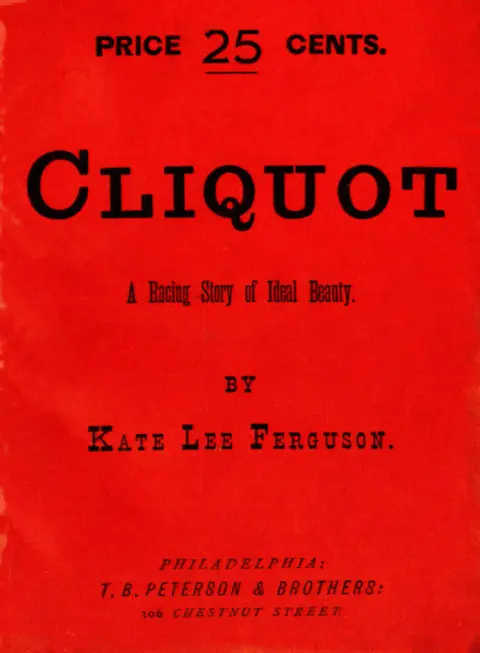
"Cliquot: A Racing Story of Ideal Beauty" by Kate Lee Ferguson is a romance novel likely written in the late 19th century. The story revolves around Neil Emory, a man with a troubled past, and his deep affections for Gwendoline Gwinn, juxtaposed against the backdrop of horse racing and a particularly dangerous stallion named Cliquot. As the plot unfolds, themes of love, ambition, and societal expectations are woven into a tapestry that includes elements of both personal struggle and the thrill of the racetrack. The opening of "Cliquot" introduces a riveting incident on the racetrack, where another jockey has been killed due to the violent behavior of the powerful stallion, Cliquot. Neil Emory, the horse's owner, grapples with the implications of this tragedy as he contemplates finding a new rider amidst a chaotic environment. The scene vividly depicts the tension and excitement of the racing world, while also hinting at Neil's complex emotions regarding his past and his feelings for Gwendoline. He is determined to win the upcoming race, not just for the financial stakes but also for personal redemption. The introduction sets the tone for a narrative rich in passionate love, fierce ambition, and the dangers of the sporting life.
Introduction adapted from the source catalogue; source summaries may be automatically generated.
Free to read · English · 37,818 words · No account needed
MAKE TIME FOR A GOOD BOOK
On by default. Untick to stop anonymous reading totals. Each page counts after 10 seconds in view. How this works.
Anonymous counting is on unless you have switched it off.
She tore her dress from the figure crouching at her feet, and, thrusting the note into Alice’s reluctant hands, bade her rise and at once go forth upon her errand, carrying those words that would bring him to her in less than an hour. Turning at the door, the girl lifted her hand and said:
“Oh! Gwendoline,--let me call you so this once--pause before you act--remember my fate--think of me!”
“Go! go!” she cried, wildly. “I can think of nothing but him!” and, throwing her arms out across the table before her, she buried her face in them as the door closed.
When the maid returned, she found her mistress tossing over the wardrobe, looking here and there for some dress to suit her fancy.
“Make me beautiful, oh! make me beautiful!” she ever murmured, as Alice stood, with trembling heart and hands, to do her bidding. At last, she was ready. She had selected a white directoire of soft material, clinging to her form, falling from her shoulders in graceful folds and open at the throat to show the whiteness of her skin. No jewelry of any kind adorned her person, and she looked like a lovely statue as she stood in the subdued light of her sitting-room, waiting for the footsteps she had thought never to hear again.
Alice, lingering in the passage, opened the door to him; then she slipped away to solitude and tears.
Gwendoline, with one hand resting upon the mantle, turned her beautiful face, and, stretching out the other, greeted him.
“I bid you welcome,” she said, softly, “back to America.”
“And you,” he asked, “have you been well?”
“Not always,” she murmured.
The fire-light was the brightest in the room,--the lamp behind them worried him with its dimness. He arose and turned the wick higher.
“Now, I can see you better--do you pardon the act? It is so long since I have looked upon your face, Gwendoline,” and he reseated himself and drew his chair close beside her.
She rested her head back against the cushions behind her, and sighed a
little.
“This is boy’s play,” thought Emory. “I must speak!” Then he said aloud: “Gwendoline, you know what has brought me--I cannot live without you! This I have come home to say. How fares it with you?”
The lace on her bosom rose and fell, while the white hands were clasping and unclasping, in a silent, anguished way.
“Speak to me!” whispered her lover, bending over her; “say that you feel as I do--let me have from those lips the assurance that ’tis not mine alone, this love that consumes.”
Your reading position is saved on this browser. Take it to another device with a library code. Reading pages adapt to text, rather than matching a printed edition.
BEHIND THE BOOK
This eBook is for the use of anyone anywhere in the United States and most other parts of the world at no cost and with almost no restrictions whatsoever. You may copy it, give it away or re-use it under the terms of the Project Gutenberg License included with this eBook or online at www.gutenberg.org. If you are not located in the United States, you will have to check the laws of the country where you are located before using this eBook. Read the source licence.
The original source file, including credits and licence, is retained by this library. Request an original-format copy at no charge. Please include the book title and Project Gutenberg identifier #66587.
KEEP YOUR CURIOSITY GOING
Coulson Kernahan

Maurice Baring
Frances Wright
Cécile Tormay

Frederic Jesup Stimson

W. H. P. (William Henry Pope) Jarvis