THE CLASSIC COLLECTION✦A dead man’s diaryCLASSIC FREE BOOKS
A dead man’s diary
Coulson Kernahan
THE CLASSIC COLLECTION · 1889
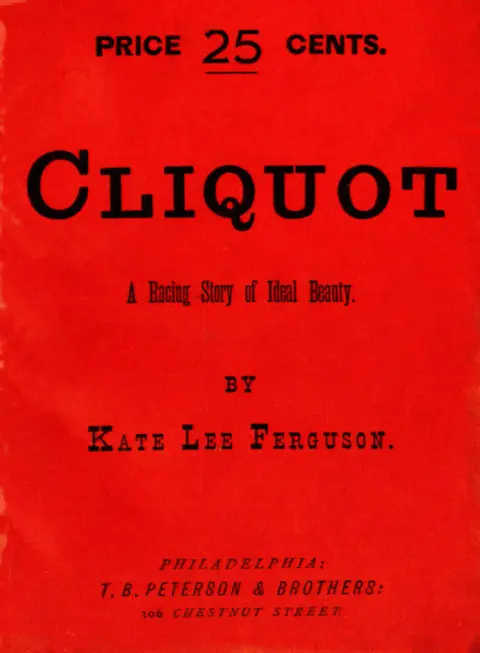
"Cliquot: A Racing Story of Ideal Beauty" by Kate Lee Ferguson is a romance novel likely written in the late 19th century. The story revolves around Neil Emory, a man with a troubled past, and his deep affections for Gwendoline Gwinn, juxtaposed against the backdrop of horse racing and a particularly dangerous stallion named Cliquot. As the plot unfolds, themes of love, ambition, and societal expectations are woven into a tapestry that includes elements of both personal struggle and the thrill of the racetrack. The opening of "Cliquot" introduces a riveting incident on the racetrack, where another jockey has been killed due to the violent behavior of the powerful stallion, Cliquot. Neil Emory, the horse's owner, grapples with the implications of this tragedy as he contemplates finding a new rider amidst a chaotic environment. The scene vividly depicts the tension and excitement of the racing world, while also hinting at Neil's complex emotions regarding his past and his feelings for Gwendoline. He is determined to win the upcoming race, not just for the financial stakes but also for personal redemption. The introduction sets the tone for a narrative rich in passionate love, fierce ambition, and the dangers of the sporting life.
Introduction adapted from the source catalogue; source summaries may be automatically generated.
Free to read · English · 37,818 words · No account needed
MAKE TIME FOR A GOOD BOOK
On by default. Untick to stop anonymous reading totals. Each page counts after 10 seconds in view. How this works.
Anonymous counting is on unless you have switched it off.
A random shot, but it told, for her cousin shrank back with the same low moan Emory had heard on the race-course. As it smote his ear, his frozen blood leaped into life again.
“Hush, woman!” and, catching her arm, he crushed her to the floor. A hollow, ugly laugh greeted him, as she twisted herself away, saying between her teeth:
“Did you enjoy the telegram?”
“Your cue on!” cried the call-boy, running up behind. She rose to her feet, quickly tossed her shaggy hair over her brow, and in a twinkling had run upon the stage, while those two, staggering down the stairs, heard a sound like silver bells and the applause that greeted “Kitty who laughed.”
Gwendoline crouched like a frightened bird in the dark corner of the hack, as it dashed along the streets; and her companion--he, too, was as silent as the grave.
This then was the end! Worse for him than Gwendoline. He had believed himself free; she had known him but in his slavery and worshiped him so.
Bewildered, and blinded by his passion for her, that night he had well nigh betrayed himself--and now the end!
The carriage drew up at Mrs. Gwinn’s door, and, dismissing it, he mounted the steps and silently pulled the bell. Before it was answered, he took both her hands in his,--those dear hands, hanging so white and bare beside her--took them in his own, and held them for a moment to his bosom; then, turning up the palms, he kissed first one and then the other passionately, saying:
“God bless them! those brave little hands--God bless them, forever!”
and he was gone.
When Mrs. Gwinn returned home from the theatre, she found her daughter in tears and learned from her something of what had occurred behind the scenes.
“How strange we never knew her, mamma, often as we have seen her act.”
“Not at all strange,” replied her mother, who was moving about the room, arranging things for the night. “What with her short dress, paint and powder, dyed hair and artificial laugh, one would hardly recognize the quiet dark girl who spent only a few short months with us, then married Mr. Emory. I really don’t think it necessary for you to worry about her. She has passed completely out of our lives, and it makes little or no difference what becomes of her.”
She did not wish to pursue the conversation further, as her mind and inclinations were bent on the completion of the match between her daughter and the wealthy Southerner, Col. Coutell.
But Gwendoline persisted in talking of her cousin, as her mother moved restlessly about the room.
Your reading position is saved on this browser. Take it to another device with a library code. Reading pages adapt to text, rather than matching a printed edition.
BEHIND THE BOOK
This eBook is for the use of anyone anywhere in the United States and most other parts of the world at no cost and with almost no restrictions whatsoever. You may copy it, give it away or re-use it under the terms of the Project Gutenberg License included with this eBook or online at www.gutenberg.org. If you are not located in the United States, you will have to check the laws of the country where you are located before using this eBook. Read the source licence.
The original source file, including credits and licence, is retained by this library. Request an original-format copy at no charge. Please include the book title and Project Gutenberg identifier #66587.
KEEP YOUR CURIOSITY GOING
Coulson Kernahan

Maurice Baring
Frances Wright
Cécile Tormay

Frederic Jesup Stimson

W. H. P. (William Henry Pope) Jarvis