THE CLASSIC COLLECTION✦A dead man’s diaryCLASSIC FREE BOOKS
A dead man’s diary
Coulson Kernahan
THE CLASSIC COLLECTION · 1889
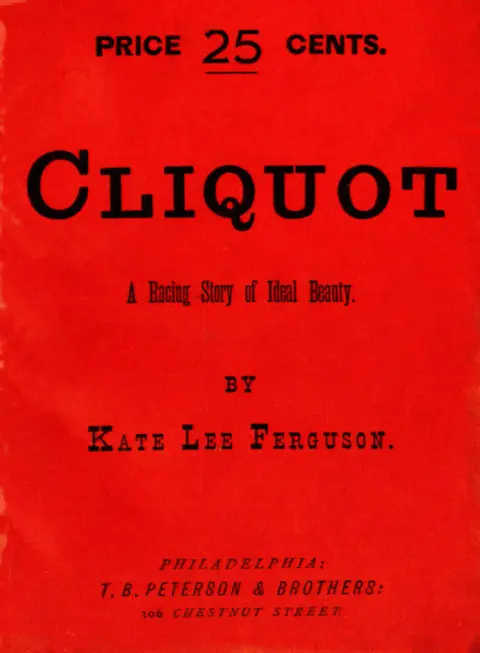
"Cliquot: A Racing Story of Ideal Beauty" by Kate Lee Ferguson is a romance novel likely written in the late 19th century. The story revolves around Neil Emory, a man with a troubled past, and his deep affections for Gwendoline Gwinn, juxtaposed against the backdrop of horse racing and a particularly dangerous stallion named Cliquot. As the plot unfolds, themes of love, ambition, and societal expectations are woven into a tapestry that includes elements of both personal struggle and the thrill of the racetrack. The opening of "Cliquot" introduces a riveting incident on the racetrack, where another jockey has been killed due to the violent behavior of the powerful stallion, Cliquot. Neil Emory, the horse's owner, grapples with the implications of this tragedy as he contemplates finding a new rider amidst a chaotic environment. The scene vividly depicts the tension and excitement of the racing world, while also hinting at Neil's complex emotions regarding his past and his feelings for Gwendoline. He is determined to win the upcoming race, not just for the financial stakes but also for personal redemption. The introduction sets the tone for a narrative rich in passionate love, fierce ambition, and the dangers of the sporting life.
Introduction adapted from the source catalogue; source summaries may be automatically generated.
Free to read · English · 37,818 words · No account needed
MAKE TIME FOR A GOOD BOOK
On by default. Untick to stop anonymous reading totals. Each page counts after 10 seconds in view. How this works.
Anonymous counting is on unless you have switched it off.
“Catch!” said Kitty, throwing him a piece of bread. He caught it in his
hand.
“Not that way--like a dog!” and she held up another piece.
“Be quiet,” said Clovis, “and go away, Kitty! You may come back
directly.”
The girl sprang from the sofa, and, without a word, went into the next room, closing the door after her.
“Well!” said Cassandra, “what did he think of it?”
“He--was--shocked!” and her companion leaned back, putting the tips of
his fingers together.
“Tut! What did he say? Tell me--I really want to know!” and she tapped her foot on the carpet.
“A great many things; among them that--that he was surprised and--and bewildered--by--er--er--the brilliancy of the horse-shoe. By the by, would you like a mate for it?” and he caught her by the wrist as she held up her hand, lapping some wine from its rosy hollow.
“Be careful, or you’ll spill it! There!” and she threw it in his face, laughing, though her eyes flashed.
He put his handkerchief up, removed it and looked a trifle angry; then he walked over to where she stood, and, catching her by both hands, imprisoned them behind her and kissed her on the mouth.
“That’s all you’ll ever get,” she hissed through her teeth.
“That’s all I want!” and he released her.
“What do you mean?” she asked.
“Ask Emory, when you are ready for a pair of diamond horse-shoes,” and
he took up his hat.
“You may tell him that when Cliquot wins I’ll be ready; and you may give him my love, and say anything else you choose quite safely, for I am sure his horse will never reach the goal.”
She didn’t look at all amiable as she walked to the window, where she caught hold of the tassel of the shade, running it up and down in a restless way, with her back to her companion.
“Good-bye!” and in a moment he was gone.
“Kitty, come here!”
She threw open the door, and the girl appeared, blowing bubbles.
“There! that’s Coutell!” and it broke. “That’s Gray!” and it broke. “That’s Emory!--and it breaks on your shoulder!” Again the laugh, rippling through the room with bell-like music.
“Pshaw! listen to me. That man kissed me!”
“Ah! Did he hug you too?” and Kitty shook her mane and shrugged her
shoulders.
“No!”
“Then he must have been intoxicated!” and the little woman hummed a tune, as she clicked time with an empty glass that stood on the table.
Clovis took up a bottle of red wine and filled one of the glasses.
“Goodness! it looks like blood!” cried Kitty.
Your reading position is saved on this browser. Take it to another device with a library code. Reading pages adapt to text, rather than matching a printed edition.
BEHIND THE BOOK
This eBook is for the use of anyone anywhere in the United States and most other parts of the world at no cost and with almost no restrictions whatsoever. You may copy it, give it away or re-use it under the terms of the Project Gutenberg License included with this eBook or online at www.gutenberg.org. If you are not located in the United States, you will have to check the laws of the country where you are located before using this eBook. Read the source licence.
The original source file, including credits and licence, is retained by this library. Request an original-format copy at no charge. Please include the book title and Project Gutenberg identifier #66587.
KEEP YOUR CURIOSITY GOING
Coulson Kernahan

Maurice Baring
Frances Wright
Cécile Tormay

Frederic Jesup Stimson

W. H. P. (William Henry Pope) Jarvis