THE CLASSIC COLLECTION✦A dead man’s diaryCLASSIC FREE BOOKS
A dead man’s diary
Coulson Kernahan
THE CLASSIC COLLECTION · 1853
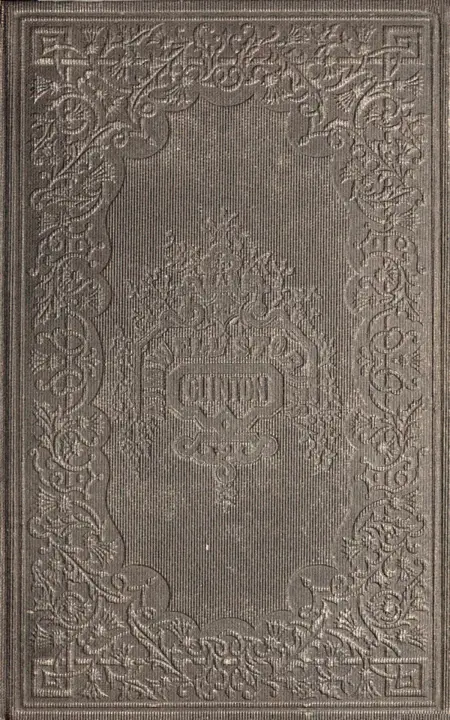
"Clinton: or, Boy-life in the Country" by Walter Aimwell is a fictional work written in the mid-19th century. This novel follows the life of a boy named Clinton Davenport, who lives in the picturesque village of Brookdale, as he navigates the complexities of growing up amidst the temptations and challenges of youth. The story promises to explore moral lessons surrounding the virtues of industry, obedience, and the importance of making sound decisions in the face of peer pressure. The opening of the story introduces us to Clinton's idyllic home life, highlighting his ingenuity and dedication to various projects, such as raising poultry and crafting items in his father's workshop. As the narrative unfolds, we see Clinton's interactions with friends, particularly two boys, Jerry and Oscar, who begin to influence him in potentially negative ways. Through these early chapters, themes of temptation, moral conflict, and the challenges of staying true to one's values are set up as Clinton grapples with the choices he faces and the consequences of his actions.
Introduction adapted from the source catalogue; source summaries may be automatically generated.
Free to read · English · 58,524 words · No account needed
MAKE TIME FOR A GOOD BOOK
On by default. Untick to stop anonymous reading totals. Each page counts after 10 seconds in view. How this works.
Anonymous counting is on unless you have switched it off.
“How to be a Man” is an inimitable little volume. We desire that it be widely circulated. It should be put into the hands of every youth in the land.—Tenn. Bap.
HOW TO BE A LADY; a Book for Girls, containing Useful Hints on the Formation of Character. Cloth, gilt, 50 cts.
“Having daughters of his own, and having been many years employed in writing for the young, he hopes to offer some good advice, in an entertaining way, for girls or misses, between the ages of eight and fifteen. His object is, to assist them in forming their characters upon the best model; that they may become well-bred, intelligent, refined, and good; and then they will be real ladies, in the highest sense.”—Preface.
Parents will consult the interests of their daughters, for time and eternity, in making them acquainted with this attractive and most useful volume.—N. Y. Evangelist.
The following Notices apply to both the above Volumes.
It would be better for the next generation if every youth would “read, learn, and inwardly digest” the contents of these volumes.—N. Y. Commercial.
These volumes contain much matter which is truly valuable.—Mer.
Journal.
They contain wise and important counsels and cautions, adapted to the young, and made entertaining by the interesting style and illustrations of the author. They are fine mirrors, in which are reflected the prominent lineaments of the Christian young gentleman and young lady. Elegant presents for the young.—American Pulpit.
Newcomb’s books are excellent. We are pleased to commend them.—N. Y.
Obs.
They are books well calculated to do good.—Phil. Ch. Chronicle.
Common-sense, practical hints on the formation of character and habits, and are adapted to the improvement of youth.—Mothers’ Journal.
ANECDOTES FOR BOYS; Entertaining Anecdotes and Narratives, illustrative of Principles and Character. 18mo, gilt, 42 cts.
ANECDOTES FOR GIRLS; Entertaining Anecdotes and Narratives, illustrative of Principles and Character. 18mo, gilt, 42 cts.
Interesting and instructive, without being fictitious. The anecdotes are many, short, and spirited, with a moral drawn from each, adapted to every age, condition, and duty of life. We commend them to families and schools.—Albany Spectator.
Works of great value, for a truth or principle is sooner instilled into the youthful heart by an anecdote, than in any other way. They are well selected.—Ev’g Gaz.
Nothing has a greater interest for a youthful mind than a well-told story, and no medium of conveying moral instructions so attractive or so successful. The influence is far more powerful when the child is assured that they are true. We cannot too strongly recommended them to parents.—Western Continent, Baltimore.
Your reading position is saved on this browser. Take it to another device with a library code. Reading pages adapt to text, rather than matching a printed edition.
BEHIND THE BOOK
This eBook is for the use of anyone anywhere in the United States and most other parts of the world at no cost and with almost no restrictions whatsoever. You may copy it, give it away or re-use it under the terms of the Project Gutenberg License included with this eBook or online at www.gutenberg.org. If you are not located in the United States, you will have to check the laws of the country where you are located before using this eBook. Read the source licence.
The original source file, including credits and licence, is retained by this library. Request an original-format copy at no charge. Please include the book title and Project Gutenberg identifier #72775.
KEEP YOUR CURIOSITY GOING
Coulson Kernahan

Maurice Baring
Frances Wright
Cécile Tormay

Frederic Jesup Stimson

W. H. P. (William Henry Pope) Jarvis