THE CLASSIC COLLECTION✦A dead man’s diaryCLASSIC FREE BOOKS
A dead man’s diary
Coulson Kernahan
THE CLASSIC COLLECTION · 1853
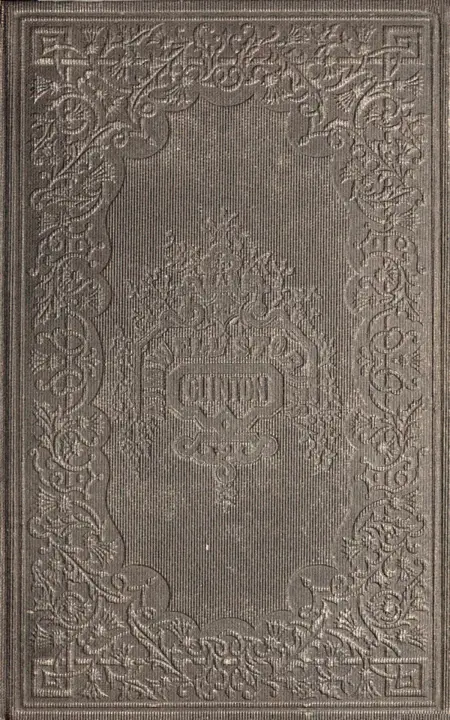
"Clinton: or, Boy-life in the Country" by Walter Aimwell is a fictional work written in the mid-19th century. This novel follows the life of a boy named Clinton Davenport, who lives in the picturesque village of Brookdale, as he navigates the complexities of growing up amidst the temptations and challenges of youth. The story promises to explore moral lessons surrounding the virtues of industry, obedience, and the importance of making sound decisions in the face of peer pressure. The opening of the story introduces us to Clinton's idyllic home life, highlighting his ingenuity and dedication to various projects, such as raising poultry and crafting items in his father's workshop. As the narrative unfolds, we see Clinton's interactions with friends, particularly two boys, Jerry and Oscar, who begin to influence him in potentially negative ways. Through these early chapters, themes of temptation, moral conflict, and the challenges of staying true to one's values are set up as Clinton grapples with the choices he faces and the consequences of his actions.
Introduction adapted from the source catalogue; source summaries may be automatically generated.
Free to read · English · 58,524 words · No account needed
MAKE TIME FOR A GOOD BOOK
On by default. Untick to stop anonymous reading totals. Each page counts after 10 seconds in view. How this works.
Anonymous counting is on unless you have switched it off.
Clinton called daily at the house, to inquire after Mary, but as it was important to keep her as quiet as possible, he did not go into the sick chamber. His mother, however, came over every day, and sometimes remained all night, greatly assisting Mrs. Preston in taking care of the sick one. Mary’s delirium continued with little interruption for two or three days. When she came out of this state, she cast a recognizing look at her mother and sisters, who were seated in the room, and then, in a low voice, inquired:—
“Mother, where is Jerry?”
“Jerry is not here, dear,” replied Mrs. Preston; “he has not yet got
back.”
“Where has he gone?”
“I don’t know where he is—he went away before you was taken sick, but we hope he will be back soon.”
“But I saw him here yesterday, mother,” continued Mary, who had a confused remembrance of some of the impressions of her delirium.
“No, darling, you are mistaken, you dreamed that you saw him—that was
all.”
Mary looked disappointed; and as her recollection of Jerry’s disappearance returned, she added mournfully:—
“Then I shan’t see Jerry again before I die—nor father either.”
“O, yes you will,” quickly replied her mother, startled at these words; “you will soon get well, I hope, and father will be home, before many weeks, and Jerry, too, perhaps.”
Mary sadly shook her head, but made no reply. That night she slept a few hours, but in the morning it was evident that she was rapidly failing. Calling her mother to the bed-side, she said, with a beautiful smile upon her face:—
“Dear mother, I am going to-day—I have seen the angel that is to carry me over the river. O, I wish I could tell you all about it, but I can’t talk much now. I saw a beautiful country—there was no snow there, but the grass was all green, and there were flowers of every kind. There was a great temple, too, as high as the clouds, and it dazzled my eyes to look at it, it glittered so in the sun. And I saw thousands of little children, dressed in white, and the Saviour gathered them around him, and kissed them, and then they all sang, and looked so happy, and he looked so kind. But there was a dark, ugly river between me and them, and while I was thinking how I should like to get across, a tall, beautiful angel came up to me, and asked me if I would not like to become one of the Saviour’s little lambs. I told him I should, but I was afraid of the terrible river. Then he kissed me, and told me not to be afraid, for he would come for me in a few hours, and carry me over; and he said I never should be sick any more, nor go astray. And I asked if he, would not take you too, and father, and Jerry, and Emily, and Harriet, but he said:—‘Not yet.’ And while the angel was talking to me, the Saviour looked towards us, and stretched out his arms; and so I am sure that I shall go to heaven to-day.”
Your reading position is saved on this browser. Take it to another device with a library code. Reading pages adapt to text, rather than matching a printed edition.
BEHIND THE BOOK
This eBook is for the use of anyone anywhere in the United States and most other parts of the world at no cost and with almost no restrictions whatsoever. You may copy it, give it away or re-use it under the terms of the Project Gutenberg License included with this eBook or online at www.gutenberg.org. If you are not located in the United States, you will have to check the laws of the country where you are located before using this eBook. Read the source licence.
The original source file, including credits and licence, is retained by this library. Request an original-format copy at no charge. Please include the book title and Project Gutenberg identifier #72775.
KEEP YOUR CURIOSITY GOING
Coulson Kernahan

Maurice Baring
Frances Wright
Cécile Tormay

Frederic Jesup Stimson

W. H. P. (William Henry Pope) Jarvis