The Standard Bearer
S. R. (Samuel Rutherford) Crockett
THE CLASSIC COLLECTION · 1895
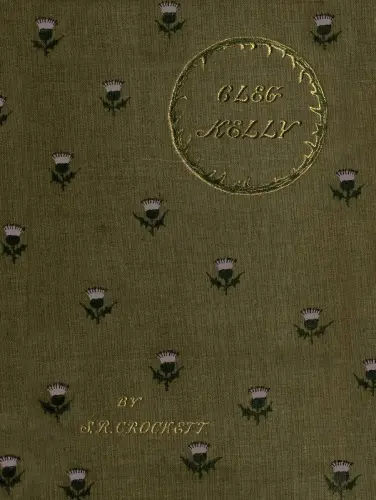
"Cleg Kelly, Arab of the City: His Progress and Adventures" by S. R. Crockett is a novel written in the late 19th century. The book chronicles the life and misadventures of an eleven-year-old boy named Cleg Kelly, a mischievous and defiant youth who becomes an outcast after rejecting the religious teachings at his local Sunday school. The story sets the stage for Cleg's journey through the streets of Edinburgh, exploring themes of childhood, rebellion, and survival in a harsh urban environment. The opening of the novel introduces Cleg Kelly's character and his expulsion from the Hunker Court mission school. During an exasperating encounter with the superintendent, Cleg brazenly declares, “It's all a dumb lie—God's dead!” This bold statement leads to his being expelled, marking the beginning of his outsider status. As he leaves the school, Cleg demonstrates a blend of bravado and vulnerability, indicating his tumultuous home life filled with neglect and abuse. The narrative quickly delves into Cleg's adventures, highlighting his resourcefulness and unruly spirit as he navigates the streets and contemplates adopting a life of crime. The reader is left anticipating how these early missteps will shape his future adventures and character growth throughout the story.
Introduction adapted from the source catalogue; source summaries may be automatically generated.
Free to read · English · 118,559 words · No account needed
MAKE TIME FOR A GOOD BOOK
On by default. Untick to stop anonymous reading totals. Each page counts after 10 seconds in view. How this works.
Anonymous counting is on unless you have switched it off.
"Aye," said the girl, her eyes lighting this time with a glint of anger; "the bairn toddled to her when she cam' hame, and he asked for a bit piece. And wi' that she took him and gied him a fling across the floor, and he hurt his airm on the corner of the bed."
And Cleg, though he had given up swearing, swore.
"The wean's asleep!" said Vara; "speak quietly."
And upon tiptoe she led the way. The dusk of the cellar was so dense and the oppression of the foul air so terrible that had not Cleg been to the manner born, he could hardly have reached the little crib where the baby lay huddled among swathings of old petticoats and bits of flannel, while underneath was a layer of hay.
Vara stood gazing with inexpressible rapture at the babe.
"Isna he bonny—bonny?"
She clasped her hands as she spoke, and looked for the answering
admiration in Cleg's face.
"Aye," said Cleg, who knew what was demanded of him if he expected to remain Vara Kavannah's friend; "he's juist terrible bonny—elegant as a pictur'!"
He had heard his father say that of a new "jemmy."
In truth, the babe was but skin and bone, with the drawn face of a mummy of five thousand years—and tiny hands, prehensile like those of a monkey.
"Vara," said Cleg, "ye canna bide here. I maun get ye awa'. This is no to be tholed. What hae ye had to eat the day?"
"We had some broth that a neighbour brocht in yesterday, and some fish. But the fish was bad," said Vara, flushing and hesitating even to say these things to Cleg.
The badness of the fish, indeed, sufficiently advertised itself.
At the mention of something to eat little Hugh sharpened his croon of
pain into a yell.
"Hugh's awsome hungry! Hugh boy wants his dinner!"
Vara went to him and knelt beside him.
"Hush thee, Hugh boy!" she said, speaking with a fragrance of motherliness which must have come to her from some ancestor, for certainly never in her life had she experienced anything like it. "Hush! Hugh boy shall have his dinner if he is a good boy! Poor handie! Poor, poor handie!"
And the girl took the swollen wrist and torn hand into hers and rocked to and fro with the boy on her knee.
"Hugh is gaun to be a man," she said. "He wadna greet. Na, he will wait till faither comes hame. And then he will get ham, nice ham, singing in the pan; aye, and red herring brandering on the fire, and salmon in tins, an' aipples, an' oranges, an' cancellaries."
Your reading position is saved on this browser. Take it to another device with a library code. Reading pages adapt to text, rather than matching a printed edition.
S. R. (Samuel Rutherford) Crockett
S. R. (Samuel Rutherford) Crockett
S. R. (Samuel Rutherford) Crockett
S. R. (Samuel Rutherford) Crockett
BEHIND THE BOOK
This eBook is for the use of anyone anywhere in the United States and most other parts of the world at no cost and with almost no restrictions whatsoever. You may copy it, give it away or re-use it under the terms of the Project Gutenberg License included with this eBook or online at www.gutenberg.org. If you are not located in the United States, you will have to check the laws of the country where you are located before using this eBook. Read the source licence.
The original source file, including credits and licence, is retained by this library. Request an original-format copy at no charge. Please include the book title and Project Gutenberg identifier #48354.
KEEP YOUR CURIOSITY GOING
Coulson Kernahan

Maurice Baring
Frances Wright
Cécile Tormay

Frederic Jesup Stimson

W. H. P. (William Henry Pope) Jarvis