The Standard Bearer
S. R. (Samuel Rutherford) Crockett
THE CLASSIC COLLECTION · 1895
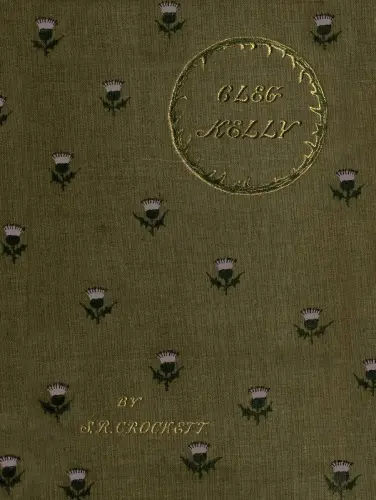
"Cleg Kelly, Arab of the City: His Progress and Adventures" by S. R. Crockett is a novel written in the late 19th century. The book chronicles the life and misadventures of an eleven-year-old boy named Cleg Kelly, a mischievous and defiant youth who becomes an outcast after rejecting the religious teachings at his local Sunday school. The story sets the stage for Cleg's journey through the streets of Edinburgh, exploring themes of childhood, rebellion, and survival in a harsh urban environment. The opening of the novel introduces Cleg Kelly's character and his expulsion from the Hunker Court mission school. During an exasperating encounter with the superintendent, Cleg brazenly declares, “It's all a dumb lie—God's dead!” This bold statement leads to his being expelled, marking the beginning of his outsider status. As he leaves the school, Cleg demonstrates a blend of bravado and vulnerability, indicating his tumultuous home life filled with neglect and abuse. The narrative quickly delves into Cleg's adventures, highlighting his resourcefulness and unruly spirit as he navigates the streets and contemplates adopting a life of crime. The reader is left anticipating how these early missteps will shape his future adventures and character growth throughout the story.
Introduction adapted from the source catalogue; source summaries may be automatically generated.
Free to read · English · 118,559 words · No account needed
MAKE TIME FOR A GOOD BOOK
On by default. Untick to stop anonymous reading totals. Each page counts after 10 seconds in view. How this works.
Anonymous counting is on unless you have switched it off.
"Cleg Kelly," he cried, "I see you; hae you a care, my son, or you'll end up alongside of your father."
"Thank ye, sir," said Cleg Kelly. "Buy a News, sir?"
"Be off, you impudent young shaver!" cried the sergeant, laughing.
And Cleg went off.
"That's a smart boy, and doing well," said Constable Gilchrist.
"Decent enough," returned the sergeant, "but he's in a bad shop at Roy's, and he'll get no good from that Drabble loon!"
And this was a truth. But at that moment, at the back of the Tinklers' Lands, the Drabble was getting much good from Cleg Kelly. Cleg had off his coat and the Drabble was being "warmed."
"That'll learn ye to touch the Kavannahs' bed!" cried Cleg.
And the Drabble sat down.
"That's for miscaain' my faither!"
The Drabble sat down again at full length.
"That's for tellin' me to say my prayers! I learn you to meddle wi' my
prayers!"
Thus Cleg upheld the Conscience Clause.
But the Drabble soon had enough. He warded Cleg off with a knee and elbow, and stated what he would do when he met him again on a future unnamed occasion.
He would tell his big brother, so he would, and his big brother would smash the face of all the Kellys that ever breathed.
Cleg was not to be outdone.
"I'll tell my big brother o' you, Drabble. He can fecht ten polissmen, and he could dicht the street wi' your brither, and throw him ower a lamp-post to dry."
Cleg and the Drabble felt that they must do something for the honour of their respective houses, for this sort of family pride is a noble thing and much practised in genealogies.
So, pausing every ten yards to state what their several big brothers would do, and with the fellest intentions as to future breaches of the peace, the combatants parted. The afternoon air bore to the Drabble from the next street—
"You—let—the Kavannahs—alane frae this oot—or it'll be the waur for
you!"
The Drabble rubbed his nose on his sleeve, and thought that on the
whole it might be so.
Then he took out three papers which he had secreted up his sleeve, and went joyfully and sold them. The Drabble was a boy of resource. Cleg had to come good for these papers to Mistress Roy, and also bear her tongue for having lost them. She stopped them out of his wages. Then Cleg's language became as bad as that of an angry Sunday school superintendent. The wise men say that the Scots dialect is only Early English. Cleg's was that kind, but debased by an admixture of Later Decorated.
Your reading position is saved on this browser. Take it to another device with a library code. Reading pages adapt to text, rather than matching a printed edition.
S. R. (Samuel Rutherford) Crockett
S. R. (Samuel Rutherford) Crockett
S. R. (Samuel Rutherford) Crockett
S. R. (Samuel Rutherford) Crockett
BEHIND THE BOOK
This eBook is for the use of anyone anywhere in the United States and most other parts of the world at no cost and with almost no restrictions whatsoever. You may copy it, give it away or re-use it under the terms of the Project Gutenberg License included with this eBook or online at www.gutenberg.org. If you are not located in the United States, you will have to check the laws of the country where you are located before using this eBook. Read the source licence.
The original source file, including credits and licence, is retained by this library. Request an original-format copy at no charge. Please include the book title and Project Gutenberg identifier #48354.
KEEP YOUR CURIOSITY GOING
Coulson Kernahan

Maurice Baring
Frances Wright
Cécile Tormay

Frederic Jesup Stimson

W. H. P. (William Henry Pope) Jarvis