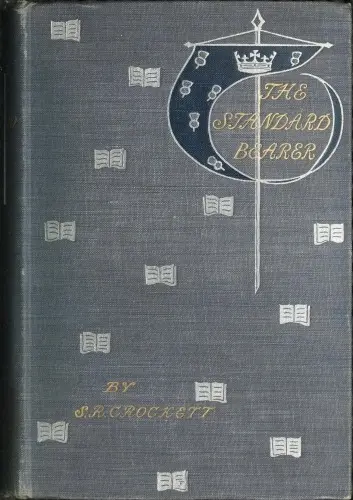
The Standard Bearer
S. R. (Samuel Rutherford) Crockett
THE CLASSIC COLLECTION · 1895
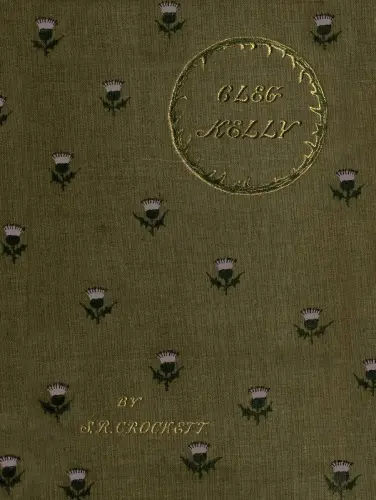
"Cleg Kelly, Arab of the City: His Progress and Adventures" by S. R. Crockett is a novel written in the late 19th century. The book chronicles the life and misadventures of an eleven-year-old boy named Cleg Kelly, a mischievous and defiant youth who becomes an outcast after rejecting the religious teachings at his local Sunday school. The story sets the stage for Cleg's journey through the streets of Edinburgh, exploring themes of childhood, rebellion, and survival in a harsh urban environment. The opening of the novel introduces Cleg Kelly's character and his expulsion from the Hunker Court mission school. During an exasperating encounter with the superintendent, Cleg brazenly declares, “It's all a dumb lie—God's dead!” This bold statement leads to his being expelled, marking the beginning of his outsider status. As he leaves the school, Cleg demonstrates a blend of bravado and vulnerability, indicating his tumultuous home life filled with neglect and abuse. The narrative quickly delves into Cleg's adventures, highlighting his resourcefulness and unruly spirit as he navigates the streets and contemplates adopting a life of crime. The reader is left anticipating how these early missteps will shape his future adventures and character growth throughout the story.
Introduction adapted from the source catalogue; source summaries may be automatically generated.
Free to read · English · 118,559 words · No account needed
MAKE TIME FOR A GOOD BOOK
On by default. Untick to stop anonymous reading totals. Each page counts after 10 seconds in view. How this works.
Anonymous counting is on unless you have switched it off.
The doctor came. He bent over Alick. He moved him tenderly, this way and that. Then he ordered all out of the left-luggage office, except Duncan Urquhart and the station master's wife, a quiet motherly woman.
Then, while the doctor did his duty, Alick sank into a kind of stupor. Presently he woke from it with a little start.
"Doctor, is this you?" he said; "this is terrible kind o' ye. But it's a cauld nicht for you to be oot o' your bed so late—and you wi' a hoast!"
"Wheesht, Alick!" said the doctor. And said no more for a little. For, like every one else, he loved the soft-hearted giant.
Then Alick beckoned the station master to him from the door of the left-luggage office, where he stood nervously clasping and unclasping his hands. The station master came and bent his head.
"The boat train," whispered Muckle Alick, "ye'll hae to enter her in the shedule five meenites late. But ye can say that she passed Netherby wi' the signals standing at clear."
He was silent a moment. Then he looked up again.
"Mind ye, there's to be nocht said aboot it in the papers. You'll see to that, will ye no? It's my wish. An' if the company likes to do aught, it'll aye be a help to Mirren."
There was a sound of sobbing at the door, and the station master shoved the youngest porter out on the platform with his foot.
"Has—ony—body gaen to tell Mirren?" asked Alick in a little.
The doctor nodded. He had, in fact, sent his own coachman to
Sandyknowes with a gig.
"Puir Mirren," said Alick again, "I'm some dootsome that she'll tak' this hard. She was na looking for it, like."
He looked about apologetically again.
"She was that sair set on me, ye see—maybe wi' us haein' nae bairns, ye
ken."
He was silent a little while, and then he said, more brightly, "There's three comed noo, though. Maybe they'll be a blessin' to her. The Lord sent them to her, I'm thinkin'. He wad ken o' this aforehand, nae doot!"
Suddenly he held up his hand, and there was a light shining like a lamp
in his eyes.
"Hearken! that's the whistle!" he cried. "Are the signals clear?"
There was no train in the station nor near it.
Muckle Alick went on. He lifted his head and looked through the open door as one looks ahead under his hand when the sun is strong.
"I can see the distant signal. It is standing at clear!" he said, and
sank back.
Your reading position is saved on this browser. Take it to another device with a library code. Reading pages adapt to text, rather than matching a printed edition.
S. R. (Samuel Rutherford) Crockett
S. R. (Samuel Rutherford) Crockett
S. R. (Samuel Rutherford) Crockett
S. R. (Samuel Rutherford) Crockett
BEHIND THE BOOK
This eBook is for the use of anyone anywhere in the United States and most other parts of the world at no cost and with almost no restrictions whatsoever. You may copy it, give it away or re-use it under the terms of the Project Gutenberg License included with this eBook or online at www.gutenberg.org. If you are not located in the United States, you will have to check the laws of the country where you are located before using this eBook. Read the source licence.
The original source file, including credits and licence, is retained by this library. Request an original-format copy at no charge. Please include the book title and Project Gutenberg identifier #48354.
KEEP YOUR CURIOSITY GOING
Coulson Kernahan

Maurice Baring
Frances Wright
Cécile Tormay

Frederic Jesup Stimson

W. H. P. (William Henry Pope) Jarvis