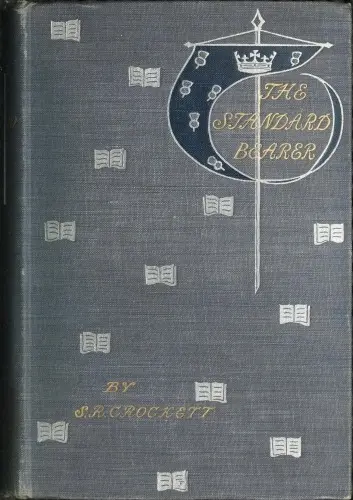
The Standard Bearer
S. R. (Samuel Rutherford) Crockett
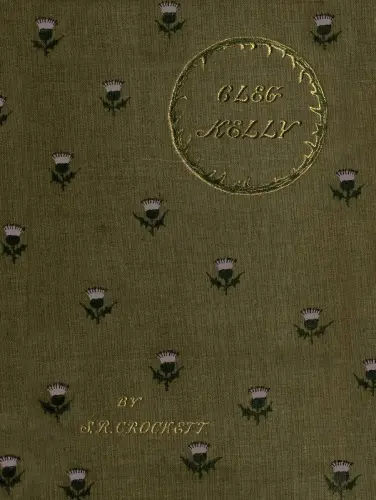
THE CLASSIC COLLECTION · 1895
"Cleg Kelly, Arab of the City: His Progress and Adventures" by S. R. Crockett is a novel written in the late 19th century. The book chronicles the life and misadventures of an eleven-year-old boy named Cleg Kelly, a mischievous and defiant youth who becomes an outcast after rejecting the religious teachings at his local Sunday school. The story sets the stage for Cleg's journey through the streets of Edinburgh, exploring themes of childhood, rebellion, and survival in a harsh urban environment. The opening of the novel introduces Cleg Kelly's character and his expulsion from the Hunker Court mission school. During an exasperating encounter with the superintendent, Cleg brazenly declares, “It's all a dumb lie—God's dead!” This bold statement leads to his being expelled, marking the beginning of his outsider status. As he leaves the school, Cleg demonstrates a blend of bravado and vulnerability, indicating his tumultuous home life filled with neglect and abuse. The narrative quickly delves into Cleg's adventures, highlighting his resourcefulness and unruly spirit as he navigates the streets and contemplates adopting a life of crime. The reader is left anticipating how these early missteps will shape his future adventures and character growth throughout the story.
Introduction adapted from the source catalogue; source summaries may be automatically generated.
Free to read · English · 118,559 words · No account needed
MAKE TIME FOR A GOOD BOOK
On by default. Untick to stop anonymous reading totals. Each page counts after 10 seconds in view. How this works.
Anonymous counting is on unless you have switched it off.
"Ow, as weel as could hae been expectit," said Muckle Alick, with just the proper amount of hypocritical resignation demanded by custom on these occasions. Mistress Fraser, whose mind ran naturally on the lines along which Muckle Alick had directed it, was completely taken in.
"An' what has Mirren gotten?—a lassie, I'll wager," said the excited mother of eleven, dusting her hands of the crumblings of the pudding suet, and then beginning breathlessly to smooth her hair and take off her baking apron. So excited was she that she could not find the loop.
"Aye," said Alick, quietly, "there's a lassie!"
"I juist kenned it," said Mistress Fraser, drawing up wisdom from the mysterious wells of her experience; "muckle men and wee wives aye start aff wi' a lassie—contrarywise they begin wi' a laddie. Noo me and my man——"
What terrible revelation of domestic experience would inevitably have followed, remains unfortunately unknown. For the words which at that moment Muckle Alick delicately let drop, as the chemist drops a rare essence into two ounces of distilled water, brought Mistress Fraser to a dead stop in the fulness of her career after the most intimate domestic reminiscences.
"But there's a laddie come too!" said Muckle Alick, and looked
becomingly at the ground.
Mistress Fraser held up her hands.
"Of a' the deceitfu', hidin', unneighbourly craiturs," said Mistress Fraser, "Mirren Terregles is the warst—an' me to hae drank my tea wi' her only last week. I'll wager if I live to hae fifty bairns——"
"The Lord forbid," said her husband, unexpectedly, from the doorway. "We hae plenty as it is——"
"And wha's faut's that?" cried his wife over her shoulder. "Oh the
deceitfu' randy——"
"In fact," said Muckle Alick, dropping another word in, "there's twa
laddies—and a lassie!"
Mistress Fraser sat down quite suddenly.
"Gie me a drink frae the water can, Tam!" she said; "haste ye fast, Alick's news has gi'en me a turn. Twa laddies and a lassie—I declare it's a Queen's bounty! Preserve me, it's no a cradle ye want, man, but a mill happer! A time or twa like this, and ye'll hae to plant taties in the front yaird—ye will hae to pay soundly for your ploy at this rate, my man. Three at a whup disna gang wi' cancy-lairies in the cabbage plots, my lad."
"It's a maist notoriously curious thing," began Tam Fraser,
unexpectedly, "that I saw Mirren carryin' twa cans o' water this very
mornin'——"
Muckle Alick gave him a warning look, which made him catch his next unspoken sentence as a wicket-keeper holds the ball before the field has seen it leave the bat.
Your reading position is saved on this browser. Take it to another device with a library code. Reading pages adapt to text, rather than matching a printed edition.
S. R. (Samuel Rutherford) Crockett
S. R. (Samuel Rutherford) Crockett
S. R. (Samuel Rutherford) Crockett
S. R. (Samuel Rutherford) Crockett
BEHIND THE BOOK
This eBook is for the use of anyone anywhere in the United States and most other parts of the world at no cost and with almost no restrictions whatsoever. You may copy it, give it away or re-use it under the terms of the Project Gutenberg License included with this eBook or online at www.gutenberg.org. If you are not located in the United States, you will have to check the laws of the country where you are located before using this eBook. Read the source licence.
The original source file, including credits and licence, is retained by this library. Request an original-format copy at no charge. Please include the book title and Project Gutenberg identifier #48354.
KEEP YOUR CURIOSITY GOING
Coulson Kernahan

Maurice Baring
Frances Wright
Cécile Tormay

Frederic Jesup Stimson

W. H. P. (William Henry Pope) Jarvis