The Standard Bearer
S. R. (Samuel Rutherford) Crockett
THE CLASSIC COLLECTION · 1895
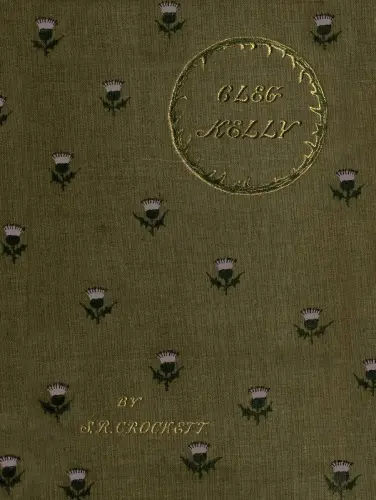
"Cleg Kelly, Arab of the City: His Progress and Adventures" by S. R. Crockett is a novel written in the late 19th century. The book chronicles the life and misadventures of an eleven-year-old boy named Cleg Kelly, a mischievous and defiant youth who becomes an outcast after rejecting the religious teachings at his local Sunday school. The story sets the stage for Cleg's journey through the streets of Edinburgh, exploring themes of childhood, rebellion, and survival in a harsh urban environment. The opening of the novel introduces Cleg Kelly's character and his expulsion from the Hunker Court mission school. During an exasperating encounter with the superintendent, Cleg brazenly declares, “It's all a dumb lie—God's dead!” This bold statement leads to his being expelled, marking the beginning of his outsider status. As he leaves the school, Cleg demonstrates a blend of bravado and vulnerability, indicating his tumultuous home life filled with neglect and abuse. The narrative quickly delves into Cleg's adventures, highlighting his resourcefulness and unruly spirit as he navigates the streets and contemplates adopting a life of crime. The reader is left anticipating how these early missteps will shape his future adventures and character growth throughout the story.
Introduction adapted from the source catalogue; source summaries may be automatically generated.
Free to read · English · 118,559 words · No account needed
MAKE TIME FOR A GOOD BOOK
On by default. Untick to stop anonymous reading totals. Each page counts after 10 seconds in view. How this works.
Anonymous counting is on unless you have switched it off.
The morning came all too soon, with a crowing of cocks and the clashing hurrahs of the rooks, circling up from their nesting in the tall trees. But the tired children slept on. The life of the farm began about them, with its cheerful sounds of clinking head-chains as the cattle came in, and of tinkling harness as the teams went afield. But still the children did not wake. It was not till Mary Bell, byre lass, came to get an armful of fodder from the stack that they were found.
"Lord, preserve us! what's that?" she cried when, with her knees upon the step of the stack, she saw the children—Vara's wearied face turned to the babe, and the dew damp on the white cheeks of Boy Hugh.
"I maun fetch the mistress!" said Mary Bell.
And then these two women stood and marvelled at the children.
"Mary," said the mistress of the farm, "d'ye mind the text last
Sabbath?"
Mary Bell looked indignantly at her employer.
"How do ye think I can mind texts wi' as mony calves to feed?" she asked, like one of whom an unfair advantage is taken.
"O Mary!" said her mistress, "how often hae I telled you no to set your mind on the vainities o' this wicked world?"
"An' whatna ane do ye pay me for?—to keep mind o' texts or to feed the calves?" asked the byre lass, pertinently.
"Mary," said the other, ignoring the argument, "the text was this: 'I will both lay me down and sleep'—dod, but I declare I forget the rest o't," she concluded, breaking down with some ignominy.
"In the land o' the leal," suggested Mary Bell, either wickedly or with a real desire to help. Her superior promptly accepted the emendation.
"That's it!" she said. "Is it no bonny to look at thae bairns and mind the text, 'I will both lay me down and sleep, in the land o' the leal'?"
"I'll wauken them," said practical Mary Bell, "and bring them into the hoose for some breakfast."
"Na, na," said her mistress, "ye maunna do that. What wad the guidman say? Ye ken he canna be doin' wi' folk that gang the country. A wee drap o' yestreen's milk noo—or the scrapins o' the parritch pot!"
"Aye," said Mary Bell, "'in the land o' the leal.' Ye had better gang ben and look up the text, mistress; I'll attend to the bairns."
"Aye, do that," said the good wife, with perfect unconsciousness of Mary Bell's sarcasm, "but be sparin'. Mind ye, this is hard times for farm folk! And we canna spend gear and graith recklessly on unkenned bairns."
Your reading position is saved on this browser. Take it to another device with a library code. Reading pages adapt to text, rather than matching a printed edition.
S. R. (Samuel Rutherford) Crockett
S. R. (Samuel Rutherford) Crockett
S. R. (Samuel Rutherford) Crockett
S. R. (Samuel Rutherford) Crockett
BEHIND THE BOOK
This eBook is for the use of anyone anywhere in the United States and most other parts of the world at no cost and with almost no restrictions whatsoever. You may copy it, give it away or re-use it under the terms of the Project Gutenberg License included with this eBook or online at www.gutenberg.org. If you are not located in the United States, you will have to check the laws of the country where you are located before using this eBook. Read the source licence.
The original source file, including credits and licence, is retained by this library. Request an original-format copy at no charge. Please include the book title and Project Gutenberg identifier #48354.
KEEP YOUR CURIOSITY GOING
Coulson Kernahan

Maurice Baring
Frances Wright
Cécile Tormay

Frederic Jesup Stimson

W. H. P. (William Henry Pope) Jarvis