THE CLASSIC COLLECTION✦Adventures and Letters of Richard Harding DavisCLASSIC FREE BOOKS
Adventures and Letters of Richard Harding Davis
Richard Harding Davis
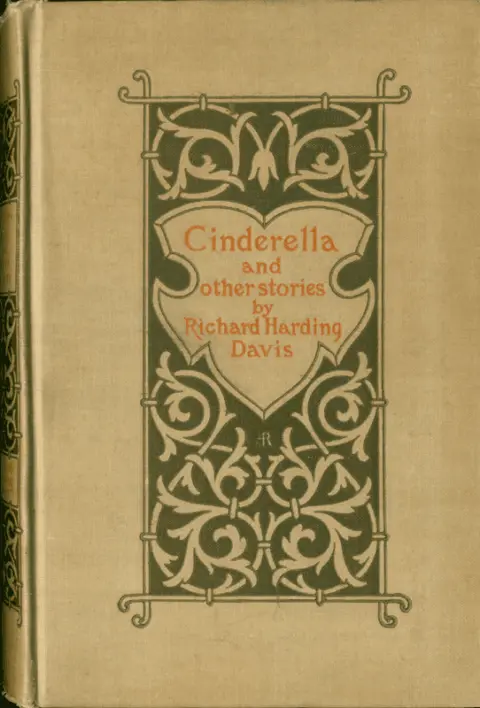
THE CLASSIC COLLECTION · 1896
"Cinderella and Other Stories" by Richard Harding Davis is a collection of short stories written in the late 19th century. The stories explore various human experiences and social dynamics through colorful characters and imaginative narratives. The collection begins with a modern twist on the classic tale of Cinderella, showcasing the lives of hotel employees as they prepare for their annual ball, introducing a mix of humor, romance, and social commentary. The opening of the book presents a lively scene at the Hotel Salisbury, where the staff, comprised of various characters such as Miss Celestine Terrell and her husband Grahame West, are excitedly preparing for a grand annual ball. As the narrative unfolds, we witness the blending of social classes as the hotel workers interact with their esteemed guests, ultimately highlighting themes of aspiration and the desire for recognition. The story sets the stage for the intertwining lives of those who may appear ordinary yet possess extraordinary talents, akin to the classic Cinderella tale, and offers insight into the complexities of both class and personal ambition in a vibrant social setting.
Introduction adapted from the source catalogue; source summaries may be automatically generated.
Free to read · English · 40,487 words · No account needed
MAKE TIME FOR A GOOD BOOK
On by default. Untick to stop anonymous reading totals. Each page counts after 10 seconds in view. How this works.
Anonymous counting is on unless you have switched it off.
Young Stedman walked up and down the length of the veranda, in and out of the moonlight, with his hands in his pockets, and his head on his chest. "You have me all stirred up, Gordon," he said; "you seem so confident and bold, and you're not so much older than I am, either."
"My training has been different; that's all," said the reporter.
"Yes," Stedman said bitterly; "I have been sitting in an office ever since I left school, sending news over a wire or a cable, and you have been out in the world, gathering it."
"And now," said Gordon, smiling, and putting his arm around the other boy's shoulders, "we are going to make news ourselves."
"There is one thing I want to say to you before you turn in," said Stedman. "Before you suggest all these improvements on Ollypybus, you must remember that he has ruled absolutely here for twenty years, and that he does not think much of consuls. He has only seen your predecessor and yourself. He likes you because you appeared with such dignity, and because of the presents; but if I were you, I wouldn't suggest these improvements as coming from yourself."
"I don't understand," said Gordon; "who could they come from?"
"Well," said Stedman, "if you will allow me to advise,--and you see I know these people pretty well,--I would have all these suggestions come from the President direct."
"The President!" exclaimed Gordon; "but how? what does the President know or care about Opeki? and it would take so long--oh, I see, the cable. Is that what you have been doing?" he asked.
"Well, only once," said Stedman, guiltily; "that was when he wanted to turn me out of the consul's office, and I had a cable that very afternoon, from the President, ordering me to stay where I was. Ollypybus doesn't understand the cable, of course, but he knows that it sends messages; and sometimes I pretend to send messages for him to the President; but he began asking me to tell the President to come and pay him a visit, and I had to stop it."
"I'm glad you told me," said Gordon. "The President shall begin to cable to-morrow. He will need an extra appropriation from Congress to pay for his private cablegrams alone."
"And there's another thing," said Stedman. "In all your plans, you've arranged for the people's improvement, but not for their amusement; and they are a peaceful, jolly, simple sort of people, and we must please them."
"Have they no games or amusements of their own?" asked Gordon.
"Well, not what we would call games."
Your reading position is saved on this browser. Take it to another device with a library code. Reading pages adapt to text, rather than matching a printed edition.
Richard Harding Davis
Richard Harding Davis
Richard Harding Davis
Richard Harding Davis
BEHIND THE BOOK
This eBook is for the use of anyone anywhere in the United States and most other parts of the world at no cost and with almost no restrictions whatsoever. You may copy it, give it away or re-use it under the terms of the Project Gutenberg License included with this eBook or online at www.gutenberg.org. If you are not located in the United States, you will have to check the laws of the country where you are located before using this eBook. Read the source licence.
The original source file, including credits and licence, is retained by this library. Request an original-format copy at no charge. Please include the book title and Project Gutenberg identifier #16310.
KEEP YOUR CURIOSITY GOING
Coulson Kernahan

Maurice Baring
Frances Wright
Cécile Tormay

Frederic Jesup Stimson

W. H. P. (William Henry Pope) Jarvis