THE CLASSIC COLLECTION✦Adventures and Letters of Richard Harding DavisCLASSIC FREE BOOKS
Adventures and Letters of Richard Harding Davis
Richard Harding Davis
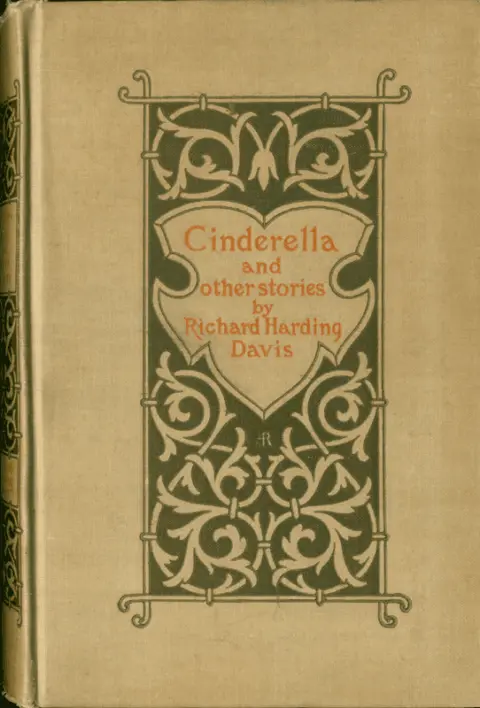
THE CLASSIC COLLECTION · 1896
"Cinderella and Other Stories" by Richard Harding Davis is a collection of short stories written in the late 19th century. The stories explore various human experiences and social dynamics through colorful characters and imaginative narratives. The collection begins with a modern twist on the classic tale of Cinderella, showcasing the lives of hotel employees as they prepare for their annual ball, introducing a mix of humor, romance, and social commentary. The opening of the book presents a lively scene at the Hotel Salisbury, where the staff, comprised of various characters such as Miss Celestine Terrell and her husband Grahame West, are excitedly preparing for a grand annual ball. As the narrative unfolds, we witness the blending of social classes as the hotel workers interact with their esteemed guests, ultimately highlighting themes of aspiration and the desire for recognition. The story sets the stage for the intertwining lives of those who may appear ordinary yet possess extraordinary talents, akin to the classic Cinderella tale, and offers insight into the complexities of both class and personal ambition in a vibrant social setting.
Introduction adapted from the source catalogue; source summaries may be automatically generated.
Free to read · English · 40,487 words · No account needed
MAKE TIME FOR A GOOD BOOK
On by default. Untick to stop anonymous reading totals. Each page counts after 10 seconds in view. How this works.
Anonymous counting is on unless you have switched it off.
The reporter gave a hardly perceptible start; his eyes were fixed on the pattern of the rug at his feet, and the editor continued to examine the papers in his hand. There was a moment's silence. From outside came the noise of children playing in the street and the rapid rush of a passing wagon.
When the two visitors raised their heads Mr. Aram was looking at them strangely, and the fingers folded in his lap were twisting in and out.
"This Shakespeare Debating Club," said the editor, "where are its rooms,
Mr. Aram?"
"It has no rooms, now," answered the poet. "It has disbanded. It never had any regular rooms; we just met about and read."
"I see--exactly," said the editor. "And the house on Seventh Avenue from which your third poem was sent--did you reside there then, or have you always lived here?"
"No, yes--I used to live there--I lived there when I wrote that poem."
The editor looked at the reporter and back at Mr. Aram. "It is a vacant lot, Mr. Aram," he said, gravely.
There was a long pause. The poet rocked slowly up and down in his rocking-chair, and looked at his hands, which he rubbed over one another as though they were cold. Then he raised his head and cleared his throat.
"Well, gentlemen," he said, "you have made out your case."
"Yes," said the editor, regretfully, "we have made out our case." He could not help but wish that the fellow had stuck to his original denial. It was too easy a victory.
"I don't say, mind you," went on Mr. Aram, "that I ever took anybody's verses and sent them to a paper as my own, but I ask you, as one gentleman talking to another, and inquiring for information, what is there wrong in doing it? I say, if I had done it, which I don't admit I ever did, where's the harm?"
"Where's the harm?" cried the two visitors in chorus.
"Obtaining money under false pretences," said the editor, "is the harm you do the publishers, and robbing another man of the work of his brain and what credit belongs to him is the harm you do him, and telling a lie is the least harm done. Such a contemptible foolish lie, too, that you might have known would surely find you out in spite of the trouble you took to--"
"I never asked you for any money," interrupted Mr. Aram, quietly.
"But we would have sent it to you, nevertheless," retorted the editor, "if we had not discovered in time that the poems were stolen."
Your reading position is saved on this browser. Take it to another device with a library code. Reading pages adapt to text, rather than matching a printed edition.
Richard Harding Davis
Richard Harding Davis
Richard Harding Davis
Richard Harding Davis
BEHIND THE BOOK
This eBook is for the use of anyone anywhere in the United States and most other parts of the world at no cost and with almost no restrictions whatsoever. You may copy it, give it away or re-use it under the terms of the Project Gutenberg License included with this eBook or online at www.gutenberg.org. If you are not located in the United States, you will have to check the laws of the country where you are located before using this eBook. Read the source licence.
The original source file, including credits and licence, is retained by this library. Request an original-format copy at no charge. Please include the book title and Project Gutenberg identifier #16310.
KEEP YOUR CURIOSITY GOING
Coulson Kernahan

Maurice Baring
Frances Wright
Cécile Tormay

Frederic Jesup Stimson

W. H. P. (William Henry Pope) Jarvis