THE CLASSIC COLLECTION✦My diaries, being a personal narrative of events 1888-1914, Part 2 (1900-1914)CLASSIC FREE BOOKS
My diaries, being a personal narrative of events 1888-1914, Part 2 (1900-1914)
Wilfrid Scawen Blunt
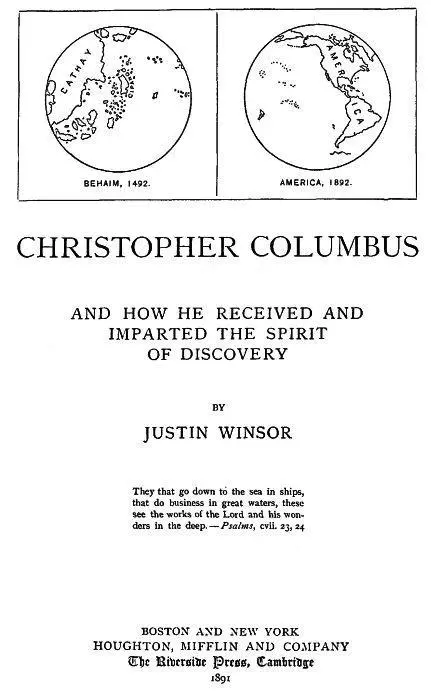
THE CLASSIC COLLECTION · 1891
"Christopher Columbus and How He Received and Imparted the Spirit of Discovery" by Justin Winsor is a historical account written in the late 19th century. The work examines the life and explorations of Christopher Columbus, highlighting the various sources of information about his journeys, and the socio-political context surrounding his discoveries. It delves into how Columbus’s character and experiences contributed to the broader spirit of exploration during his time. At the start of the narrative, the author focuses on the various sources of documentation related to Columbus's life and voyages, emphasizing the significance of Columbus's own writings. Winsor notes the challenges historians face due to the complexities and inconsistencies in Columbus's accounts, as well as the limited availability of original documents. The opening chapters introduce the reader to the extensive documentary evidence surrounding Columbus's life, including his letters and the various biographical works that have attempted to portray his legacy. Through a detailed examination of these sources, Winsor sets the stage for a deeper exploration of Columbus's impact on the spirit of discovery that characterized the Age of Exploration.
Introduction adapted from the source catalogue; source summaries may be automatically generated.
Free to read · English · 211,353 words · No account needed
MAKE TIME FOR A GOOD BOOK
On by default. Untick to stop anonymous reading totals. Each page counts after 10 seconds in view. How this works.
Anonymous counting is on unless you have switched it off.
Colon, Luis (grandson of Columbus), succeeds his father, 522;
makes compromise with the Crown, 522;
holds Jamaica, 523;
made Duke of Veragua, 523;
governs Española, 523;
his marriages, 523;
imprisoned and dies, 523;
his children, 526.
Colon. See Columbus.
Columbia River, 658.
Columbus, Bartholomew (brother of Columbus), born, 77;
in Portugal, 104;
affects Columbus's views, 117;
with Diaz on the African coast, 151, 303;
sent to England, 167, 303, 339;
in France, 168, 303;
reaches Española, 303;
made Adelantado, 304;
left in command by Columbus, 323;
confirmed by the Crown as Adelantado, 328;
portrait, 329;
attacks the Quibian, 451;
sees Columbus for the last time, 488;
survives him, 513;
goes to Rome, 516;
takes a map, 516, 533;
goes to Española, 516;
dies, 518;
reputed descendant, 527.
COLUMBUS, CHRISTOPHER, sources of information, 1;
biographers, 30;
his prolixity and confusion, 1;
his writings, 1;
Libro de las Proficias, 1;
facsimile of his handwriting, 2;
his private papers, 2;
letters, 2, 5;
written in Spanish, 2;
his privileges, 3;
Codex Diplomaticus, 3;
the Custodia at Genoa, 4, 5;
Bank of St. George, 5;
marginalia, 7;
Declaracion de Tabla navigatoria, 7, 32;
Cinco Zonas, 7;
lost manuscripts, 8;
MS. annotations, 8;
missing letters, 9, 18, 19;
missing commentary, 9;
journal of his first voyage, 9, 193;
printed in English, 10;
letters on his discovery, 10;
printed editions, 12;
Catalan text, 13;
Latin text, 14;
his transient fame, 14;
in England, 14;
autographs, 14;
edition of the Latin first letter, 15;
facsimile of a page, 16;
libraries possessing copies, 17;
bibliography of first letter, 17;
other accounts of first voyage, 17;
lawsuits of heirs, 18, 26, 514;
account of his second voyage, 18, 264;
Libro del Segundo Viage, 18, 264;
letters owned by the Duke de Veragua, 18;
accounts of his third voyage, 18, 347;
of his fourth voyage, 19;
Lettera rarissima, 19;
Libros de memorias, 19;
work on the Arctic Pole, 19;
his maps, 29;
Memorial del Pleyto, 26;
Italian accounts of, 30;
influenced by his Spanish life, 33;
Portuguese accounts, 33;
Spanish accounts, 33;
documents preserved by Las Casas, 47;
canonization, 52;
English accounts, 55;
life by Irving, 56;
bibliography, 59;
his portraits, 61-70;
his person, 61;
tomb at Havana, 69;
his promise to the Bank of St. George, 5, 70;
ancestry, 71;
early home, 71;
name of Colombo, 71;
the French family, 71;
professes he was not the first admiral of his name, 72;
spurious genealogies, 73, 74;
prevalence of the name Colombo, 73;
his grandfather, 74;
his father, 74;
life at Savona, 75;
Genoa, 75;
his birth, 76;
disputed date, 76;
his mother, 77;
her offspring, 77;
place of his birth, 77;
many claimants, 78;
uncertainties of his early life, 79;
his early education, 79;
his penmanship and drawing, 79;
specimen of it, 80;
said to have been at Pavia, 79;
at Genoa, 81;
in Anjou's expedition, 83;
his youth at sea, 83;
drawn to Portugal, 86, 102;
living there, 103;
alleged swimming with an oar, 103;
marries, 105;
supposed interview with a sailor who had sailed west, 107;
knew Marco Polo's book, 116;
Mandeville's book, 116;
the ground of his belief in a western passage, 117;
inherits his views of the sphericity of the earth, 119;
of its size, 123;
his ignorance of the Atlantis story, etc., 126, 148;
learns of western lands, 129;
in Portugal, 131;
in Iceland, 135;
Tratado de las Cinco Zonas, 137;
and the Sagas, 146;
his first gratuity in Spain, 149;
difficulty in following his movements, 149;
interviews the Portuguese king, 150;
abandons Portugal, 149, 153;
did he lay his project before the authorities of Genoa? 153;
did he propose to those of Venice? 154;
did he leave a wife in Portugal? 154;
enters Spain, 154, 157, 169;
at Rabida, 154, 173;
calls himself Colon, 157;
receives gratuities, 157, 168;
sells books and maps, 158;
writes out his proofs of a new world, 158;
interview with Ferdinand of Spain, 159;
his monument at Genoa, 163;
at Malaga, 165;
connection with Beatrix Enriquez, 166;
his son Ferdinand born, 166;
his views in England, 167;
invited back to Portugal, 168;
lived in Spain with the Duke of Medina-Celi, 169;
at Cordova, 169;
at Baza, 169;
his views again rejected, 170;
at Santa Fé, 176;
his arrogant demands, 177;
starts for France, 177;
recalled and agreed with, 179;
his passport, 180;
the capitulations, 181;
allowed to use Don, 181;
at Palos, 181;
his fleet fitted out, 182;
expenses of the first voyage, 183;
his flag-ship, 183;
her size, 184;
hopes to find mid-ocean islands, 185;
sails, 191;
keeps a journal, 193;
the "Pinta" disabled, 195;
sees Teneriffe, 195;
at the Canaries, 195;
falsifies his reckoning, 195;
map of the routes of his four voyages, 196;
of the first voyage, 197;
his dead reckoning, 198;
his judgment of his speed, 198;
observes no variation of his needle, 198;
watches the stars, 203;
believed the earth pear-shaped, 203;
meets a west wind, 205;
thinks he sees land, 206;
follows the flight of birds, 206;
pacifies his crew, 207;
alleged mutiny, 208;
claims to see a light, 208;
receives a reward for first seeing land, 209, 249;
map of the landfall, 210;
land actually seen, 211;
land taken possession of, 211;
his armor, 211;
question of his landfall, 214;
trades with the natives, 218, 220;
first intimates his intention to enslave them, 220;
finds other islands, 220;
eager to find gold, 221;
reaches Cuba, 223;
mentions pearls for the first time, 223;
thought himself on the coast of Cathay, 224;
takes an observation, 224;
meets with tobacco, 225;
with potatoes, 225;
hears of cannibals, 225;
seeks Babeque, 225;
difficult communication with the natives, 226, 227;
in the King's Garden, 226;
deserted by Pinzon, 226;
at Española, 228;
takes his latitude, 229;
entertains a cacique, 231;
meets with a new language, 232;
seeks gold, 232;
shipwrecked, 232;
builds a fort, 233;
names it La Navidad, 235;
hears of Jamaica, 235;
of Amazons, 235;
fears the Pinzons, 235;
sees mermaids, 236;
sails for Spain, 236;
meets a gale, 237;
separates from the "Pinta," 237;
throws overboard an account of his discoveries, 238;
makes land at the Azores, 238;
gets provisions, 238;
his men captured on shore, 239;
again at sea, 240;
enters the Tagus, 240;
reason for using the name Indies, 240;
goes to the Portuguese Court, 241;
leaves the Tagus, having sent a letter to the Spanish Court, 242;
reaches Palos, 242;
the "Pinta" arrives the same day, 242, 244;
his Indians, 244, 259, 272;
summoned to Court, 244;
at Barcelona, 245;
reception, 245;
his life there, 246, 247, 249, 256;
his first letter, 248;
scant impression made by the announcement, 248;
the egg story, 249;
receives a coat-of-arms, 249, 550;
his family arms, 251;
his motto, 251;
receives the royal seal, 256;
leaves the Court, 256;
in Seville, 256;
relations with Fonseca begin, 256;
fits out the second expedition, 257, 258, 261;
embarks, 263;
sails, 264;
his character, 265;
at the Canaries, 265;
at Dominica, 266;
at Marigalante, 266;
at Guadaloupe, 268;
fights the Caribs at Santa Cruz, 271;
reaches Española, 272;
arrives at La Navidad, 273;
finds it destroyed and abandons it, 275, 277;
disembarks at another harbor, 278;
founds Isabella, 278;
grows ill, 279;
expeditions to seek gold, 279, 280;
writes to the sovereigns, 280;
the fleet leaves him, 282;
harassed by factions, 284;
leads an expedition inland, 285;
builds Fort St. Thomas, 287;
returns to Isabella, 288;
sends Ojeda to St. Thomas, 289;
sails to explore Cuba, 290;
discovers Jamaica, 291;
returns to Cuba, 293;
imagines his approach to the Golden Chersonesus, 295;
exacts an oath from his men that they were in Asia, 296;
doubts as to his own belief, 297;
return voyage, 299;
on the Jamaica coast, 300;
calculates his longitude on the Española coast, 301;
falls into a stupor, 302;
reaches Isabella, 302;
finds his brother Bartholomew there, 303;
learns what had happened in his absence, 304;
receives supplies, 309;
sends the fleet back, 310;
sends Diego to Spain, 311;
sends natives as slaves, 311;
battle of the Vega Real, 312;
oppresses the natives, 315;
his enemies in Spain, 318;
receives a royal letter by Aguado, 319;
the fleet wrecked, 321;
thinks the mines of Hayna the Ophir of Solomon, 322;
sails for Spain, 323;
reaches Cadiz, 324;
lands in the garb of a Franciscan, 325;
proceeds to Court, 326;
asks for a new fleet, 326;
delays, 327;
his rights reaffirmed, 328;
new proportion of profits, 328;
his will, 330;
his signature, 330;
lives with Andres Bernaldez, 331;
his character drawn by Bernaldez, 331;
enlists criminals, 332;
his altercation with Fonseca's agent, 333;
had authorized voyages, 336;
the third voyage and its sources, 347;
leaves directions for his son Diego, 348;
sails from San Lucar, 348;
his course, 348;
letter to him from Jayme Ferrer, 349;
captures a French prize, 349;
at the Cape de Verde Islands, 349;
at Trinidad, 350;
first sees mainland, 351;
touches the Gulf Stream, 352;
grows ill, 355, 356;
his geographical delusions, 356;
compared with Vespucius, 358;
observations of nature, 359;
meets the Adelantado, 359;
reaches Santo Domingo, 365;
his experience with convict settlers, 366, 392, 396, 434;
sends letters to Spain, 367;
treats with Roldan, 368, 370;
institutes repartimientos, 371;
sends other ships to Spain, 371;
his prerogatives as Admiral infringed, 372;
sends Roldan against Ojeda, 374;
did he know of Cabot's voyage? 386;
his wrongs from furtive voyagers, 372-387;
opposition to his rule in the Antilles, 388;
his new relations with Roldan, 389;
quells Moxica's plot, 390;
Bobadilla arrives, 390;
charges against the Admiral, 392, 402, 404;
his deceiving the Crown, 393;
receives copies of Bobadilla's instructions, 400;
reaches Santo Domingo, 401;
imprisoned and fettered, 401;
sent to Spain in chains, 403;
his letter to Prince Juan's nurse, 404, 405, 407;
his alienation of mind, 405;
reaches Cadiz, 407;
his reception, 408, 409;
suspended from power, 409;
his connection with the Cantino map, 420, 421;
his destitution, 420; his vested rights invaded, 428;
his demands unheeded, 428;
sends a factor to Española, 430;
Libros de las Proficias, 431;
his projected conquest of the Holy Land, 431;
defeated by Satan, 431;
dreams on a hidden channel through the new world, 432;
still seeking the Great Khan, 433;
his purposed gift to Genoa, 434;
writes to the Bank of St. George, 435;
his fourth voyage, 437;
his mental and physical condition, 437;
at Martinico, 438;
touches at the forbidden Santo Domingo, 438;
but is denied the port, 439;
his ships ride out a gale, 441;
on the Honduras coast, 441;
meets a large canoe, 442;
says mass on the land, 442;
on the Veragua coast, 445;
touches the region tracked by Bastidas, 448;
sees a waterspout, 449;
returns to Veragua, 450;
finds the gold mines of Solomon, 450;
plans settlement at Veragua, 451;
dangers, 451;
has a fever, 453;
hears a voice, 454;
the colony rescued, 456;
sails away, 456;
abandons one caravel, 457;
on the Cuban coast, 457;
goes to Jamaica, 457;
strands his ships, 458;
sends Mendez to Ovando, 458, 461;
writes a letter to his sovereigns, 459;
Lettera rarissima, 459;
his worship of gold, 461;
the revolt of Porras, 462;
Porras sails away, 464;
but returns to the island and wanders about, 464;
predicts an eclipse of the moon, 465;
Escobar arrives, 467;
and leaves, 468;
negotiations with Porras, 468;
fight between the rebels and the Adelantado, 469;
Porras captured, 469;
the rebels surrender, 470;
Mendez sends to rescue him, 470;
leaves Jamaica, 471;
learns of events in Española during his absence, 472;
reaches Santo Domingo, 475;
relations with Ovando, 475;
sails for Spain, 475;
arrives, 476; in Seville, 477;
his letters at this time, 477;
his appeals, 477;
fears Porras, 478, 479;
appeals to Mendez, 479;
his increasing malady, 480;
sends a narrative to Rome, 482;
suffered to ride on a mule, 483;
relations with the Bank of St. George in Genoa, 483;
his privileges, 484;
doubtful reference to Fonseca, 484;
later relations with Vespucius, 484;
his property sold, 486; goes to Segovia, 486;
Deza asked to arbitrate, 486;
makes a will, 487;
at Salamanca, 487;
at Valladolid, 488;
seeks to propitiate Juana, 488;
makes a codicil to his will, 488;
its doubtful character, 488;
ratifies his will, 489;
its provisions, 489;
dies, 490;
his death unnoticed, 491;
later distich proposed for his tomb, 491;
successive places of interment, 491;
his bones removed to Santo Domingo, 492;
to Havana, 492;
controversy over their present position, 492;
his chains, 494;
the age of Columbus, 494;
statue at Santo Domingo, 495;
his character, his dependence on the Imago Mundi, 497;
on other authors, 498;
relations with Toscanelli, 499;
different delineations of his character, 501;
his observations of nature, 502;
his overwrought mind, 502;
hallucinations, 503, 504;
arguments for his canonization, 505;
purpose to gain the Holy Sepulchre, 505;
his Catholicism, 505; his urgency to enslave the Indians, 505, 506;
his scheme of repartimientos 506;
adopts garb of the Franciscans, 508;
mercenary, 508, 509;
the moving light of his first voyage, 510;
insistence on territorial power, 510;
claims inspiration, 511;
his heirs, 513; his discoveries denied after his death, 514, 520;
his territorial power lost by his descendants, 523;
table of his descendants, 524, 525;
his male line becomes extinct, 526;
lawsuit to establish the succession, 526;
female line through the Portogallos fails, 527;
now represented by the Larreategui family, 528;
present value of the estates, 528;
the geographical results of his discoveries, 529;
connection with early maps, 533, 534;
his errors in longitude, 603;
his observations of magnetic influence, 632.
Your reading position is saved on this browser. Take it to another device with a library code. Reading pages adapt to text, rather than matching a printed edition.
BEHIND THE BOOK
This eBook is for the use of anyone anywhere in the United States and most other parts of the world at no cost and with almost no restrictions whatsoever. You may copy it, give it away or re-use it under the terms of the Project Gutenberg License included with this eBook or online at www.gutenberg.org. If you are not located in the United States, you will have to check the laws of the country where you are located before using this eBook. Read the source licence.
The original source file, including credits and licence, is retained by this library. Request an original-format copy at no charge. Please include the book title and Project Gutenberg identifier #42059.
KEEP YOUR CURIOSITY GOING
Wilfrid Scawen Blunt
Wilfrid Scawen Blunt

E. W. (Edgar Watson) Howe
Cécile Tormay

Moritz Busch
John L. Ransom