THE CLASSIC COLLECTION✦The loss of the SwanseaCLASSIC FREE BOOKS
The loss of the Swansea
W. L. (William Livingston) Alden
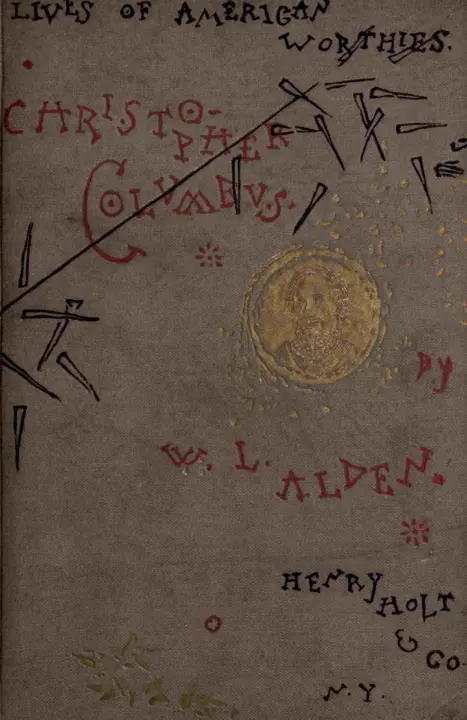
THE CLASSIC COLLECTION · 1881
"Christopher Columbus (1440–1506): The First American Citizen (by Adoption)" by William L. Alden is a historical account written in the late 19th century. This biography explores the life of Christopher Columbus, delving into his early years, ambitions, and the voyages that led to the discovery of the Americas. Alden presents Columbus not merely as a renowned explorer but also takes a unique stance by suggesting he can be considered the first American citizen by adoption. The opening of the book introduces readers to the complexities surrounding Columbus's birth and early life, highlighting the uncertain narratives surrounding his origins. Alden cleverly conveys the multiple claims to Columbus's birthplace and his early education and aspirations. The anecdotes about youthful adventures and misadventures provide insights into Columbus’s character and hint at the determination that would drive his later explorations. These early chapters set the stage for Columbus's aspirations to explore uncharted territories, as he begins to form ideas of sailing westward to find new lands, which would eventually lead to his historic voyages across the Atlantic.
Introduction adapted from the source catalogue; source summaries may be automatically generated.
Free to read · English · 47,759 words · No account needed
MAKE TIME FOR A GOOD BOOK
On by default. Untick to stop anonymous reading totals. Each page counts after 10 seconds in view. How this works.
Anonymous counting is on unless you have switched it off.
As an explorer, he failed to find a path to India, and he died under the delusion that Pekin was somewhere in Costa Rica. His first voyage across the broad Atlantic seems to us a wonderful achievement, but in either difficulty or danger it cannot be compared with Stanley’s march across the African continent. We must concede to Columbus a certain amount of boldness and perseverance, but we cannot shut our eyes to the faults of his conduct and character.
And yet Columbus was a true hero. Whatever flaws there may have been in the man, he was of a finer clay than his fellows, for he could dream dreams that their dull imaginations could not conceive. He belonged to the same land which gave birth to Garibaldi, and, like the Great Captain, the Great Admiral lived in a high, pure atmosphere of splendid visions, far removed from and above his fellow-men. The greatness of Columbus cannot be argued away. The glow of his enthusiasm kindles our own, even at the long distance of four hundred years, and his heroic figure looms grander through successive centuries.
Aguado, Juan, appointed investigator, 185;
investigates, 188;
makes nothing by it, 195.
Angel, Luis de St., 56;
offers to advance money, 57.
Astrolabe, invented, 32;
description of, 276.
Black Crook, thought to have broken out in Spain, 194.
Bobadilla, Francisco de, arrives in Hispaniola, 221;
arrests Columbus, 228;
sends Columbus to Spain, 229.
Boyle, Father Bernardo, 133;
desires to burn somebody, 150, 163;
is disappointed, 174.
Caonabo, 160;
captured, 175;
dies, 193.
Cedo, Fermin, alleged scientific person, 158.
Cogoletto, alleged birthplace of Columbus, 1.
Columbus, Bartholomew, born and translated, 4;
is sent to England, 38;
arrives at Hispaniola, 171;
made Governor of Isabella, 191;
able commander, 209;
arrested, 228;
sails with fourth exploring expedition, 236;
defeats Porras, 261.
Columbus, Christopher, born, 1;
translated, 3;
anecdotes of boyhood, 5;
goes to Pavia, 9;
becomes sailor, 11;
engages in Neapolitan expedition, 12;
deceives sailors or posterity, 13;
does not arrive in Portugal, 16;
does arrive there, 18;
marries, 19;
makes maps, 20;
lives at Porto Santo, 21;
goes to Iceland or elsewhere, 28;
talks to King John, 35;
goes to Spain, 38;
deposited with Quintanilla, 41;
meets Scientific Congress, 43;
goes to Convent of Rabida, 49;
meets committee on exploration, 54;
starts for France, 56;
goes to Palos, 61;
sails on first voyage, 67;
keeps false reckoning, 72;
discovers San Salvador, 89;
sails for Spain, 97;
wrecked, 102;
founds colony, 105;
sees Mermaids, 110;
displays seamanship, 115;
arrives at Azores, 116;
arrives at Palos, 125;
flattens egg, 135;
sails on second voyage, 138;
discovers Dominica, 141;
returns to Spain, 191;
loses popularity, 196;
sails on third voyage, 200;
discovers Trinidad, 204;
invents ingenious theory, 205;
arrives at Hispaniola, 208;
arrested, 228;
sent to Spain, 229;
arrives in Spain, 230;
sails on fourth voyage, 237;
reaches Honduras, 240;
searches for Panama Canal, 240;
founds colony at Veragua, 243;
sails away, 250;
reaches Jamaica, 251;
manages lunar eclipse, 258;
reaches Hispaniola, 262;
returns to Spain, 264;
dies, 268;
is extensively buried, 268;
perhaps is a sun-myth, 269;
character, 284.
Your reading position is saved on this browser. Take it to another device with a library code. Reading pages adapt to text, rather than matching a printed edition.
W. L. (William Livingston) Alden
W. L. (William Livingston) Alden
W. L. (William Livingston) Alden
W. L. (William Livingston) Alden
BEHIND THE BOOK
This eBook is for the use of anyone anywhere in the United States and most other parts of the world at no cost and with almost no restrictions whatsoever. You may copy it, give it away or re-use it under the terms of the Project Gutenberg License included with this eBook or online at www.gutenberg.org. If you are not located in the United States, you will have to check the laws of the country where you are located before using this eBook. Read the source licence.
The original source file, including credits and licence, is retained by this library. Request an original-format copy at no charge. Please include the book title and Project Gutenberg identifier #71569.
KEEP YOUR CURIOSITY GOING
Cécile Tormay

Moritz Busch
John L. Ransom
Frances Wright
Cécile Tormay

Mabel Potter Daggett