
Dark Hester
Anne Douglas Sedgwick
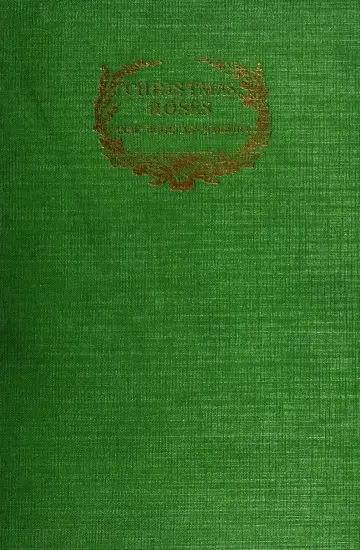
THE CLASSIC COLLECTION · 1920
"Christmas Roses and Other Stories" by Anne Douglas Sedgwick is a collection of fictional narratives written in the early 20th century. The opening story centers on Mrs. Delafield, a widowed and childless woman reflecting on her life while tending to Christmas roses in her garden, which symbolize resilience and hope amidst sorrow. As she grapples with memories of her losses and familial obligations, she is drawn into the complexities of her niece Rhoda's tumultuous relationships. The beginning of the story introduces Mrs. Delafield as she finds solace in her garden, particularly in the vibrant Christmas roses that bloom despite the winter chill. The flowers evoke memories of Christmas and life’s miracles, prompting her to draw parallels between their persistence and her own strength in the face of grief. As she prepares to address a troubling letter from her brother regarding Rhoda and her reckless romantic choices, the narrative hints at a family dynamic filled with expectation and concern, foreshadowing the potential impact Mrs. Delafield's decisions will have on her niece's future and the fragile bond between them.
Introduction adapted from the source catalogue; source summaries may be automatically generated.
Free to read · English · 95,137 words · No account needed
MAKE TIME FOR A GOOD BOOK
On by default. Untick to stop anonymous reading totals. Each page counts after 10 seconds in view. How this works.
Anonymous counting is on unless you have switched it off.
Her gentleness had always seemed contentment; this afternoon it seemed happiness, and he had never seen her look so young. He wondered if she were going to take him so dreadfully aback as not even to mention his poems; if she had simply forgotten them, too. Already her demeanour, unclouded, almost radiant, inflicted a wound; she had either forgotten, or she had cared little indeed, since she could look like that. But, after he had commented, consentingly, on the lovely hour, she went on with a change of tone, a voice a little shy, “I’ve read the poems. Thank you so much for letting me see them.”
“You read all of them?”
“Yes. I didn’t write my letters.”
“I hope you read them, then, because you cared for them.”
She didn’t answer for a moment, walking along and placing the small white feet carefully among the crocuses. “They are very sad,” she then said.
He was aware, after an instant of adjustment to the blow, that she made him very angry. Terrible, his poems, searing, scorching; wicked, if one would; but not sad.
“Oh!” he murmured; and he wondered if the divided feeling she had from the first roused in him had been this hatred, not perhaps of her, but of her unvarying acquiescence, her untroubled inadequacy.
“They interested me very much,” she said, feeling, no doubt, that, whatever he was, he was not pleased. “They made me see, I mean, all the things you have been through.”
“Sad things, you call them. You know, I rather feel as if I’d heard you
call hell sad.”
She looked up at him quickly, and it was now she who was taken aback and, as she had been the other day, at a loss. And, as on the other day, she found the same answer, though she offered it deprecatingly, feeling his displeasure. “But hell doesn’t exist.”
“Don’t you think anything horrible exists?”
They turned at the end of the meadow. It seemed to him, although he felt as if he hated her, that they were suddenly intimate in their antagonism. He would force that antagonism, and its intimacy, upon her--to its last implication.
“Horrible? Oh, yes, yes!” she said, startled, and that was, he reflected grimly, to the good. “But it would have to be irretrievable, wouldn’t it, to be hell?” she urged.
“Do you suggest that it’s not irretrievable? You own it’s horrible. Irretrievably horrible, I call it. And that’s what I call hell. Yet all that you can find to say of my poems is that they are sad.”
Your reading position is saved on this browser. Take it to another device with a library code. Reading pages adapt to text, rather than matching a printed edition.
Anne Douglas Sedgwick
Anne Douglas Sedgwick

Anne Douglas Sedgwick

Anne Douglas Sedgwick
BEHIND THE BOOK
This eBook is for the use of anyone anywhere in the United States and most other parts of the world at no cost and with almost no restrictions whatsoever. You may copy it, give it away or re-use it under the terms of the Project Gutenberg License included with this eBook or online at www.gutenberg.org. If you are not located in the United States, you will have to check the laws of the country where you are located before using this eBook. Read the source licence.
The original source file, including credits and licence, is retained by this library. Request an original-format copy at no charge. Please include the book title and Project Gutenberg identifier #40650.
KEEP YOUR CURIOSITY GOING
Coulson Kernahan

Maurice Baring
Frances Wright
Cécile Tormay

Frederic Jesup Stimson

W. H. P. (William Henry Pope) Jarvis