
Dark Hester
Anne Douglas Sedgwick
THE CLASSIC COLLECTION · 1920
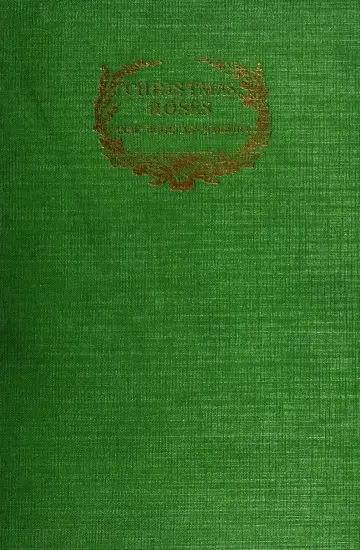
"Christmas Roses and Other Stories" by Anne Douglas Sedgwick is a collection of fictional narratives written in the early 20th century. The opening story centers on Mrs. Delafield, a widowed and childless woman reflecting on her life while tending to Christmas roses in her garden, which symbolize resilience and hope amidst sorrow. As she grapples with memories of her losses and familial obligations, she is drawn into the complexities of her niece Rhoda's tumultuous relationships. The beginning of the story introduces Mrs. Delafield as she finds solace in her garden, particularly in the vibrant Christmas roses that bloom despite the winter chill. The flowers evoke memories of Christmas and life’s miracles, prompting her to draw parallels between their persistence and her own strength in the face of grief. As she prepares to address a troubling letter from her brother regarding Rhoda and her reckless romantic choices, the narrative hints at a family dynamic filled with expectation and concern, foreshadowing the potential impact Mrs. Delafield's decisions will have on her niece's future and the fragile bond between them.
Introduction adapted from the source catalogue; source summaries may be automatically generated.
Free to read · English · 95,137 words · No account needed
MAKE TIME FOR A GOOD BOOK
On by default. Untick to stop anonymous reading totals. Each page counts after 10 seconds in view. How this works.
Anonymous counting is on unless you have switched it off.
“Well,” Aubrey continued, smiling his gentle, tentative smile, “my foxgloves, at all events, can’t take me in, and since they are so very unusual and so lovely I thought I’d ask a few people in to-day to see them. The Carews, you know, and Barton, and Mrs. and Miss Pickering. And you--if you can come. I’ll put it off till to-morrow, if that will secure you, only the foxgloves may not be quite so lovely by then.”
“I will come with pleasure, my dear Aubrey,” said Mrs. Pomfrey, “and though nobody will appreciate your foxgloves as you do, we shall all enjoy your tea.”
“Miss Pickering cares very much for flowers, you know, very much. We’ve talked a great deal about flowers,” said Aubrey, swinging his eyeglass and nodding as he looked at his old friend.
“Does she? She doesn’t know much about 'em though.”
“No; all those years in India, and in towns. She has lived so much in towns. Such an inappropriate life it seems for such an exquisite creature.”
“Does it?” said Mrs. Pomfrey. She added after a moment, as if with concession, “She is a very pretty girl.”
Aubrey Westmacott was not acute. “Isn’t she?” he said eagerly. “A beautiful and noble and lovely head, isn’t it? like a flower; she is altogether like a flower, with her slenderness and height. Do you know,” he went on, swinging his glasses more quickly, while he kept his ingenuous eyes on his friend, “can you guess the flower she makes me think of? In that pale pink dress, that pink dress she wore the other day at the rectory garden party, and with that white hat lined with pink. Can you guess?” His eyes overflowed with their suggestion.
Mrs. Pomfrey moved hers from his face to the foxgloves. “Like those, I
suppose you mean.”
“Isn’t she?” he repeated. “Now, isn’t it quite remarkable? You see it,
too.”
“Yes; I see it,” said Mrs. Pomfrey. She studied the flowers and again, after a deliberating pause, went on, “Do you think Mrs. Pickering is like purple foxgloves?”
Aubrey’s eyeglass tumbled from his hand. He was astonished, almost indignant. “Mrs. Pickering?”
“She looks like her daughter,” said Mrs. Pomfrey; “as much like her, that is, as a purple foxglove looks like a pink one.”
“I can imagine nothing more unlike a flower than Mrs. Pickering,” said Aubrey, with gathered repudiation.
“No; certainly; she’s not at all like a flower. She’s more like a sparrow--something sharp and commonplace and civic. I only intended an analogy, for she must have been a very pretty girl.”
Your reading position is saved on this browser. Take it to another device with a library code. Reading pages adapt to text, rather than matching a printed edition.
Anne Douglas Sedgwick
Anne Douglas Sedgwick

Anne Douglas Sedgwick

Anne Douglas Sedgwick
BEHIND THE BOOK
This eBook is for the use of anyone anywhere in the United States and most other parts of the world at no cost and with almost no restrictions whatsoever. You may copy it, give it away or re-use it under the terms of the Project Gutenberg License included with this eBook or online at www.gutenberg.org. If you are not located in the United States, you will have to check the laws of the country where you are located before using this eBook. Read the source licence.
The original source file, including credits and licence, is retained by this library. Request an original-format copy at no charge. Please include the book title and Project Gutenberg identifier #40650.
KEEP YOUR CURIOSITY GOING
Coulson Kernahan

Maurice Baring
Frances Wright
Cécile Tormay

Frederic Jesup Stimson

W. H. P. (William Henry Pope) Jarvis