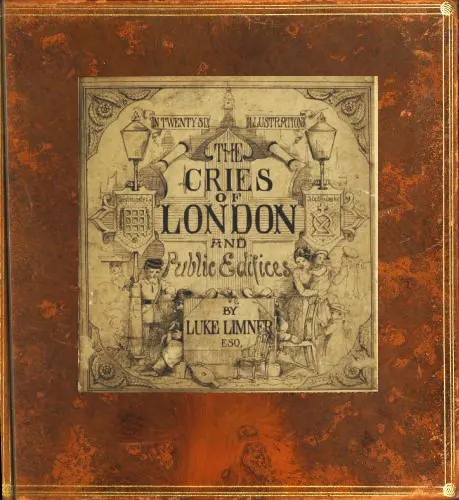
London Cries & Public Edifices
John Leighton
THE CLASSIC COLLECTION · 1850
"Christmas Comes but Once a Year" by John Leighton is a comedic narrative likely written in the late 19th century. The story follows the life of Mr. John Brown, a prosperous citizen of London, as he navigates the festive chaos of the Christmas season alongside his family and various quirky neighbors. The tale captures the humorous mishaps and social absurdities typical of Victorian holiday celebrations. The opening of the book sets the scene during a bleak Christmas season, introducing the Browns—Mr. Brown, his wife, and their two daughters, among other notable characters like the pompous Captain de Camp. The narrative paints a vivid picture of the Christmas preparations, complete with whimsical details about the family's home, social aspirations, and interactions with their neighbors. Mr. Brown is characterized as a well-meaning but bumbling figure, attempting to fulfill both familial and social obligations as absurdity reigns around him. The fun-infused prose hints at delightful humor and a critical look at society's quirks during the festive period while laying the groundwork for a story filled with mishaps and endearing moments.
Introduction adapted from the source catalogue; source summaries may be automatically generated.
Free to read · English · 23,671 words · No account needed
MAKE TIME FOR A GOOD BOOK
On by default. Untick to stop anonymous reading totals. Each page counts after 10 seconds in view. How this works.
Anonymous counting is on unless you have switched it off.
Now a knock brings more visitors, the Masters Young, in all the ungainliness of hobbledyhoyhood--that transmigratory period when coat-tails are first developed:--they have come with their sister Flora, a lovely bud, expected "out" next season. Here are the Bells, the Petits, and the little Larks, with their big brother, the "jolly Lark," who made his debut over the top of the drawing-room-door, standing upon the shoulders of your humble servant; who felt the "jolly Lark" anything but light, and no joke--though the juveniles must have thought it so, for we could hear their merry peals of laughter ringing joyously, dispelling the silence that had hitherto prevailed, overturning the sage injunctions of proper mammas, who teach their children to behave "pretty"--thinking good and quiet synonymous. Somehow, the little fellows, unfortunately, take the Lark for Mr. Spohf, who has hitherto done the funny in a refined style, scarcely to be imagined--an elegant, amiable, fun,--a mixture of the buffoon and gentleman, the sublime and the ridiculous, quite marvellous to behold,--making our little friend (who you are aware was moulded in one of Nature's odd freaks) appear, to tender imaginations, almost supernatural. The mistake and misplaced approbation is very galling to Mrs. Brown; so much so that she becomes angry with the tea-urn, and, in turn, burns her fingers--venting her ire in the shape of a box on the ears of Master Bold, who ventured to hint Mr. Spohf's absence a "jolly shame;" and, now vows to tell his mamma--a thing it is very evident Mrs. Brown does not wish, for she has shown a great deal of favour and contrition towards the young gentleman since.
The tea-tray having been removed, the burners of the chandelier heightened, and the Snuffle family had their row of little noses polished by the eldest sister, preparations begin:--Miss Jemima playing the pretty little "Hop o'my Thumb Polka," and Tom, who has been sitting very quietly beside Mercy Merry (vowing to marry her at fourteen, for "his father is so rich that he would give him five pounds a year to live upon"), leads off, much to the mortification of those boys who will not be "young gentlemen"--the many who won't, can't, and shan't dance! but, being bent upon mischief, dispose explosive spiders and chair-crackers about the carpet;--one little mischievous fellow wishing he had brought some pepper to strew on the floor, and make 'em sneeze; however, they get up a little excitement another way with the sofa-pillows, a sham fight, in which a parian Amazon falls beside Marian Bell, who "didn't go to do it;" so dancing is relinquished for games to suit all parties:--Hunt the Slipper, a sport carried on with great spirit, until it is found there are slippers enough for three--a thing everybody holds to be cheatery:--so that game is abandoned for Blind-man's-buff, the mere mention of which, carries us back to childhood; and, as authors often lug in their thoughts (bits of nature) very unceremoniously, and at odd times, we may, possibly, be pardoned or praised for so doing. Well, we never hear mention of this game but we think of a bump we once received during the sport, our blind ardour causing us to flounder in a fender, and bruise our head, the remains of which will be taken to the "long home." Well do we remember the spotted turban worn on that occasion--for we recollect, at the time, thinking "Belcher" a new term, just coined;--having our crown rubbed with brandy and taking a little internally, which appeared attracted by that externally, for it got in our head and made us very merry, causing the hiccups to such an extent, that we were called Sir Toby Belch of "Twelfth Night; or, What you Will" notoriety (having drawn that character). Thus, brandy, Belchers, and Blind-man's-buff, hold an indissoluble partnership in our memory--a remnant of those days when we imagined a Jew incapable of dealing in other merchandise than old clothes; or of shaving like a Christian, or, if he did, would do other than expose a pendant chin, resembling the vertebrae of a horse's tail. Oh! those days have flown--days when we imagined peas split by hand, and thought humanity fools for not making soup with whole ones--but we are sadly digressing!--"It's not fair!" cry twenty voices--"the blind man can see;" and so he could, for he always caught Miss Brown, who, afraid of the piano or pier-glass, would stand in the way:--so that sport is relinquished for cake and Characters; the former seeming to afford great gratification, and the latter little, save to the King and Queen--all other characters being, like the riddles, "given up,"--no one caring to know when a sailor is not a sailor?--when he's a-board: or to be bored with a door's being a-jar, and a man a-shaving.
Your reading position is saved on this browser. Take it to another device with a library code. Reading pages adapt to text, rather than matching a printed edition.
John Leighton
John Leighton
BEHIND THE BOOK
This eBook is for the use of anyone anywhere in the United States and most other parts of the world at no cost and with almost no restrictions whatsoever. You may copy it, give it away or re-use it under the terms of the Project Gutenberg License included with this eBook or online at www.gutenberg.org. If you are not located in the United States, you will have to check the laws of the country where you are located before using this eBook. Read the source licence.
The original source file, including credits and licence, is retained by this library. Request an original-format copy at no charge. Please include the book title and Project Gutenberg identifier #20251.
KEEP YOUR CURIOSITY GOING
Coulson Kernahan

Maurice Baring
Frances Wright
Cécile Tormay

Frederic Jesup Stimson

W. H. P. (William Henry Pope) Jarvis