THE CLASSIC COLLECTION✦The Story of Francis CluddeCLASSIC FREE BOOKS
The Story of Francis Cludde
Stanley John Weyman
THE CLASSIC COLLECTION · 1906
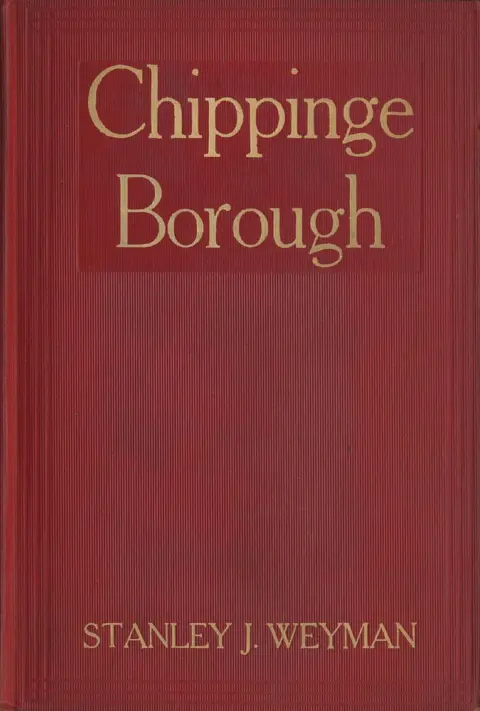
"Chippinge Borough" by Stanley John Weyman is a historical novel written in the early 20th century. It captures a tumultuous period in British politics surrounding the Reform Bill of 1831. The story follows the protagonist Arthur Vaughan, an ambitious young man with connections to an established Tory family, as he navigates the shifting tides of political sentiment and personal loyalty amid societal change. At the start of the novel, we meet Vaughan on a momentous day marked by the King's dissolution of Parliament, creating a backdrop of excitement and political fervor. In the crowded streets of London, Vaughan observes the reactions of the populace to this event, reflecting his own aspirations and the alarming reality of his family's influence. As he grapples with his identity and ambition, a chance encounter leads him to intervene in the path of a much-hated figure, further entangling him in both the political and personal conflicts of the coming elections. The opening establishes a compelling mix of intrigue, societal change, and character development that sets the stage for the unfolding drama in Chippinge Borough.
Introduction adapted from the source catalogue; source summaries may be automatically generated.
Free to read · English · 144,070 words · No account needed
MAKE TIME FOR A GOOD BOOK
On by default. Untick to stop anonymous reading totals. Each page counts after 10 seconds in view. How this works.
Anonymous counting is on unless you have switched it off.
“Because,” Miss Sibson replied, “the lady was not known to be in this part of England; and because you, sir, maintained that Miss Smith had left the parcel in the coach.”
“I maintained what I was told.”
“But it was not the fact. However, let that pass.”
“No,” Vaughan retorted, with some warmth. “For it seems to me, Madam, very extraordinary that in a matter which was capable of so simple an explanation you should have elected to insult a stranger—a stranger who——”
“Who was performing no more than an office of civility, you would say?”
“Precisely.”
“Well—yes.” Miss Sibson spoke slowly, and was silent for a moment after she had spoken. Then, somewhat abruptly, “You are an usher, I think,” she said, “at Mr. Bengough’s?”
Vaughan almost jumped in his chair. “I, Madam?” he cried. “Certainly
not!”
“Not at Mr. Bengough’s?”
“Certainly not!” he repeated, with indignation. Was the woman mad? An
usher? Good heavens!
“I know your name,” she said slowly. “But——”
“I came from London the day before yesterday. I am staying at the White Lion, and I am late of the 14th Dragoons.”
She raised her eyebrows. “Oh, indeed,” she said. “Is that so? Well,” rubbing a little of the powder from her nose with a needlecase, and looking at him very shrewdly, “I think,” she continued, “that that is the answer to your question.”
Vaughan stared.
“I do not understand you,” he said.
“Then I must speak more plainly. Were you an usher at Mr. Bengough’s your civility—civility, I think you called it?—to my assistant had passed very well, Mr. Vaughan. But the civility of a gentleman, late of the 14th Dragoons, fresh from London, and staying at the White Lion, to a young person in Miss Smith’s position is apt, as in this case—eh?—to lead to misconstruction.”
“You do me an injustice!” he said, reddening to the roots of his hair.
“Possibly, possibly,” Miss Sibson said. But on that, without warning, she gave way to a fit of silent laughter, which caused her portly form to shake like a jelly. It was a habit with her, attributed by some to her private view of Mrs. Chapone’s famous letters on the improvement of the mind; by others, to that knowledge of the tricks and turns of her sex with which thirty years of schoolkeeping had endowed her.
No doubt the face of rueful resentment with which Arthur Vaughan regarded her did not shorten the fit. But at last, “Young gentleman,” she said, “you do not deceive me! You did not come here to-day merely to hear an old woman make an apology.”
Your reading position is saved on this browser. Take it to another device with a library code. Reading pages adapt to text, rather than matching a printed edition.
Stanley John Weyman
Stanley John Weyman
Stanley John Weyman
Stanley John Weyman
BEHIND THE BOOK
This eBook is for the use of anyone anywhere in the United States and most other parts of the world at no cost and with almost no restrictions whatsoever. You may copy it, give it away or re-use it under the terms of the Project Gutenberg License included with this eBook or online at www.gutenberg.org. If you are not located in the United States, you will have to check the laws of the country where you are located before using this eBook. Read the source licence.
The original source file, including credits and licence, is retained by this library. Request an original-format copy at no charge. Please include the book title and Project Gutenberg identifier #38871.
KEEP YOUR CURIOSITY GOING
Cécile Tormay

Moritz Busch
Coulson Kernahan
John L. Ransom

Maurice Baring
Frances Wright