THE CLASSIC COLLECTION✦The Story of Francis CluddeCLASSIC FREE BOOKS
The Story of Francis Cludde
Stanley John Weyman
THE CLASSIC COLLECTION · 1906
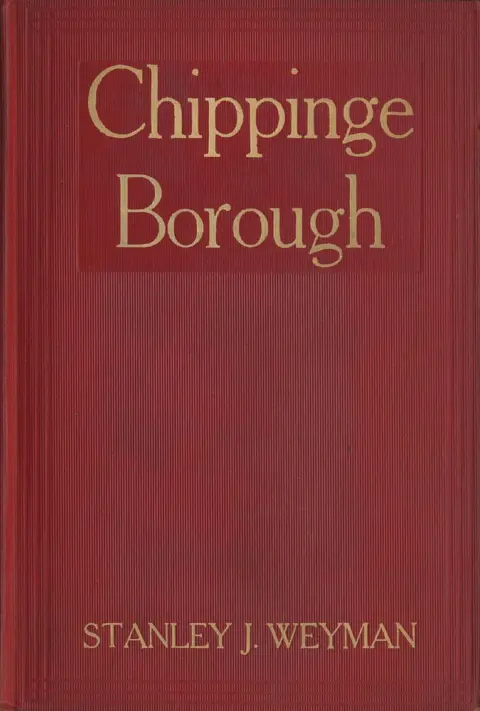
"Chippinge Borough" by Stanley John Weyman is a historical novel written in the early 20th century. It captures a tumultuous period in British politics surrounding the Reform Bill of 1831. The story follows the protagonist Arthur Vaughan, an ambitious young man with connections to an established Tory family, as he navigates the shifting tides of political sentiment and personal loyalty amid societal change. At the start of the novel, we meet Vaughan on a momentous day marked by the King's dissolution of Parliament, creating a backdrop of excitement and political fervor. In the crowded streets of London, Vaughan observes the reactions of the populace to this event, reflecting his own aspirations and the alarming reality of his family's influence. As he grapples with his identity and ambition, a chance encounter leads him to intervene in the path of a much-hated figure, further entangling him in both the political and personal conflicts of the coming elections. The opening establishes a compelling mix of intrigue, societal change, and character development that sets the stage for the unfolding drama in Chippinge Borough.
Introduction adapted from the source catalogue; source summaries may be automatically generated.
Free to read · English · 144,070 words · No account needed
MAKE TIME FOR A GOOD BOOK
On by default. Untick to stop anonymous reading totals. Each page counts after 10 seconds in view. How this works.
Anonymous counting is on unless you have switched it off.
“She’s no one I know, sir. After one of the men, perhaps.”
Sir Robert straightened himself. He had spent a bad ten minutes gazing at the distant figure. “Just so,” he said. “Very likely. And now what is it, White?”
“I’ve bad news, sir, I’m afraid,” the agent said, in an altered tone.
“What is it?”
“It’s that d——d Pybus, sir! I’m afraid that, after all——”
“They’re going to fight?”
“I’m afraid, Sir Robert, they are.”
The old gentleman’s eyes gleamed. “Afraid, sir, afraid?” he cried. “On the contrary, so much the better. It will cost me some money, but I can spare it; and it will cost them more, and nothing for it. Afraid? I don’t understand you.”
The agent, standing on the step below him, coughed dubiously. “Well, sir,” he said, “what you say is reasonable. But——”
“But! But what?”
“There is so much excitement in the country at this time——”
“So much greediness in the country,” Sir Robert retorted, striking his stick upon the stone steps. “So much unscrupulousness, sir; so many liars promising, and so many fools listening; so much to get, and so many who would like it! There’s all that, if you please; but for excitement, I don’t know”—with a severe look—“what you mean, or what it has to do with us.”
“I am afraid, sir, there is bad news from Devon, where it is said our candidate is retiring.”
“A good man, but weak; neither one side nor the other.”
“And from Dorset, sir, where they say Mr. Bankes will be beaten.”
“I’ll not believe it,” Sir Robert answered positively. “I’ll never believe it. Mr. Bankes beaten in Dorset! Absurd! Why do you listen to such tales? Why do you listen? By G—d, White, what is the matter with you? Or how does it touch us if Mr. Bankes is beaten? Nine votes to four! Nine will still be nine, and four four, if he be beaten. When you can make four to be more than nine you may come whining to me!”
White coughed. “Dyas, the butcher——”
“What of him?”
“Well, Sir Robert, I am afraid he has been getting some queer notions.”
“Notions?” the baronet echoed in astonishment.
“He has been listening to someone, and—and thinks he has views on the
Bill.”
Sir Robert exploded. “Views!” he cried. “Views! The butcher with views! Why, damme, White, you must be mad! Mad! Since when have butchers taken to politics, or had views?”
“I don’t know anything about that, sir,” White mumbled.
Your reading position is saved on this browser. Take it to another device with a library code. Reading pages adapt to text, rather than matching a printed edition.
Stanley John Weyman

Stanley John Weyman
Stanley John Weyman
Stanley John Weyman
BEHIND THE BOOK
This eBook is for the use of anyone anywhere in the United States and most other parts of the world at no cost and with almost no restrictions whatsoever. You may copy it, give it away or re-use it under the terms of the Project Gutenberg License included with this eBook or online at www.gutenberg.org. If you are not located in the United States, you will have to check the laws of the country where you are located before using this eBook. Read the source licence.
The original source file, including credits and licence, is retained by this library. Request an original-format copy at no charge. Please include the book title and Project Gutenberg identifier #38871.
KEEP YOUR CURIOSITY GOING
Cécile Tormay

Moritz Busch
Coulson Kernahan
John L. Ransom

Maurice Baring
Frances Wright