THE CLASSIC COLLECTION✦The Story of Francis CluddeCLASSIC FREE BOOKS
The Story of Francis Cludde
Stanley John Weyman
THE CLASSIC COLLECTION · 1906
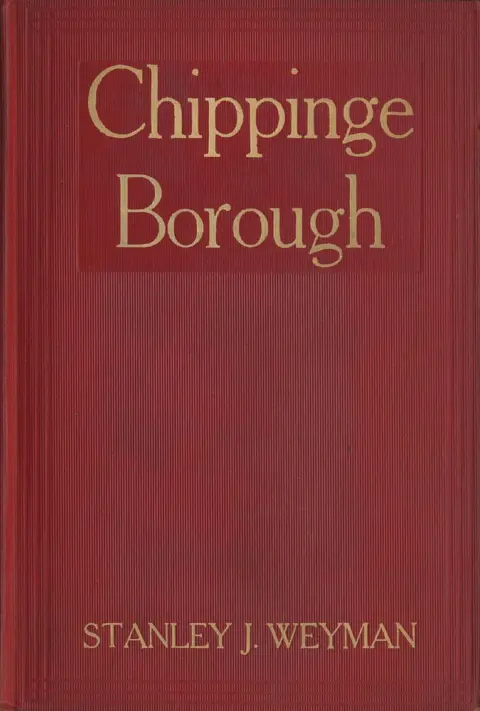
"Chippinge Borough" by Stanley John Weyman is a historical novel written in the early 20th century. It captures a tumultuous period in British politics surrounding the Reform Bill of 1831. The story follows the protagonist Arthur Vaughan, an ambitious young man with connections to an established Tory family, as he navigates the shifting tides of political sentiment and personal loyalty amid societal change. At the start of the novel, we meet Vaughan on a momentous day marked by the King's dissolution of Parliament, creating a backdrop of excitement and political fervor. In the crowded streets of London, Vaughan observes the reactions of the populace to this event, reflecting his own aspirations and the alarming reality of his family's influence. As he grapples with his identity and ambition, a chance encounter leads him to intervene in the path of a much-hated figure, further entangling him in both the political and personal conflicts of the coming elections. The opening establishes a compelling mix of intrigue, societal change, and character development that sets the stage for the unfolding drama in Chippinge Borough.
Introduction adapted from the source catalogue; source summaries may be automatically generated.
Free to read · English · 144,070 words · No account needed
MAKE TIME FOR A GOOD BOOK
On by default. Untick to stop anonymous reading totals. Each page counts after 10 seconds in view. How this works.
Anonymous counting is on unless you have switched it off.
“Ah, well, time and patience and Bellamy’s chops, Mr. Vaughan, will carry you far, I am sure.”
“It is on that subject—the subject of time—I venture to trouble your
lordship.”
The Chancellor’s lumpish but singularly mobile features underwent a change. Caught in a complacent, vain humour, he had forgotten a thing which, with Vaughan’s last words, recurred to him. “Yes?” he said, “yes, Mr. Vaughan?” But the timbre of that marvellously flexible voice with which he boasted that he could whisper so as to be heard to the very door of the House of Commons, was changed. “Yes, what is it, pray?”
“It is time I require,” Vaughan answered. “And, in fine, I have done some service, yeoman service, my lord, and I think that I ought not to be cast aside by the party in whose interest I was returned, and with whose objects I am in sympathy.”
“Cast aside? Tut, tut! What do you mean?”
“I am told that though the borough for which I sit will continue to return one member, I shall not have the support of the party in retaining my seat.”
“Indeed! Indeed!” Brougham answered, “Is it so? I am sorry to hear
that.”
“But——”
“Very sorry, Mr. Vaughan.”
“But, with submission, my lord, it is something more than sorrow I seek,” Vaughan answered, too sore to hide his feelings. “You have owned very candidly that I derived from you the impulse which has carried me so far. Is it unreasonable if I venture to turn to you, when advised to see one of the chiefs of my party?”
“Who,” Brougham asked with a quick look, “gave you that advice, Mr.
Vaughan?”
“Sir Charles Wetherell.”
“Um!” the Chancellor replied through pinched lips. And he stood, “they had crossed Piccadilly and Berkeley Square, and had reached the corner of Hill Street, where at No. 5, Brougham lived.
“I repeat, my lord,” Vaughan continued, “is it unreasonable if I apply to you in these circumstances, rather——”
“Rather than to one of the whips?” Brougham said drily.
“Yes.”
“But I know nothing of the matter, Mr. Vaughan.”
But Vaughan was in no mood to put up with subterfuges. If the other did not know, he should know. He had been all-powerful, it seemed, to bring him in: was he powerless to keep him in? “There is a compact, I am told,” he said, “under which the seat is to be surrendered—for this turn, at any rate—to my cousin’s nominee.”
Your reading position is saved on this browser. Take it to another device with a library code. Reading pages adapt to text, rather than matching a printed edition.
Stanley John Weyman

Stanley John Weyman
Stanley John Weyman
Stanley John Weyman
BEHIND THE BOOK
This eBook is for the use of anyone anywhere in the United States and most other parts of the world at no cost and with almost no restrictions whatsoever. You may copy it, give it away or re-use it under the terms of the Project Gutenberg License included with this eBook or online at www.gutenberg.org. If you are not located in the United States, you will have to check the laws of the country where you are located before using this eBook. Read the source licence.
The original source file, including credits and licence, is retained by this library. Request an original-format copy at no charge. Please include the book title and Project Gutenberg identifier #38871.
KEEP YOUR CURIOSITY GOING
Cécile Tormay

Moritz Busch
Coulson Kernahan
John L. Ransom

Maurice Baring
Frances Wright