THE CLASSIC COLLECTION✦The Story of Francis CluddeCLASSIC FREE BOOKS
The Story of Francis Cludde
Stanley John Weyman
THE CLASSIC COLLECTION · 1906
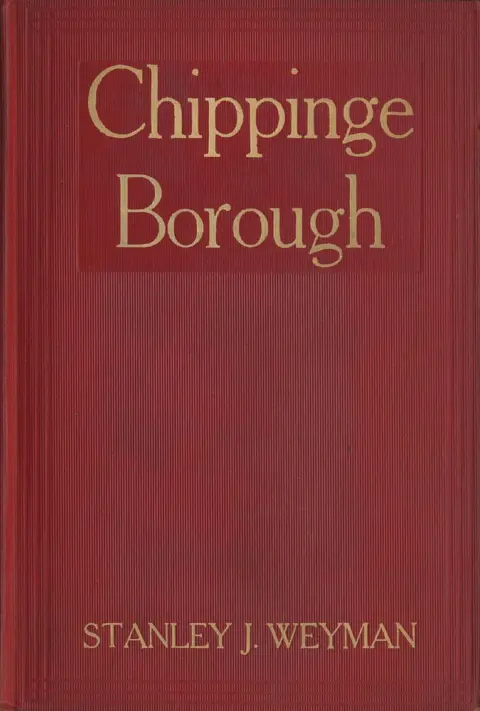
"Chippinge Borough" by Stanley John Weyman is a historical novel written in the early 20th century. It captures a tumultuous period in British politics surrounding the Reform Bill of 1831. The story follows the protagonist Arthur Vaughan, an ambitious young man with connections to an established Tory family, as he navigates the shifting tides of political sentiment and personal loyalty amid societal change. At the start of the novel, we meet Vaughan on a momentous day marked by the King's dissolution of Parliament, creating a backdrop of excitement and political fervor. In the crowded streets of London, Vaughan observes the reactions of the populace to this event, reflecting his own aspirations and the alarming reality of his family's influence. As he grapples with his identity and ambition, a chance encounter leads him to intervene in the path of a much-hated figure, further entangling him in both the political and personal conflicts of the coming elections. The opening establishes a compelling mix of intrigue, societal change, and character development that sets the stage for the unfolding drama in Chippinge Borough.
Introduction adapted from the source catalogue; source summaries may be automatically generated.
Free to read · English · 144,070 words · No account needed
MAKE TIME FOR A GOOD BOOK
On by default. Untick to stop anonymous reading totals. Each page counts after 10 seconds in view. How this works.
Anonymous counting is on unless you have switched it off.
“But you can easily understand this, Mary,” he replied. “That young girls of your age, without experience of life or of—of the darker side of things, cannot be allowed to judge for themselves on all occasions. There are sometimes circumstances to be weighed which it is not possible to detail to them.”
She closed her eyes for an instant, to collect her thoughts.
“But—but, sir,” she said, “you cannot wish me to have no will—no choice—in a matter which affects me so nearly.”
“No,” he said, speaking seriously and with something approaching sternness. “But that will and that choice must be guided. They should be guided. Your feelings are natural—God forbid that I should think them otherwise! But you must leave the decision to me.”
She looked at him, aghast. She had heard, but had never believed, that in the upper classes matches were arranged after this fashion. But to have no will and no choice in such a thing as marriage! She must be dreaming.
“You cannot,” he continued, looking at her firmly but not unkindly, “have either the knowledge of the past,” with a slight grimace, as of pain, “or the experience needful to enable you to measure the result of the step you take. You must, therefore, let your seniors decide for you.”
“But I could never—never,” she answered, with a deep blush, “marry a man without—liking him, sir.”
“Marry?” Sir Robert repeated. He stared at her.
She returned the look. “I thought, sir,” she faltered, with a still deeper blush, “that you were talking of that.”
“My dear,” he said, gravely, “I am referring to the subject on which I understood that you requested Miss Sibson to speak to me.”
“My mother?” she whispered, the colour fading quickly from her face.
He paused a moment. Then, “You would oblige me,” he said, slowly and formally, “by calling her Lady Sybil Vermuyden. And not—that.”
“But she is—my mother,” she persisted.
He looked at her, his head slightly bowed, his lower lip thrust out. “Listen,” he said, with decision. “What you propose—to go to her, I mean—is impossible. Impossible, you understand. There must be an end of any thought of it!” His tone was cold, but not unkind. “The thing must not be mentioned again, if you please,” he added.
She was silent a while. Then, “Why, sir?” she asked. She spoke
tremulously, and with an effort. But he had not expected her to speak
at all.
Yet he merely continued, as he stood on the hearth rug, to look at her askance. “That is for me,” he said, “to decide.”
“But——”
Your reading position is saved on this browser. Take it to another device with a library code. Reading pages adapt to text, rather than matching a printed edition.
Stanley John Weyman
Stanley John Weyman
Stanley John Weyman
Stanley John Weyman
BEHIND THE BOOK
This eBook is for the use of anyone anywhere in the United States and most other parts of the world at no cost and with almost no restrictions whatsoever. You may copy it, give it away or re-use it under the terms of the Project Gutenberg License included with this eBook or online at www.gutenberg.org. If you are not located in the United States, you will have to check the laws of the country where you are located before using this eBook. Read the source licence.
The original source file, including credits and licence, is retained by this library. Request an original-format copy at no charge. Please include the book title and Project Gutenberg identifier #38871.
KEEP YOUR CURIOSITY GOING
Cécile Tormay

Moritz Busch
Coulson Kernahan
John L. Ransom

Maurice Baring
Frances Wright