THE CLASSIC COLLECTION✦The Story of Francis CluddeCLASSIC FREE BOOKS
The Story of Francis Cludde
Stanley John Weyman
THE CLASSIC COLLECTION · 1906
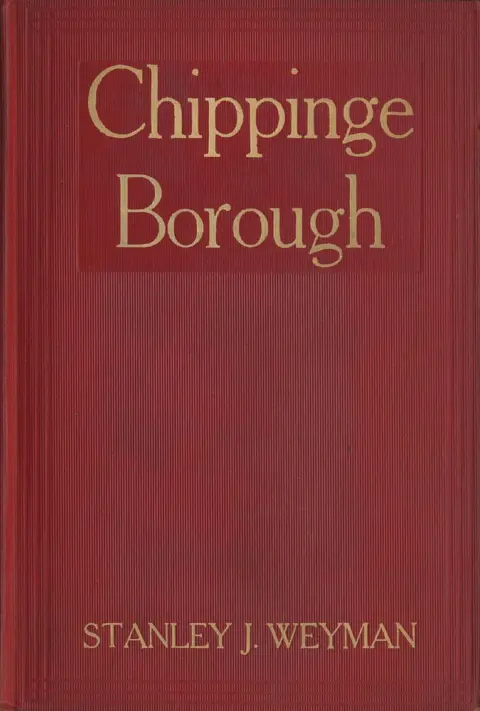
"Chippinge Borough" by Stanley John Weyman is a historical novel written in the early 20th century. It captures a tumultuous period in British politics surrounding the Reform Bill of 1831. The story follows the protagonist Arthur Vaughan, an ambitious young man with connections to an established Tory family, as he navigates the shifting tides of political sentiment and personal loyalty amid societal change. At the start of the novel, we meet Vaughan on a momentous day marked by the King's dissolution of Parliament, creating a backdrop of excitement and political fervor. In the crowded streets of London, Vaughan observes the reactions of the populace to this event, reflecting his own aspirations and the alarming reality of his family's influence. As he grapples with his identity and ambition, a chance encounter leads him to intervene in the path of a much-hated figure, further entangling him in both the political and personal conflicts of the coming elections. The opening establishes a compelling mix of intrigue, societal change, and character development that sets the stage for the unfolding drama in Chippinge Borough.
Introduction adapted from the source catalogue; source summaries may be automatically generated.
Free to read · English · 144,070 words · No account needed
MAKE TIME FOR A GOOD BOOK
On by default. Untick to stop anonymous reading totals. Each page counts after 10 seconds in view. How this works.
Anonymous counting is on unless you have switched it off.
Brougham laid down the book and rubbed his chin. “Under those circumstances,” he said, after musing a while, “don’t you think that your cousin could be persuaded to return you as an independent member?”
Vaughan shook his head with decision.
“The matter is important,” the Chancellor continued slowly, and as if he weighed his words. “I cannot precisely make a promise, Mr. Vaughan; but if your cousin could see the question of the Bill in another light, I have little doubt that any object in reason could be secured for him. If, for instance, it should be necessary in passing the Bill through the Upper House to create new—eh?”
He paused, looking at Vaughan, who laughed outright. “Sir Robert would not cross the park to save my life, my lord,” he said. “And I am sure he would rather hang outside the White Lion in Chippinge marketplace than resign his opinions or his borough!”
“He’ll lose the latter, whether or no,” Brougham answered, with a touch of irritation. “Was there not some trouble about his wife? I think I remember something.”
“They were separated many years ago.”
“She is alive, is she not?”
“Yes.”
Brougham saw, perhaps, that the subject was not palatable, and he abandoned it. With an abrupt change of manner he flung the books from him with the recklessness of a boy, and raised his sombre figure to its height. “Well, well,” he said, “I hoped for better things; but I fear, as Tommy Moore sings—
“He’s pledged himself, though sore bereft
Of ways and means of ruling ill,
To make the most of what are left
And stick to all that’s rotten still!
And by the Lord, I don’t say that I don’t respect him. I respect every man who votes honestly as he thinks.” And grandly, with appropriate gestures, he spouted:
“Who spurns the expedient for the right
Scorns money’s all-attractive charms,
And through mean crowds that clogged his flight
Has nobly cleared his conquering arms.
That’s the Attorney-General’s. He turns old Horace well, doesn’t he?”
Vaughan coloured. Young and candid, he could not bear the thought of taking credit where he did not deserve it. “I fear,” he said awkwardly, “that would bear rather hardly on me if we had a contest at Chippinge, my lord. Fortunately it is unlikely.”
“How would it bear hardly on you?” Brougham asked, with interest.
“I have a vote.”
“You are one of the twelve burgesses?” in a tone of surprise.
“Yes, by favour of Sir Robert.”
Your reading position is saved on this browser. Take it to another device with a library code. Reading pages adapt to text, rather than matching a printed edition.
Stanley John Weyman

Stanley John Weyman
Stanley John Weyman
Stanley John Weyman
BEHIND THE BOOK
This eBook is for the use of anyone anywhere in the United States and most other parts of the world at no cost and with almost no restrictions whatsoever. You may copy it, give it away or re-use it under the terms of the Project Gutenberg License included with this eBook or online at www.gutenberg.org. If you are not located in the United States, you will have to check the laws of the country where you are located before using this eBook. Read the source licence.
The original source file, including credits and licence, is retained by this library. Request an original-format copy at no charge. Please include the book title and Project Gutenberg identifier #38871.
KEEP YOUR CURIOSITY GOING
Cécile Tormay

Moritz Busch
Coulson Kernahan
John L. Ransom

Maurice Baring
Frances Wright