THE CLASSIC COLLECTION✦The Story of Francis CluddeCLASSIC FREE BOOKS
The Story of Francis Cludde
Stanley John Weyman
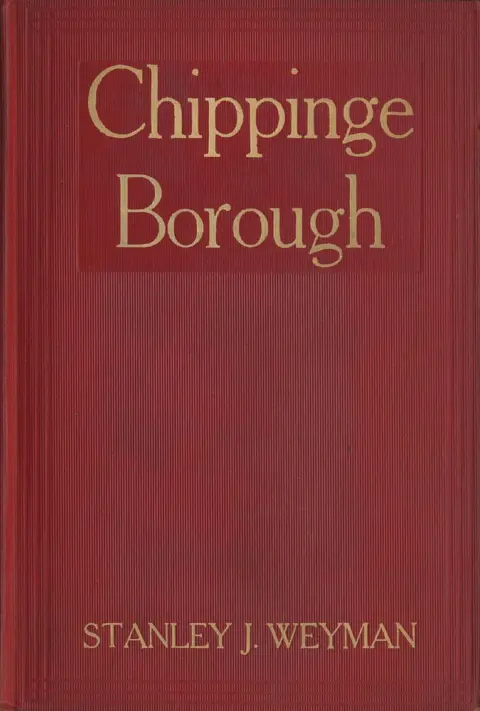
THE CLASSIC COLLECTION · 1906
"Chippinge Borough" by Stanley John Weyman is a historical novel written in the early 20th century. It captures a tumultuous period in British politics surrounding the Reform Bill of 1831. The story follows the protagonist Arthur Vaughan, an ambitious young man with connections to an established Tory family, as he navigates the shifting tides of political sentiment and personal loyalty amid societal change. At the start of the novel, we meet Vaughan on a momentous day marked by the King's dissolution of Parliament, creating a backdrop of excitement and political fervor. In the crowded streets of London, Vaughan observes the reactions of the populace to this event, reflecting his own aspirations and the alarming reality of his family's influence. As he grapples with his identity and ambition, a chance encounter leads him to intervene in the path of a much-hated figure, further entangling him in both the political and personal conflicts of the coming elections. The opening establishes a compelling mix of intrigue, societal change, and character development that sets the stage for the unfolding drama in Chippinge Borough.
Introduction adapted from the source catalogue; source summaries may be automatically generated.
Free to read · English · 144,070 words · No account needed
MAKE TIME FOR A GOOD BOOK
On by default. Untick to stop anonymous reading totals. Each page counts after 10 seconds in view. How this works.
Anonymous counting is on unless you have switched it off.
The Alderman, Annibal, Dewell, the clerk, the sexton, and Arthur Vaughan. White totted them up again and again and made them six. The Bowood voters he made five—four stalwarts and Dyas the butcher.
Certainly he might still poll Pillinger. But, on the other hand, Mr. Vaughan might arrive too late. White had written to his address in town, and receiving no answer had sent an express to Bristol on the chance that the young gentleman was still there. Probably he would be in time. But when things are so very close—and when there were alarm and defeat in the air—men grow nervous. White smiled as he chatted with the pompous Rector and the country squires, but he was very anxious. He thought of old Sir Robert at Stapylton, and he sweated at the notion of defeat. Cobbett had reached his mind, but Sir Robert had his heart!
“Boo!” moaned the crowd higher up the street. The sound sank and the harsh voice of a speaker came fitfully over the heads of the people.
“Who’s that?” asked old Squire Rowley, one of the country gentlemen.
“Some spouter from Bristol, sir, I fancy,” the agent replied contemptuously. And with his eye he whipped in a couple of hobbledehoys who seemed inclined to stray towards the enemy.
“I suppose,” the Squire continued, lowering his voice, “you can depend on your men, White?”
“Oh, Lord, yes, sir,” White answered; like a good election agent he took no one into his confidence. “We’ve enough here to do the trick. Besides, young Mr. Vaughan will be here to-morrow, and the landlord of the Blue Duck, who is not well enough to walk to-day, will poll. He’d break his heart, bless you,” White continued, with a brow of brass, “if he could not vote for Sir Robert!”
“Seven to five.”
“Seven to four, sir.”
“But Dyas, I hear, the d——d rogue, will vote against you?”
White winked.
“Bad,” he said cryptically, “but not as bad as that, sir.”
“Oh! oh!” quoth the other, nodding, “I see.” And then, glancing at the gang before the cloth works, whose taunts of “Flunkies!” and “Sell your birthright, will you?” were constant and vicious, “You’ve no fear there’ll be violence, White?” he asked.
“Lord, no, sir,” White answered; “you know what election rows are, all bark and no bite!”
“Still I hear that at Bath, where I’m told Lord Brecknock stands a poor chance, they are afraid of a riot.”
“Ay, ay, sir,” White answered indifferently, “this isn’t Bath.”
Your reading position is saved on this browser. Take it to another device with a library code. Reading pages adapt to text, rather than matching a printed edition.
Stanley John Weyman

Stanley John Weyman
Stanley John Weyman
Stanley John Weyman
BEHIND THE BOOK
This eBook is for the use of anyone anywhere in the United States and most other parts of the world at no cost and with almost no restrictions whatsoever. You may copy it, give it away or re-use it under the terms of the Project Gutenberg License included with this eBook or online at www.gutenberg.org. If you are not located in the United States, you will have to check the laws of the country where you are located before using this eBook. Read the source licence.
The original source file, including credits and licence, is retained by this library. Request an original-format copy at no charge. Please include the book title and Project Gutenberg identifier #38871.
KEEP YOUR CURIOSITY GOING
Cécile Tormay

Moritz Busch
Coulson Kernahan
John L. Ransom

Maurice Baring
Frances Wright