THE CLASSIC COLLECTION✦The sprightly romance of MarsacCLASSIC FREE BOOKS
The sprightly romance of Marsac
Molly Elliot Seawell
THE CLASSIC COLLECTION · 1893
"Children of Destiny" by Molly Elliot Seawell is a historical novel written in the late 19th century. Set in the rural landscapes of Virginia, the book explores themes of social dynamics, personal ambition, and romantic entanglements through the lives of its characters, particularly focusing on Richard Skelton and young Lewis Pryor. The narrative delves into the complexities of relationships in a society marked by class distinctions and personal rivalries. The opening portion vividly paints a picturesque setting during harvest time at Deerchase, establishing a backdrop of beauty and simplicity. We are introduced to Lewis, a young boy overwhelmed by his thoughts while under the care of his tutor, Mr. Bulstrode, who provides a colorful contrast with his eccentric views on life and philosophy. Tension quickly builds with the arrival of Richard Skelton, a man of both status and unresolved conflicts, hinting at complex relationships, particularly with Elizabeth Blair and her husband Jack. The various character dynamics and social expectations are set against the rich tapestry of the Virginia landscape, promising a story filled with emotional depth and interpersonal drama.
Introduction adapted from the source catalogue; source summaries may be automatically generated.
Free to read · English · 92,831 words · No account needed
MAKE TIME FOR A GOOD BOOK
On by default. Untick to stop anonymous reading totals. Each page counts after 10 seconds in view. How this works.
Anonymous counting is on unless you have switched it off.
“I see the necessity for right living, Mr. Conyers, for right feeling; but--there is something more. I know it as well as you.”
Conyers’s glance sought Sylvia’s. Usually his eyes were rather cold and expressionless, but now they were full of a strange distress, an untold misery. Here was the first human being who had ever asked him for knowledge, and he was as helpless to answer her as a little child. And he aspired to be a teacher of men! He went home and studied furiously at some expurgated copies of the Fathers he possessed, and at a few more or less acute commentaries upon them: they did not give him one ray of light. He had two or three one-sided histories of the Reformation: these he read, and cast them aside in disgust. The readiness with which creeds were made, changed, made again, in the fifteenth century had always astounded and disheartened him. The old, old difficulty came back to him--provision was made everywhere for man’s moral nature, and he earnestly believed that provision had been made for man’s spiritual nature, but he could not find that provision in the narrow sphere to which his learning and his observation was confined. But cast, as he was, upon a vast and unknown sea of doubt, and feeling that he knew nothing, and could explain nothing, he confined himself to a plain and evangelical style of preaching and an ascetic strictness of life. He made some vain appeals for help from his ecclesiastical superior, the bishop, but the bishop plainly did not understand what Conyers was after, and bade him rather sharply to cease from troubling. He reminded Conyers of what a good salary Abingdon church paid him, and in what a very agreeable and hospitable community his lot was cast. As for the salary, it was very good on paper. But the laity had a fearful power over the clergy, for all of a clergyman’s comfort depended upon whether he made himself agreeable to his parishioners or not. Conyers found this the most harrowing, debasing, unapostolic circumstance in all his long list of miseries. He earned a living, but he had trouble in getting it. He was distinctly unpopular, and one of his first acts after taking charge of the parish was calculated to foment his unpopularity. He had scruples about slavery, as he had about everything, for he was a man tormented by a devil of scrupulosity. He had inherited five negroes, and these he set free and commended them to God. The result was appalling. Of the five, two became confirmed criminals, two died of exposure and neglect of themselves, and one was hanged for murder. The planters, seeing their own well-fed, well-cared-for slaves around them, pointed to Conyers’s experiment with triumph. That was what freeing a lot of irresponsible half-monkeys meant! This humble tragedy haunted Conyers night and day, and almost drove him mad. Conyers had not been a young man when he was ordained, but after this he lost every vestige of youth. There were cruel hollows in his face, and his strange eyes grew more and more distressed in their expression. Nevertheless, he would not abandon any one of his theories and principles. The people were far from vindictive. On the contrary, they were singularly amiable and easy-going; and had they been any less easy-going, pastor and people would certainly have parted company. It would have required a concerted effort to get rid of him, and Conyers, although he would cheerfully have given up his daily bread for conscience’ sake, yet could not bear to part with his dream of being a teacher and preacher. And he knew what a discredited clergyman meant. So, alternately harassed with doubts and fixed in a dull despair, he presented that spectacle which the heathen philosopher declared to be the most touching sight in the world--a good man in adversity. His adversity had a practical side to it, too. As his congregation did not like him, they were lax about paying his salary. The pastors they were used to complained readily enough when the stipend was not forthcoming and drummed up delinquents briskly, which was a very good and wholesome thing for the delinquents; and it had not been so very long ago since the heavy hand of the law was laid upon parishioners who were forgetful of this. But the people waited for Conyers to remind them of what they owed, and he would rather have starved by inches than have asked them for a penny. So in this hospitable, delightful parish he was miserably, desperately poor. The only thing he wanted of his parishioners was what was due him, and that was the only thing they would not give him, for they were not ungenerous in other ways, and occasionally sent him bottles of Madeira when the rectory roof was leaking, and old Tom Shapleigh sent him regularly every winter a quarter of beef, which spoiled before the half of it was eaten. Conyers still took comfort in the tender emotional religion of some of the women, but Sylvia Shapleigh, whose restless mind traversed mental depths and heights unknown to most women, was the one, single, solitary person in the world who really understood why it was that Conyers was not a happy man. Sylvia herself, with a great flow of spirits and much wit and a ridiculously overrated beauty, was not happy either. Her good looks were overrated because she was so charming; but as she passed for a beauty it was all one. She had, it is true, a pair of lovely grey eyes, and a delicate complexion like a March primrose, and her walk was as graceful as the swallow’s flight. She was getting perilously fast out of her twenties, and there was apparently no more prospect of her marrying than at eighteen. Yet, just as people always expected Skelton to perform some wonderful intellectual achievement, so they still expected Sylvia to make a great match.
Your reading position is saved on this browser. Take it to another device with a library code. Reading pages adapt to text, rather than matching a printed edition.
Molly Elliot Seawell
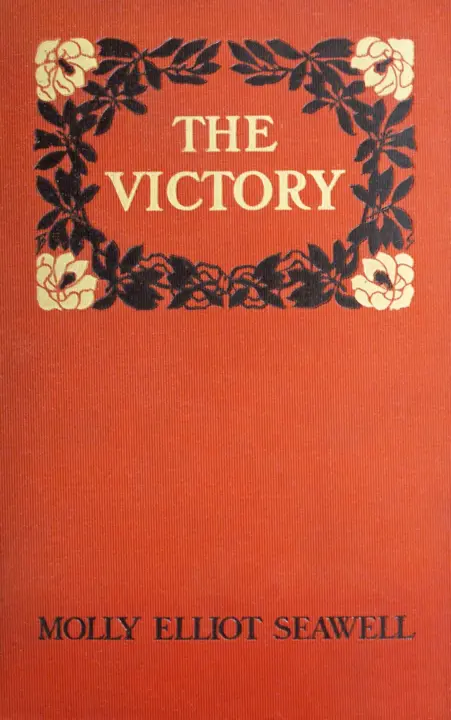
Molly Elliot Seawell

Molly Elliot Seawell
Molly Elliot Seawell
BEHIND THE BOOK
This eBook is for the use of anyone anywhere in the United States and most other parts of the world at no cost and with almost no restrictions whatsoever. You may copy it, give it away or re-use it under the terms of the Project Gutenberg License included with this eBook or online at www.gutenberg.org. If you are not located in the United States, you will have to check the laws of the country where you are located before using this eBook. Read the source licence.
The original source file, including credits and licence, is retained by this library. Request an original-format copy at no charge. Please include the book title and Project Gutenberg identifier #69193.
KEEP YOUR CURIOSITY GOING
Cécile Tormay

Moritz Busch
Coulson Kernahan
John L. Ransom

Maurice Baring
Frances Wright