THE CLASSIC COLLECTION✦Noah Webster American Men of LettersCLASSIC FREE BOOKS
Noah Webster American Men of Letters
Horace Elisha Scudder

THE CLASSIC COLLECTION · 1894
"Childhood in Literature and Art" by Horace E. Scudder is a study that likely delves into the depiction of childhood across various literary and artistic traditions, written in the late 19th century. The book explores the evolution of childhood as a theme in literature and art, examining its significance from ancient texts to the modern era. Scudder aims to demonstrate how literature for children emerged alongside a growing recognition of childhood as a distinct and vital stage of life. The opening of the work sets the stage for this exploration by suggesting that the acknowledgment of childhood in literature has only been pronounced since the late 18th century. Scudder reflects on how earlier works often overlooked children as significant characters, focusing instead on adults and their experiences. He discusses the gradual shift in perspectives, noting the increasing representation of childhood in literature, especially prominent with poets like Wordsworth. The introduction promises to consider various epochs, from Greek and Roman literature to English and American texts, providing a historical framework to understand the evolving perceptions of childhood.
Introduction adapted from the source catalogue; source summaries may be automatically generated.
Free to read · English · 51,175 words · No account needed
MAKE TIME FOR A GOOD BOOK
On by default. Untick to stop anonymous reading totals. Each page counts after 10 seconds in view. How this works.
Anonymous counting is on unless you have switched it off.
It is worth noting, then, that just when historical criticism, under the impulse of the Grimms, was ordering and accounting for these fragile creations,—a sure mark that they were ceasing to exist as living forms in literature,—Hans Christian Andersen should have come forward as master in a new order of stories, which may be regarded as the true literary successor to the old order of fairy tales, answering the demands of a spirit which rejects the pale ghost of the scientific or moral or jocular or pedantic fairy tale. Andersen, indeed, has invented fairy tales purely such, and has given form and enduring substance to traditional stories current in Scandinavia; but it is not upon such work that his real fame rests, and it is certain that while he will be mentioned in the biographical dictionaries as the writer of novels, poems, romances, dramas, sketches of travel, and an autobiography, he will be known and read as the author of certain short stories, of which the charm at first glance seems to be in the sudden discovery of life and humor in what are ordinarily regarded as inanimate objects, or what are somewhat compassionately called dumb animals. When we have read and studied the stories further, and perceived their ingenuity and wit and humane philosophy, we can after all give no better account of their charm than just this, that they disclose the possible or fancied parallel to human life carried on by what our senses tell us has no life, or our reason assures us has no rational power.
The life which Andersen sets before us is in fact a dramatic representation upon an imaginary stage, with puppets that are not pulled by strings, but have their own muscular and nervous economy. The life which he displays is not a travesty of human life, it is human life repeated in miniature under conditions which give a charming and unexpected variety. By some transmigration, souls have passed into tin-soldiers, balls, tops, beetles, money-pigs, coins, shoes, leap-frogs, matches, and even such attenuated individualities as darning-needles; and when, informing these apparently dead or stupid bodies, they begin to make manifestations, it is always in perfect consistency with the ordinary conditions of the bodies they occupy, though the several objects become by this endowment of souls suddenly expanded in their capacity. Perhaps in nothing is Andersen’s delicacy of artistic feeling better shown than in the manner in which he deals with his animated creations when they are brought into direct relations with human beings. The absurdity which the bald understanding perceives is dexterously suppressed by a reduction of all the factors to one common term. For example, in his story of The Leap-Frog, he tells how a flea, a grasshopper and a leap-frog once wanted to see which could jump highest, and invited the whole world “and everybody else besides who chose to come,” to see the performance. The king promised to give his daughter to the one who jumped the highest, for it was stale fun when there was no prize to jump for. The flea and the grasshopper came forward in turn and put in their claims; the leap-frog also appeared, but was silent. The flea jumped so high that nobody could see where he went to, so they all asserted that he had not jumped at all; the grasshopper jumped in the king’s face, and was set down as an ill-mannered thing; the leap-frog, after reflection, leaped into the lap of the princess, and thereupon the king said, “There is nothing above my daughter; therefore to bound up to her is the highest jump that can be made: but for this, one must possess understanding, and the leap-frog has shown that he has understanding. He is brave and intellectual.” “And so,” the story declares, “he won the princess.” The barren absurdity of a leap-frog marrying a princess is perhaps the first thing that strikes the impartial reader of this abstract, and there is very likely something offensive to him in the notion; but in the story itself this absurdity is so delightfully veiled by the succession of happy turns in the characterization of the three jumpers, as well as of the old king, the house-dog, and the old councilor “who had had three orders given him to make him hold his tongue,” that the final impression upon the mind is that of a harmonizing of all the characters, and the king, princess, and councilor can scarcely be distinguished in kind from the flea, grasshopper, leap-frog, and house-dog. After that, the marriage of the leap-frog and princess is quite a matter of course.
Your reading position is saved on this browser. Take it to another device with a library code. Reading pages adapt to text, rather than matching a printed edition.
Horace Elisha Scudder
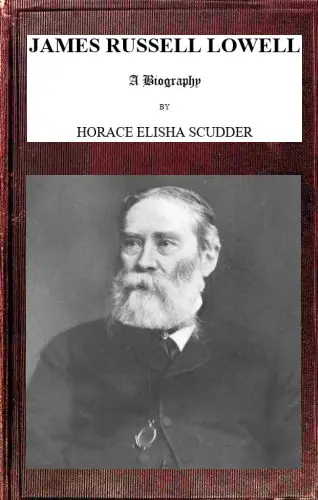
Horace Elisha Scudder
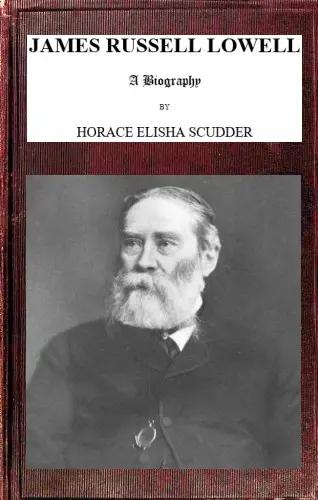
Horace Elisha Scudder
Horace Elisha Scudder
BEHIND THE BOOK
This eBook is for the use of anyone anywhere in the United States and most other parts of the world at no cost and with almost no restrictions whatsoever. You may copy it, give it away or re-use it under the terms of the Project Gutenberg License included with this eBook or online at www.gutenberg.org. If you are not located in the United States, you will have to check the laws of the country where you are located before using this eBook. Read the source licence.
The original source file, including credits and licence, is retained by this library. Request an original-format copy at no charge. Please include the book title and Project Gutenberg identifier #75367.
KEEP YOUR CURIOSITY GOING
Cécile Tormay

Moritz Busch
John L. Ransom
Frances Wright
Cécile Tormay

Mabel Potter Daggett