THE CLASSIC COLLECTION✦Noah Webster American Men of LettersCLASSIC FREE BOOKS
Noah Webster American Men of Letters
Horace Elisha Scudder

THE CLASSIC COLLECTION · 1894
"Childhood in Literature and Art" by Horace E. Scudder is a study that likely delves into the depiction of childhood across various literary and artistic traditions, written in the late 19th century. The book explores the evolution of childhood as a theme in literature and art, examining its significance from ancient texts to the modern era. Scudder aims to demonstrate how literature for children emerged alongside a growing recognition of childhood as a distinct and vital stage of life. The opening of the work sets the stage for this exploration by suggesting that the acknowledgment of childhood in literature has only been pronounced since the late 18th century. Scudder reflects on how earlier works often overlooked children as significant characters, focusing instead on adults and their experiences. He discusses the gradual shift in perspectives, noting the increasing representation of childhood in literature, especially prominent with poets like Wordsworth. The introduction promises to consider various epochs, from Greek and Roman literature to English and American texts, providing a historical framework to understand the evolving perceptions of childhood.
Introduction adapted from the source catalogue; source summaries may be automatically generated.
Free to read · English · 51,175 words · No account needed
MAKE TIME FOR A GOOD BOOK
On by default. Untick to stop anonymous reading totals. Each page counts after 10 seconds in view. How this works.
Anonymous counting is on unless you have switched it off.
In taking one step more from Sophocles to Euripides, there is food for thought in a new treatment of childhood. Whatever view one may choose to take of Euripides and his art in its relation to the heroic tragedy, there can be no question as to the nearness in which Euripides stands to the characters of his dramas, and this nearness is shown in nothing more than in the use which he makes of domestic life. With him, children are the necessary illustrations of humanity. Thus, in the Medea, when Medea is pleading with Creon for a respite of a day only from banishment, the argument which prevails is that which rests on pity for her little ones, and in the very centre of Medea’s vengeance is that passion for her children which bids her slay them rather than leave them
“Among their unfriends, to be trampled on.”
Again, in Alkestis, the last words of the heroine before she goes to her sacrifice are a demand of Admetus that the integrity of their home shall be preserved, and no step-dame take her place with the children. Both Alkestis and Admetus, in that wonderful scene, are imaged to the eye as part of a group, and, though the children themselves do not speak, the words and the very gestures are directed toward them.
Alkestis. My children, ye have heard your father’s pledge Never to set a step-dame over you, Or thrust me from the allegiance of his heart.
Admetus. What now I say shall never be unsaid.
Alkestis. Then here our children I entrust to thee.
Admetus. And I receive them as the gage of love.
Alkestis. Be thou a mother to them in my place.
Admetus. Need were, when such a mother has been lost.
Alkestis. Children, I leave you when I fain would live.
Admetus. Alas! what shall I do, bereft of thee?
Alkestis. Time will assuage thy grief: the dead are nought.
Admetus. Take, take me with thee to the underworld.
Alkestis. It is enough that I must die for thee.
Admetus. O Heaven! of what a partner I am reft!
Alkestis. My eyes grow dim and the long sleep comes on.
Admetus. I too am lost if thou dost leave me, wife.
Alkestis. Think of me as of one that is no more.
Admetus. Lift up thy face, quit not thy children dear.
Alkestis. Not willingly; but, children, fare ye well.
Admetus. Oh, look upon them, look!
Alkestis. My end is come.
Admetus. Oh, leave us not.
Alkestis. Farewell.
Admetus. I am undone.
Chorus. Gone, gone; thy wife, Admetus, is no more.[6]
Your reading position is saved on this browser. Take it to another device with a library code. Reading pages adapt to text, rather than matching a printed edition.
Horace Elisha Scudder
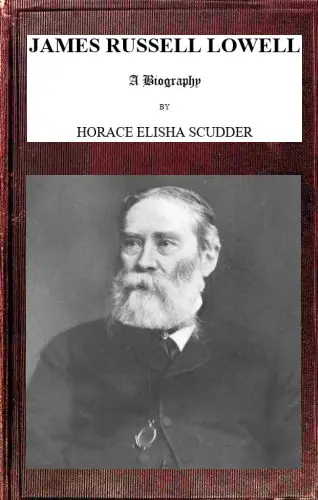
Horace Elisha Scudder
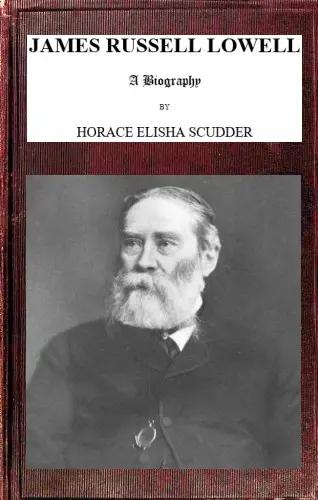
Horace Elisha Scudder
Horace Elisha Scudder
BEHIND THE BOOK
This eBook is for the use of anyone anywhere in the United States and most other parts of the world at no cost and with almost no restrictions whatsoever. You may copy it, give it away or re-use it under the terms of the Project Gutenberg License included with this eBook or online at www.gutenberg.org. If you are not located in the United States, you will have to check the laws of the country where you are located before using this eBook. Read the source licence.
The original source file, including credits and licence, is retained by this library. Request an original-format copy at no charge. Please include the book title and Project Gutenberg identifier #75367.
KEEP YOUR CURIOSITY GOING
Cécile Tormay

Moritz Busch
John L. Ransom
Frances Wright
Cécile Tormay

Mabel Potter Daggett