THE CLASSIC COLLECTION✦Noah Webster American Men of LettersCLASSIC FREE BOOKS
Noah Webster American Men of Letters
Horace Elisha Scudder

THE CLASSIC COLLECTION · 1894
"Childhood in Literature and Art" by Horace E. Scudder is a study that likely delves into the depiction of childhood across various literary and artistic traditions, written in the late 19th century. The book explores the evolution of childhood as a theme in literature and art, examining its significance from ancient texts to the modern era. Scudder aims to demonstrate how literature for children emerged alongside a growing recognition of childhood as a distinct and vital stage of life. The opening of the work sets the stage for this exploration by suggesting that the acknowledgment of childhood in literature has only been pronounced since the late 18th century. Scudder reflects on how earlier works often overlooked children as significant characters, focusing instead on adults and their experiences. He discusses the gradual shift in perspectives, noting the increasing representation of childhood in literature, especially prominent with poets like Wordsworth. The introduction promises to consider various epochs, from Greek and Roman literature to English and American texts, providing a historical framework to understand the evolving perceptions of childhood.
Introduction adapted from the source catalogue; source summaries may be automatically generated.
Free to read · English · 51,175 words · No account needed
MAKE TIME FOR A GOOD BOOK
On by default. Untick to stop anonymous reading totals. Each page counts after 10 seconds in view. How this works.
Anonymous counting is on unless you have switched it off.
To the mind of these early Christians the life of Jesus was compounded of holiness and supernatural power; so far as they distinguished these, the holiness was the cause of the power, and hence, when the imagination fashioned saints out of men and women, it followed the same course which it had taken with the Master. The childhood of the saints was an anticipation of maturer virtues and powers, rather than a manifestation of ingenuous innocence. There was a tendency to explain exceptional qualities in lives by extending them backward into youth, thereby gaining for them an apparent corroboration. The instances of this in the legends are frequent. Mothers, like the Virgin Mary, have premonitions that their children are to be in some special manner children of God, and the characteristics of later life are foreshadowed at birth. The Virgin herself was thus dealt with. The strong human feeling which subsequently, when the tenderness of Christ had been petrified into judgment, interposed the Virgin as mediator, found gratification in surrounding Mary’s infancy and childhood with a supernatural grace and power, the incidents in some cases being faint reflections of incidents in the life of her son; as when we are told that Joachim and Anna carried Mary, then three years old, to place her among the virgins in the temple of God. “And when she was put down before the doors of the temple, she went up the fifteen steps so swiftly that she did not look back at all; nor did she, as children are wont to do, seek for her parents. Whereupon her parents, each of them anxiously seeking for the child, were both alike astonished until they found her in the temple, and the priests of the temple themselves wondered.”
In like manner a halo of light played about S. Catherine’s head when she was born. The year of the birth of S. Elizabeth of Hungary was full of blessings to her country; the first words she uttered were those of prayer, and when three years old she gave signs of the charity which marked her life by giving her toys and garments to those less fortunate than herself. A pretty story is told of her betrothal to Prince Louis of Thuringia. Herman of Thuringia sent an embassy to the king of Hungary, desiring the little Elizabeth, then only four years old, for his son; and the maiden accompanied the embassy, carrying with her a silver cradle and silver bath, which her father had given her. She was betrothed to Louis, and the little pair played happily together in the same cradle. S. Genevieve of Paris was a maiden of seven, who tended a flock of sheep at the village of Narterre. Hither came S. Germain, and when the inhabitants were assembled to receive his benediction his eyes rested on the little shepherdess, and seeing her saintliness he set her apart as a bride of Christ. S. Gregory Nazianzen had a dream when he was a boy, in which two heavenly virgins of celestial beauty visited him: they were Chastity and Temperance, and so captivating was their presence, so winning were their words, that he awoke to take perpetual vows of continence. S. John Chrysostom was a dull boy at school, and so disturbed was he by the ridicule of his fellows that he went into a church to pray to the Virgin for help. A voice came from the image: “Kiss me on the mouth, and thou shalt be endowed with all learning.” He did this, and when he returned to his school-fellows they saw a golden circle about his mouth, and his eloquence and brilliancy astounded them. Martyrdom was the portion of these saintly children as well as of their elders. The story is told of Hilarion, one of the four children of Saturninus the priest, that when the proconsul of Carthage thought to have no difficulty in dealing with one of tender age, the child resisted all cajolings and threats. “I am a Christian,” said the little fellow. “I have been at the collect [that is, assisted as an acolyte], and it was of my own voluntary choice, without any compulsion.” Thereupon the proconsul, who was probably a father, threatened him, as the story runs, “with those little punishments with which children are accustomed to be chastised,” but the child only laughed at the idea of giving up his faith for fear of a whipping. “I will cut off your nose and ears!” shouted the exasperated inquisitor. “You may do it, but I shall be a Christian still,” replied the undaunted boy; and when he was ordered off to prison with the rest, he was heard to pipe forth, “God be thanked,” and so was led away.
Your reading position is saved on this browser. Take it to another device with a library code. Reading pages adapt to text, rather than matching a printed edition.
Horace Elisha Scudder
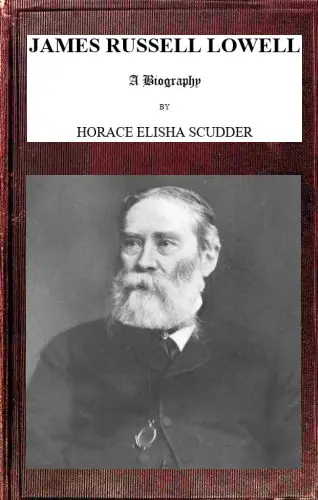
Horace Elisha Scudder
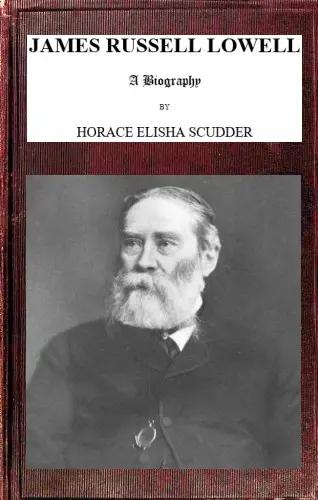
Horace Elisha Scudder
Horace Elisha Scudder
BEHIND THE BOOK
This eBook is for the use of anyone anywhere in the United States and most other parts of the world at no cost and with almost no restrictions whatsoever. You may copy it, give it away or re-use it under the terms of the Project Gutenberg License included with this eBook or online at www.gutenberg.org. If you are not located in the United States, you will have to check the laws of the country where you are located before using this eBook. Read the source licence.
The original source file, including credits and licence, is retained by this library. Request an original-format copy at no charge. Please include the book title and Project Gutenberg identifier #75367.
KEEP YOUR CURIOSITY GOING
Cécile Tormay

Moritz Busch
John L. Ransom
Frances Wright
Cécile Tormay

Mabel Potter Daggett