Chats on Old Silver
Arthur Hayden
THE CLASSIC COLLECTION · 1917
"Chats on Old Clocks" by Arthur Hayden is a historical account written in the early 20th century. This work explores the artistry and craftsmanship of old clocks, focusing particularly on English domestic clocks and their makers. It provides insights into the evolution of clock design and construction, the notable clockmakers of the past, and the significance of different styles and mechanisms. The opening of the book presents an introduction to the concept of timekeeping, detailing how early mechanisms were developed, particularly focusing on the pendulum's introduction, which revolutionized clockmaking. Hayden emphasizes the artistic and scientific evolution of clocks, highlighting the transformation from primitive timekeeping devices to complex machines. He also reflects on the cultural significance of clocks in domestic settings and sets the stage for further exploration of specific types and styles of clocks throughout the volume.
Introduction adapted from the source catalogue; source summaries may be automatically generated.
Free to read · English · 39,074 words · No account needed
MAKE TIME FOR A GOOD BOOK
On by default. Untick to stop anonymous reading totals. Each page counts after 10 seconds in view. How this works.
Anonymous counting is on unless you have switched it off.
John Airey (Hexham), 1790-95.
Jas. Atkinson (Gateshead), 1770-77.
Joseph Atkinson (Gateshead), 1790-1804.
Beilly and Hawthorn, 1780.
William Berry (Gateshead), 1810.
Thomas Bell, 1785.
John Bolton (Chester-le-Street), 1812; (Durham), 1812-21.
S. Boverick, 1765.
William Coventry, 1778.
William Featherstone, 1790-95.
William Fenton, 1778.
William Foggin, 1833 (clock-dial maker).
Gibson, 1750.
John Greaves, 1780-95.
Thomas Greaves, 1778-95.
John Harrison, 1790-95.
John Hawthorn, 1780.
W. Heron, 1790.
Geo. Hidspeth, 1800.
J. Hutchinson, 1811.
Matt. Kirkup, 1811.
Jos. Ledgard, 1707-32.
Richard Marshall (Wolsingham), 1796.
Geo. Miller (Gateshead), 1770.
Sam Ogden, 1760-70.
Ord (Hexham), 1797.
Jno. Peacock, 1800.
John Rawson, 1790.
Wm. Rawson, 1790.
{ Christian Ker Reid, 1778-1834.
{ St. Nicholas Churchyard, close to workshop of Thomas Bewick.
{ Reid and Son, 1817.
{ Reid and Sons, 1845 to present day.
Henry Sanders (Gateshead), 1800.
John Scott (Sandgate), 1790-95.
Thomas Smoult, 1790.
{ Hugh Stockell, 1790.
{ Stockell and Stuart, 1798.
{ Hugh Stockell, 1800.
Archibald Strachan, 1790.
William Tickle, sen., 1790-95.
William Tickle, jun., 1790-95.
J. H. Wakefield (Gateshead), 1800.
John Wakefield (Lamesley), 1827.
Ward, 1811.
Michael Watson, 1811-27.
Thomas Weatherley (Berwick-on-Tweed), 1790-95.
John Weatherston, 1790-95.
John Wilson, 1782-90.
Richard Young, 1811.
In regard to the remarks about Thomas Bewick and clock dials, there is every likelihood that his 'prentice work in engraving them between 1763 and 1774 is to be found on clocks by S. Boverick, William Coventry, William Fenton, Gibson, John Hawthorn, John Wilson, and Christian K. Reid; the latter maker certainly knew Bewick. The dates given in the above list do not definitely represent that the maker's work was confined to that period exclusively. They are approximate dates.
=Yorkshire Clockmakers: Halifax and the District.=--We have already seen that John Harrison, the great self-taught genius, born in 1683, was a Yorkshireman. Of early makers there is a record of John Ogden, of Bowrigg, of the late seventeenth century, and Samuel Ogden, born at Sowerby in 1669. The name of Ogden is found on many Yorkshire clocks. Thomas Ogden came to Halifax; although the Ogdens seem to have been a Quaker family, one of his clocks is in the Unitarian Chapel vestry. The Ogden type of dial with the phases of the moon, although not original, being adapted from Dutch models, became noteworthy in the North of England, and such styles were termed "Halifax" clocks. Samuel Ogden, a descendant, migrated to Newcastle-upon-Tyne (see list, p. 216), perpetuating the name a hundred years after.
In Halifax parish churchyard is a tombstone to the memory of R.
Duckworth, clockmaker, 1677.
John Mason was a maker about 1760, and his father, Timothy Mason, was a clockmaker before him. At Rotherham some years ago there were some Mason clocks on exhibition, and there were eight generations of Masons as clockmakers, the later branch having settled at Rotherham. Such is the record of many provincial makers.
Emanuel Hopperton, of Leeds, made clocks with marquetry cases. One bore the proud motto, Non mihi sed mundo.
Your reading position is saved on this browser. Take it to another device with a library code. Reading pages adapt to text, rather than matching a printed edition.
Arthur Hayden
Arthur Hayden
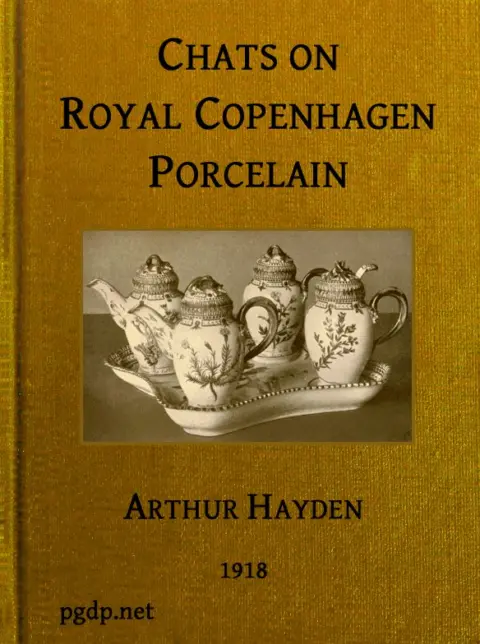
Arthur Hayden
Arthur Hayden
BEHIND THE BOOK
This eBook is for the use of anyone anywhere in the United States and most other parts of the world at no cost and with almost no restrictions whatsoever. You may copy it, give it away or re-use it under the terms of the Project Gutenberg License included with this eBook or online at www.gutenberg.org. If you are not located in the United States, you will have to check the laws of the country where you are located before using this eBook. Read the source licence.
The original source file, including credits and licence, is retained by this library. Request an original-format copy at no charge. Please include the book title and Project Gutenberg identifier #45772.
KEEP YOUR CURIOSITY GOING
Cécile Tormay

Moritz Busch
John L. Ransom
Frances Wright
Cécile Tormay

Mabel Potter Daggett