Chats on Old Silver
Arthur Hayden
THE CLASSIC COLLECTION · 1917
"Chats on Old Clocks" by Arthur Hayden is a historical account written in the early 20th century. This work explores the artistry and craftsmanship of old clocks, focusing particularly on English domestic clocks and their makers. It provides insights into the evolution of clock design and construction, the notable clockmakers of the past, and the significance of different styles and mechanisms. The opening of the book presents an introduction to the concept of timekeeping, detailing how early mechanisms were developed, particularly focusing on the pendulum's introduction, which revolutionized clockmaking. Hayden emphasizes the artistic and scientific evolution of clocks, highlighting the transformation from primitive timekeeping devices to complex machines. He also reflects on the cultural significance of clocks in domestic settings and sets the stage for further exploration of specific types and styles of clocks throughout the volume.
Introduction adapted from the source catalogue; source summaries may be automatically generated.
Free to read · English · 39,074 words · No account needed
MAKE TIME FOR A GOOD BOOK
On by default. Untick to stop anonymous reading totals. Each page counts after 10 seconds in view. How this works.
Anonymous counting is on unless you have switched it off.
Marquetry--
Country cabinet-makers' use of, 84
Decadence of, 100
Definition of, 71
Dutch school of, 79
Early English attempt at, 84
Finest period, 40, 79, 83
Foreign influence on English art, 79
German school of, 72
Imported sheets, frequent use of, 84, 97
Italian school of, 71
Provincial, 60
Revival of, Sheraton period, 123, 147
Veneer, the use of, with, 74
Martin, Sieur Simon Etienne, his varnish, 112
Mary, Queen, and Hampton Court, 98, 170
Massy, Henry (1680), dial of clock by, 158
Mean time, 29
Mechanism of clocks, early, 32
Midlands, list of clockmakers in the, 230
Mills, Humphry, Edinburgh (1661), 261
Richard, Edinburgh (1678-1710), 261
Minute, the, its division into seconds, 30
Mudge, Thomas, Exeter (1715), 37, 212
Musical clock attributed to Rimbault, 142
by George Aicken, Cork, 277
Name of maker, position on dial, 161
Names found on dials, origin of, 213
Nantes, Edict of, and its effect, 68, 120
Newcastle-upon-Tyne, list of makers, 215
New Geneva (near Waterford), Irish watchmaking centre at, 278
Silver assayed at, 278
New York Metropolitan Art Museum, clocks illustrated, 57, 193
Nineteenth century, best period of clockmaking in, 40
Long-case clock of the, 147
North of England, list of clockmakers, 215
Nottingham clockmakers, list of, 235
Numerals on dial, note on, 158, 165
Painted furniture simulating lacquer work, 123
Panels, lacquered, imported from the East, 109
Marquetry, their use in clock-case, 97
"Parliament" clocks, so-called, 124
Pendulum, the--
Advent of, 50
Early studies relating to, 154
First introduction of, 33
Introduced into England by Fromanteel, 37
Length of, determined by longitude, 179
Types of--
the anchor, 59;
the "royal" or long, 33;
the short, its position at front of dial, 33
Pepys' Diary quoted (1667), 161
Personal clock, the, 34
Personality in clockmaking, 38
Pinchbeck, Christopher, 37
Period of watches, 290
Pitt, his tax on clocks (1797), 124
Pope, Essay on Criticism quoted, 31
Porcelain, true, its introduction into Europe, 109
Poy, Godfrey, clock by (1745), 192
Pre-pendulum clocks, 33
Provincial clocks and makers, 211
Makers, some great, 211
Quare, name falsely put on Dutch clocks, 36
Queen Mary, her influence in rebuilding Hampton Court, 98
Ramsay, David, 255;
watch signed by, 257
Réfugié, le style, its introduction into England, 90
Regulator clock, the, 148
Repairs, ignorant restoration to be avoided, 42
Riesener, the marquetry of, 111
Rimbault, Stephen, 37
Noteworthy for musical clocks, 142, 147
Roentgen, David, the marquetry of, 111
Science, the dawn of, 35
Scott, Sir Walter, Fortunes of Nigel quoted, 255
Scottish clocks, 255
Character of, 266
Makers, eighteenth century, list of, 261, 262
Second, the, the second division of the hour, 30
Hand, the, 30
Seventeenth century, dawn of science in the, 35
Types of lantern clock, 53
Watches, 286, 287
Shagreen cases to watches, 290
Shakespeare, As you like it quoted, 162
King John quoted, 32
Sheraton style in clock-cases, 147
Spandrel ornament on clock-dial--
Artistic difficulty of, 166
Cherub head style, 166, 169
Cupids and crown style, 170
Spanish proverb quoted, 185
Specialization of clockmaking, 37
Spring, the, its early use as a motive power, 32
Staffordshire earthenware clock vase, 198
Stalker and Parker, treatise on "japanning" (1688), 122
Striking and alarum clocks, early, 32
Strowbridge (Dawlish), clock by, 204
Clock repaired by, 247
Stuart and Tudor ages compared, 35
Sundial, the, and its tradition, 162
Time, 29
Sussex, clockmakers of, 247
Clock (Ashburnham) illustrated, 243
Swiss watchmakers settled in Ireland (1784-90), 278
Your reading position is saved on this browser. Take it to another device with a library code. Reading pages adapt to text, rather than matching a printed edition.
Arthur Hayden
Arthur Hayden
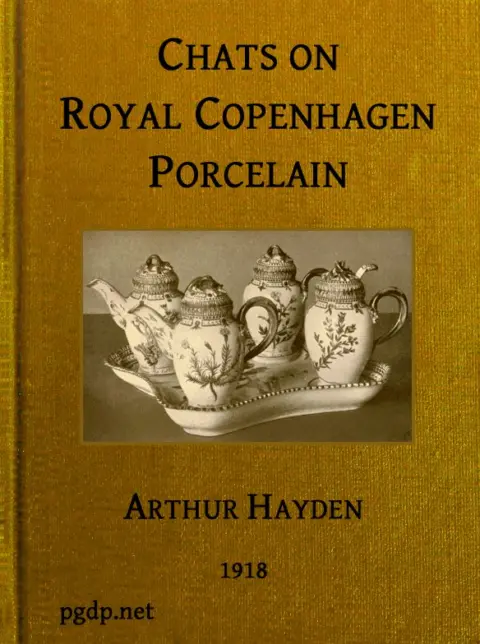
Arthur Hayden
Arthur Hayden
BEHIND THE BOOK
This eBook is for the use of anyone anywhere in the United States and most other parts of the world at no cost and with almost no restrictions whatsoever. You may copy it, give it away or re-use it under the terms of the Project Gutenberg License included with this eBook or online at www.gutenberg.org. If you are not located in the United States, you will have to check the laws of the country where you are located before using this eBook. Read the source licence.
The original source file, including credits and licence, is retained by this library. Request an original-format copy at no charge. Please include the book title and Project Gutenberg identifier #45772.
KEEP YOUR CURIOSITY GOING
Cécile Tormay

Moritz Busch
John L. Ransom
Frances Wright
Cécile Tormay

Mabel Potter Daggett