THE CLASSIC COLLECTION✦Mr. FaustCLASSIC FREE BOOKS
Mr. Faust
Arthur Davison Ficke
THE CLASSIC COLLECTION · 1915
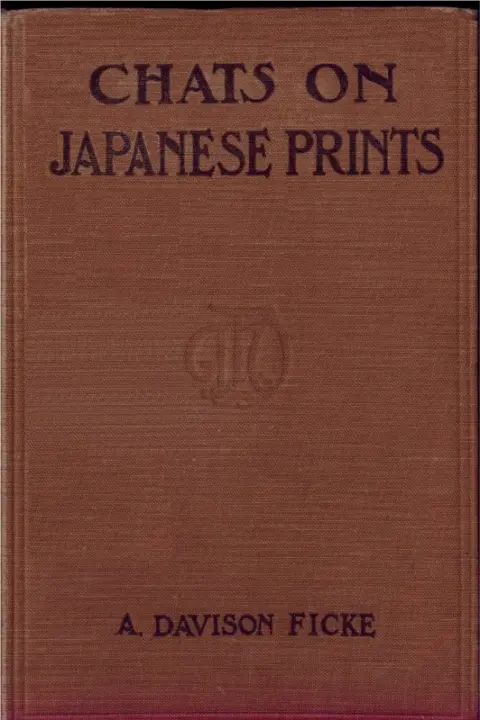
"Chats on Japanese Prints" by Arthur Davison Ficke is a scholarly work focused on the history and significance of Japanese woodblock prints, written in the early 20th century. The book explores the aesthetic qualities, techniques, and cultural context of these prints, providing insights into the evolution of this art form and its appreciation in the West. As readers delve into this text, they can expect to uncover discussions about various artists, styles, and periods that shaped the genre. The opening of the book introduces the topic with a preface that acknowledges various contributors to its creation and outlines the core themes going forward. Ficke begins with a "Preliminary Survey" that illustrates the intrinsic beauty of Japanese prints and the emotional response they evoke in viewers, emphasizing their escape from the everyday into the realm of art. This opening sets the stage for a detailed exploration of the history of Japanese prints, their evolving techniques, and the factors that led to their rise in popularity both in Japan and internationally. The author draws connections between the prints and broader cultural movements in Japan, highlighting their appeal to a burgeoning Western audience drawn to the unfamiliar and the aesthetic principles of this captivating art form.
Introduction adapted from the source catalogue; source summaries may be automatically generated.
Free to read · English · 74,669 words · No account needed
MAKE TIME FOR A GOOD BOOK
On by default. Untick to stop anonymous reading totals. Each page counts after 10 seconds in view. How this works.
Anonymous counting is on unless you have switched it off.
But some care is necessary. Even during Utamaro's life his work was forged by unscrupulous persons who hoped to reap the benefit of his popularity; and his pupils, under his direction, produced an unknown quantity of work signed with his name. After his death, from about 1808 to 1820, the Second Utamaro worked in the manner of his predecessor, issuing work that cannot with certainty be distinguished from the late work of the master. Besides these perils there is the fact that Utamaro's prints have been well reproduced in recent years; and reproductions are sometimes put forward as originals by ignorant or dishonest dealers. Considerable familiarity with authentic examples of Utamaro's best work, or expert advice, can alone protect the would-be purchaser.
Though Utamaro's influence upon his contemporaries was incalculably great, he left behind him a body of pupils who were almost without exception rather insignificant artists. With cruder colour and composition, they carried still farther the vulgarities of Utamaro's declining period. Among them may be mentioned the following men:--
UTAMARO II, whose original name was Koikawa Shuncho or Harumachi, was a pupil of Sekiyen; he married Utamaro's widow, and from about 1808 to 1820 continued to produce prints in the debased Utamaro manner. Dr. Kurth believes he must be distinguished from another Koikawa Shuncho whose family name was Kurahashi, and who died in 1789. The whole matter is by no means clear.
BANKI and SHIKIMARO were among the best of this group. Particularly the former, before Utamaro's death, produced some fine work.
TAMAGAWA SHUCHO was a rare pupil of Utamaro who worked about 1790 to
1810.
KIKUMARO I (who also called himself KITAGAWA TSUKIMARO), KIKUMARO II, TANIMOTO TSUKIMARO, TAKEMARO, TOYOMARO, YUKIMARO I, YUKIMARO II, YOSHIMARO I (also called KITAO SHIGEMASA III), YOSHIMARO II, REKESENTI SOGAKU, GOSHICHI, HIDEMARO, MITEMARO, MINEMARO, KITAMARO, MICHIMARO, TOSHIMARO, HANAMARO, ISOMARO, ASHIMARO, KANAMARO, KUNIMARO, YOSHIMUNE, YOSHITORA, YOSHITSUYA, YOSHIKI, YOSHIMORI, YOSHITOSHI, YOSHIKATA, YENCHO, YUMIAKI, HOKOKUJIN FUYO, CHIKANOBU, SHINTOKU, SHUNKIOSAI, HISANOBU, SORAKU, SENKA, RYUKOKU, SEKKYO, SEKICHO, SEKIHO, SEKIJO may all be classed as late followers, fellow-pupils, or rivals of Utamaro.
BUNRO, some of whose work is fine, was a rare imitator of Utamaro. He worked chiefly about 1800 to 1810.
Dramatic Portrait.
Whence art thou come,
Tall figure clasping to thy tragic breast
Thy orange robe, a flame amid the gloom--
By what wild doom
Art thou forever onward--onward pressed?
A wreath is on thy brow,
A crown of leafage from some lonely haunt
Where might Medea's shade brood ministrant.
Thy shoulders bow
Beneath what fearful weight, what need, what vow?
A leopard fierce--
A ghost that wanders down the wandering wind--
A fury tracking toward some shaken mind--
Where shall I find
The divination that thy veil shall pierce?
Your reading position is saved on this browser. Take it to another device with a library code. Reading pages adapt to text, rather than matching a printed edition.
Arthur Davison Ficke
BEHIND THE BOOK
This eBook is for the use of anyone anywhere in the United States and most other parts of the world at no cost and with almost no restrictions whatsoever. You may copy it, give it away or re-use it under the terms of the Project Gutenberg License included with this eBook or online at www.gutenberg.org. If you are not located in the United States, you will have to check the laws of the country where you are located before using this eBook. Read the source licence.
The original source file, including credits and licence, is retained by this library. Request an original-format copy at no charge. Please include the book title and Project Gutenberg identifier #46753.
KEEP YOUR CURIOSITY GOING
Cécile Tormay

Moritz Busch
John L. Ransom
Frances Wright
Cécile Tormay

Mabel Potter Daggett