THE CLASSIC COLLECTION✦An outlaw’s diary: the CommuneCLASSIC FREE BOOKS
An outlaw’s diary: the Commune
Cécile Tormay
THE CLASSIC COLLECTION · 1914
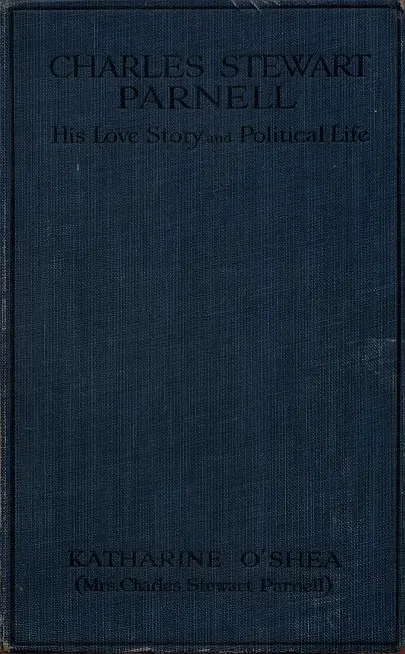
"Charles Stewart Parnell: His Love Story and Political Life" by Katharine O'Shea is a historical account written in the early 20th century. This work delves into the life of Charles Stewart Parnell, a significant figure in Irish politics known for his role in the Home Rule movement, and provides an intimate look at his personal life and romantic relationship with Katharine O'Shea, who narrates the story. The book aims to portray both the public and private dimensions of Parnell's life, illustrating how his love story was intricately linked with his political endeavors and the controversies surrounding them. The opening of this narrative introduces readers to the poignant preface by Katharine, Parnell's wife, reflecting on their passionate love and the political storms that overshadowed their life together. She shares her deep affection for Parnell, emphasizing her desire to counteract the negative perceptions that clouded his legacy following his death. Katharine expresses her determination to honor their relationship, hinting at the challenges they faced from society and the political landscape of the time. As she recalls their early days, the foundation of Parnell's political ambitions comes into focus, setting the stage for the unfolding story of love and ambition in a deeply divided Ireland.
Introduction adapted from the source catalogue; source summaries may be automatically generated.
Free to read · English · 105,382 words · No account needed
MAKE TIME FOR A GOOD BOOK
On by default. Untick to stop anonymous reading totals. Each page counts after 10 seconds in view. How this works.
Anonymous counting is on unless you have switched it off.
There is little more to add. All that last night I sat by my husband watching and listening for the look and the word he would never give me again. All that night I whispered to him to speak to me, and I fancied that he moved, and that the fools who said he was dead did not really know. He had never failed to answer my every look and word before. His face was so peaceful; so well, all the tiredness had gone from it now. I would not open {335} the door because I feared to disturb him--he had always liked us to be alone. And the rain and the wind swept about the house as though the whole world shared my desolation.
He did not make any "dying speech," or refer in any way at the last to his "Colleagues and the Irish people," as was at the time erroneously reported. I was too broken then and too indifferent to what any sensation-lovers put about to contradict this story, but, as I am now giving to the world the absolutely true account of the Parnell whom I knew and loved, I am able to state that he was incapable of an affectation so complete. The last words Parnell spoke were given to the wife who had never failed him, to the love that was stronger than death--"Kiss me, sweet Wifie, and I will try to sleep a little."
[1] Of the Divorce Case.
[2] We had an idea of renting a house in Wales.
"AGONY" column advertisements, 35
Aldershot, a review at, 7
Allen, Fenian leader, 52
Arklow, quarries at, 213
Arms Bill, the, introduction of, 50
Arrears Bill, a promised, 165
becomes law, 180
introduction of, 171
Astronomy, Parnell's study of, 303
"Aunt Ben" (see Mrs. Benjamin Wood)
Austin, Alfred, friendship with, 37
Avondale, Parnell's estates at, 51
Parnell's love of, 209
Baily, L. R., 189 (note)
Balfour, Rt. Hon. A. J., 194
Ballina, Parnell's reception at, 321
Ballot Act, the, passing of, 52
Barker, Edgar, 35
Barlow, Captain, 147
Barrett-Lennard, Lady, 10, 14, 16, 19
Sir Thomas, 6, 14, 31
Beaufort Gardens, 36
Belhus, visits to, 6, 16
Bennington Park, Hertfordshire, 24
Biggar, J. G., 74
obstructs Parliamentary business, 53
warrant for arrest of, 118
Birling Gap, visits to, 239
Bognor, visit to, 247
Book-keeping, Parnell's studies in, 100
Boulogne, Parnell meets O'Brien at, 297
Bourke, Walter, murder of, 179
Boycott, principle enunciated, 74
Brennan, Thomas, 119
Brighton, a day on the downs at, 30 et seq.
life at, 28
Brighton, Local Government Bill discussed at, 223
Mrs. O'Shea's house at, 273
railway station rebuilt, 100
visits to, 229
Brompton Oratory, 37
Bryson, Phyllis, 313, 315, 316
Burke, Mr., murder of, 168
Butt, Isaac, 50, 53
Butt, Mr. Justice, 300
Buxton, Mrs. Sydney, 265
Campbell, Mr. Parnell's secretary, 246
Campbell-Bannerman, Sir Henry, accepts Irish Secretaryship, 182
enters the Cabinet, 197
Canada, Parnell's reception in, 54
Carlingford, Lord, opposes Home Rule, 197
Carnarvon, Lord, becomes Lord Lieutenant, 186
meets Parnell, 187
resignation of, 193, 196
Your reading position is saved on this browser. Take it to another device with a library code. Reading pages adapt to text, rather than matching a printed edition.
BEHIND THE BOOK
This eBook is for the use of anyone anywhere in the United States and most other parts of the world at no cost and with almost no restrictions whatsoever. You may copy it, give it away or re-use it under the terms of the Project Gutenberg License included with this eBook or online at www.gutenberg.org. If you are not located in the United States, you will have to check the laws of the country where you are located before using this eBook. Read the source licence.
The original source file, including credits and licence, is retained by this library. Request an original-format copy at no charge. Please include the book title and Project Gutenberg identifier #60895.
KEEP YOUR CURIOSITY GOING
Cécile Tormay

Moritz Busch
John L. Ransom
Frances Wright
Cécile Tormay

Mabel Potter Daggett