THE CLASSIC COLLECTION✦An American tragedy, v. 2CLASSIC FREE BOOKS
An American tragedy, v. 2
Theodore Dreiser
THE CLASSIC COLLECTION · 1927
"Chains: Lesser Novels and Stories" by Theodore Dreiser is a collection of narratives exploring themes of poverty, despair, and the human condition, likely written in the late 19th century. The book delves into the struggles of individuals trapped in dire circumstances, highlighting the difficulties faced by characters like Madeleine Kinsella, who navigates a harsh urban environment while grappling with her family's dysfunction and her own yearning for a better life. The opening of the book introduces Madeleine's grim existence in a rundown tenement, where the atmosphere is permeated by violence, drunkenness, and pervasive poverty. We learn about her oppressive family dynamics, marked by her father's alcoholism and her mother's neglect, which force her into a role of caretaker at an early age. As she grows, Madeleine's hope for a better life and love becomes evident; however, her encounters with the world are fraught with difficulties, leading her to questionable choices in search of escape. The narrative sets the stage for an exploration of her internal and external struggles as she faces the grim realities of her environment and the impacts of her circumstances on her future.
Introduction adapted from the source catalogue; source summaries may be automatically generated.
Free to read · English · 149,662 words · No account needed
MAKE TIME FOR A GOOD BOOK
On by default. Untick to stop anonymous reading totals. Each page counts after 10 seconds in view. How this works.
Anonymous counting is on unless you have switched it off.
“A great promiser there was here once,” commented Ajeeb, the gossip, sententiously, “and he sat himself in this self-same door. I remember him well. He wore a green turban, but a greater liar there never was. He promised wonders and terrors enough, but it came to nothing—not a demon or Jinn in it.”
“Is it of demons and Jinns only that thou thinkest, donkey?” demanded Haifa. “Verily, there are wonders and mysteries everywhere, without having them in tales.”
“Yea, but a tale need not be for profit, either,” said Waidi, the water-seller. “It is for one’s leisure, at the end of a day. I like such as end happily, with evil punished and the good rewarded.”
“Come, O friends,” insisted Gazzar-al-Din, seeing that one or two were interested, “for a score of anna I begin. Of Yemen it is, this very Yemen, and Baghdad, once a greater city than any to-day—”
“Begin then,” said Azad Bakht, the barber. “Here is an anna for thee,” and he tossed a coin in the tambour.
“And here is another for thee,” observed Haifa, fishing in his purse. “I do not mind risking it.”
“And here is another,” called Soudi condescendingly. “Begin.”
“And here is yet another,” added Parfi grandiosely. “Now, then, thy tale, and look thee that it is as thou sayst, marvelous.” And they squatted about him on the ground.
But Gazzar, determined not to begin until he had at least ten anna, the price of a bowl of curds and a cup of kishr, waited until he had accumulated so many, as well as various “Dogs!” and “Pigs!” and “Wilt thou begin, miser, or wilt thou fill thy tambour?” into the bargain. He then crouched upon his rags, lifted his hand for silence, and began:
“Know then, O excellent citizens of Hodeidah, that once, many years since, there lived in this very Yemen where now is Taif, then a much more resplendent city, a sultan by the name of Kar-Shem, who had great cities and palaces and an army, and was beloved of all over whom he ruled. When he—wilt thou be seated, O friend? And silence!—when he was but newly married and ruling happily a son was born to him, Hussein, an infant of so great charm and beauty that he decided he should be carefully reared and wisely trained and so made into a fit ruler for so great a country. But, as it chanced, there was a rival or claimant to this same throne by another line, a branch long since deposed by the ancestors of this same king, and he it was, Bab-el-Bar by name, who was determined that the young Prince Hussein should be stolen and disposed of in some way so that he should never return and claim the throne. One day, when the prince was only four years of age, the summer palace was attacked and the princeling captured. From thence he was carried over great wastes of sand to Baghdad, where he was duly sold as a slave to a man who was looking for such, for he was a great and successful thief, one who trained thieves from their infancy up so that they should never know what virtue was.”
Your reading position is saved on this browser. Take it to another device with a library code. Reading pages adapt to text, rather than matching a printed edition.
Theodore Dreiser
Theodore Dreiser
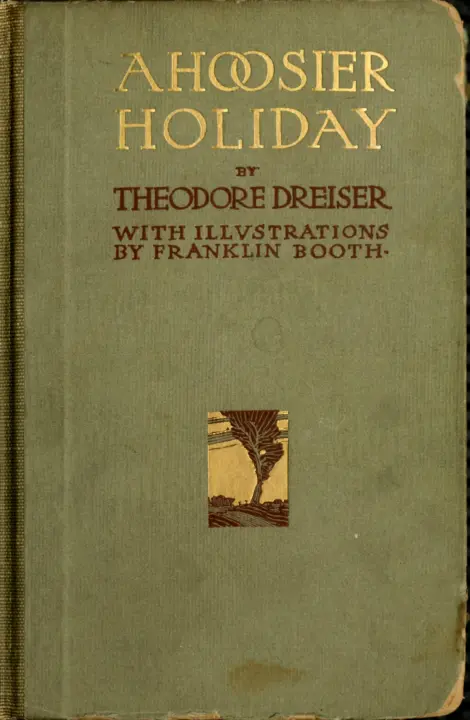
Theodore Dreiser

Theodore Dreiser
BEHIND THE BOOK
This eBook is for the use of anyone anywhere in the United States and most other parts of the world at no cost and with almost no restrictions whatsoever. You may copy it, give it away or re-use it under the terms of the Project Gutenberg License included with this eBook or online at www.gutenberg.org. If you are not located in the United States, you will have to check the laws of the country where you are located before using this eBook. Read the source licence.
The original source file, including credits and licence, is retained by this library. Request an original-format copy at no charge. Please include the book title and Project Gutenberg identifier #72326.
KEEP YOUR CURIOSITY GOING
Coulson Kernahan

Maurice Baring
Frances Wright
Cécile Tormay

Frederic Jesup Stimson

W. H. P. (William Henry Pope) Jarvis