THE CLASSIC COLLECTION✦An outlaw’s diary: the CommuneCLASSIC FREE BOOKS
An outlaw’s diary: the Commune
Cécile Tormay
THE CLASSIC COLLECTION · 1890
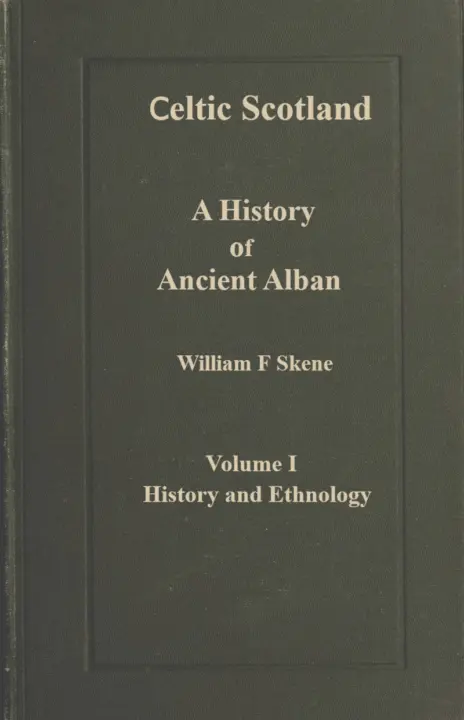
"Celtic Scotland: A History of Ancient Alban" by William F. Skene is a historical account written in the late 19th century. The work delves into the early civil history, ethnology, and the complex cultural landscape of ancient Scotland, known as Alban, during the Celtic period. This meticulous exploration aims to sift through historical inaccuracies to present a clearer picture of Scotland's early historical narratives. At the start of the book, the author outlines the challenging task of revisiting early Scottish history by critically evaluating the sources and narratives that have long been accepted. He expresses a desire to discard the elaborate but often inaccurate histories constructed by earlier writers, such as John of Fordun, in favor of a more authentic representation based on trustworthy authorities. The initial chapters introduce key historical events such as the Roman invasions and the political landscape of ancient Britain, establishing the groundwork for a nuanced discussion of the various tribes and their interactions with one another and with invading forces.
Introduction adapted from the source catalogue; source summaries may be automatically generated.
Free to read · English · 191,540 words · No account needed
MAKE TIME FOR A GOOD BOOK
On by default. Untick to stop anonymous reading totals. Each page counts after 10 seconds in view. How this works.
Anonymous counting is on unless you have switched it off.
From these deeds we not only learn the extent of David’s possessions, but we also see that he had attached to himself not only his Anglic vassals but a large following of Norman barons. Of the witnesses to the inquisition there are, besides his countess Matilda and his nephew William, son of his brother Duncan, eight of Anglic race and fourteen who are Normans. In his foundation charter of Selkirk, besides Bishop John of Glasgow, his countess Matilda, his son Henry, his nephew William, and three chaplains, there are eleven Norman witnesses, nine Anglic, and a solitary Gillemichel to represent the Celtic race. The native Cumbrians nowhere appear as witnessing his grants, and it seems plain enough that he had largely introduced the Norman element into his territories, and ruled over them as a feudal superior basing his power and influence upon his Norman and Anglic vassals, of whom the former were now the most prominent both in weight and number.[674]
[Sidenote: A.D. 1124-1153.
David reigns over all Scotland as first feudal monarch.]
On the death of King Alexander in the year 1124, the Saxon Chronicle tells us that ‘David, his brother, who was earl of Northamptonshire, succeeded to the kingdom, and had them both together, the kingdom of Scotland and the earldom in England;’ and thus the southern and northern districts, which had been severed during the whole of Alexander’s reign, were once more united under one king, and David founded a dynasty of feudal monarchs of Celtic descent in the paternal line, and in the maternal representing the old Saxon royal family, but governing the country as feudal superiors, and introducing feudal institutions. The extent to which the feudal and Norman element had already been introduced into the south of Scotland, while under the rule of earl, by David, will be apparent when we examine the relation between the Norman barons who witness his charters and the land under his sway. The most prominent of those who witness the foundation charter of Selkirk are four Norman barons, who possessed extensive lordships in the north of England. The first was Hugo de Moreville, and we find him in possession of extensive lands in Lauderdale, Lothian, and Cuningham in Ayrshire. The second was Paganus de Braosa. The third Robertus de Brus, who acquired the extensive district of Annandale in Dumfriesshire; and the fourth, Robertus de Umfraville, received grants of Kinnaird and Dunipace in Stirlingshire. Of the other Norman knights who witness this charter, and also the inquisition, Gavinus Ridel, Berengarius Engaine, Robertus Corbet, and Alanus de Perci possess manors in Teviotdale. Walterus de Lindesaya has extensive possessions in Upper Clydesdale, Mid and East Lothian, and in the latter district Robertus de Burneville is also settled. In Scotland proper the character in which David ruled will be best seen by contrasting his charters with those of his predecessors. Eadgar, who possessed the whole kingdom north of the Tweed and the Solway, addresses his charters to all his faithful men in his kingdom, Scots and Angles. Alexander, who possessed the kingdom north of the Firths of Forth and Clyde alone, to the bishops and earls, and all his faithful men of the kingdom of Scotia. A charter granted by David, in the third year of his accession to the throne, to the monks of Durham, of lands in Lothian, is addressed to all dwelling throughout his kingdom in Scotland and Lothian, Scots and Angles;[675] but when we enter Scotland proper, and compare his foundation charter of Dunfermline with that of Scone by his predecessor, Alexander I., there is a marked contrast between them. Alexander grants his charter to Scone, with the formal assent and concurrence of the seven earls of Scotland; and it is confirmed by the two bishops of the only dioceses which then existed in Scotland proper, with exception of St. Andrews, which was vacant, and the witnesses are the few Saxons who formed his personal attendants, Edward the constable, Alfric the pincerna, and others.[676] King David’s charter to Dunfermline, a foundation also within Scotland proper, is granted ‘by his royal authority and power, with the assent of his son Henry, and with the formal confirmation of his queen Matilda, and the bishops, earls, and barons of his kingdom, the clergy and people acquiescing.’ Here we see the feudal baronage of the kingdom occupying the place of the old constitutional body of the seven earls, while the latter appear only as individually witnessing the charter. David’s subsequent charters to Dunfermline show this still more clearly, for they are addressed to the ‘bishops, abbots, earls, sheriffs, barons, governors, and officers, and all the good men of the whole land, Norman, English, and Scotch:’ in short, the feudal community or ‘communitas regni,’ consisting of those holding lands of the crown, while the old traditionary earls of the Celtic kingdom appear among the witnesses only.[677]
Your reading position is saved on this browser. Take it to another device with a library code. Reading pages adapt to text, rather than matching a printed edition.
BEHIND THE BOOK
This eBook is for the use of anyone anywhere in the United States and most other parts of the world at no cost and with almost no restrictions whatsoever. You may copy it, give it away or re-use it under the terms of the Project Gutenberg License included with this eBook or online at www.gutenberg.org. If you are not located in the United States, you will have to check the laws of the country where you are located before using this eBook. Read the source licence.
The original source file, including credits and licence, is retained by this library. Request an original-format copy at no charge. Please include the book title and Project Gutenberg identifier #71258.
KEEP YOUR CURIOSITY GOING
Cécile Tormay

Moritz Busch
John L. Ransom
Frances Wright
Cécile Tormay

Mabel Potter Daggett