THE CLASSIC COLLECTION✦An outlaw’s diary: the CommuneCLASSIC FREE BOOKS
An outlaw’s diary: the Commune
Cécile Tormay
THE CLASSIC COLLECTION · 1890
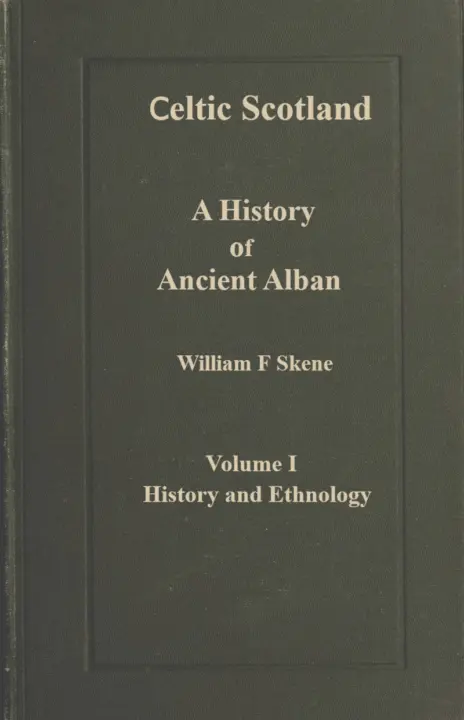
"Celtic Scotland: A History of Ancient Alban" by William F. Skene is a historical account written in the late 19th century. The work delves into the early civil history, ethnology, and the complex cultural landscape of ancient Scotland, known as Alban, during the Celtic period. This meticulous exploration aims to sift through historical inaccuracies to present a clearer picture of Scotland's early historical narratives. At the start of the book, the author outlines the challenging task of revisiting early Scottish history by critically evaluating the sources and narratives that have long been accepted. He expresses a desire to discard the elaborate but often inaccurate histories constructed by earlier writers, such as John of Fordun, in favor of a more authentic representation based on trustworthy authorities. The initial chapters introduce key historical events such as the Roman invasions and the political landscape of ancient Britain, establishing the groundwork for a nuanced discussion of the various tribes and their interactions with one another and with invading forces.
Introduction adapted from the source catalogue; source summaries may be automatically generated.
Free to read · English · 191,540 words · No account needed
MAKE TIME FOR A GOOD BOOK
On by default. Untick to stop anonymous reading totals. Each page counts after 10 seconds in view. How this works.
Anonymous counting is on unless you have switched it off.
Fordun tells us that while Eadgar was advancing with his uncle Eadgar Aetheling, towards Scotland, Saint Cuthbert appeared to him in a dream, and promised him success if he would take his standard from the church at Durham and carry it against his foes; and that, having put Donald and his men to flight, Eadgar then, by the favour of God and the merits of Saint Cuthbert, happily achieved a bloodless victory, and when established on the throne granted to the monks of Durham the lands of Coldingham.[641] That he refounded the monastery of Coldingham, and granted it to the canons regular of Saint Cuthbert is certain, for the charters still exist.[642] In these charters Eadgar terms himself king of the Scots (rex Scottorum), and addresses them to the Scots and Angles or English (Scottis et Anglis), thus classing his subjects under these two heads. Only one of the charters contains a list of witnesses. These are of the same character as those of King Duncan’s charter, and equally belong to the race of the Angles. Two of them are in part repeated; Vinget and Aelfric, who witnessed Duncan’s charter, appear also witnessing this charter as Unioett ghwite and Aelfric Pincerna, and Eadgar was thus surrounded by a Saxon court. He appears too to have made Edinburgh his residence, which as a stronghold situated near the western boundary of Lothian and on the Firth of Forth, was well adapted to be the seat of a king whose main supporters were in Lothian, and whose tenure of the northern part of his kingdom was uncertain, and to have died there on the 13th of January in the year 1107,[643] and was buried in Dunfermline. There were only three of the sons of Queen Margaret in life, Ethelred, Alexander, and David.[644] Ethelred was a churchman, abbot of Dunkeld, and possessed as a further appanage of the earldom of Fife, but seems to have made no pretension to the throne, and Alexander appears to have regarded himself as the natural heir; but Eadgar limited his succession to Scotland proper and its dependencies, and bequeathed the districts south of the Firths, consisting of Lothian and the Cumbrian province, to his youngest brother, David, with the title of Comes or Earl.[645] His motive for making this division of the kingdom between the two brothers was probably caused by the difficult position in which the kingdom was placed towards the English monarch, in regard to his claims of superiority. So far as Lothian was concerned, there was probably no idea at this period of the history of contesting it, and both Duncan and Eadgar seem to have purchased the assistance of the English by a general admission that they held the kingdom under the king of England. As soon, however, as they had obtained possession of the throne, they found the necessity of basing their right to the throne, so far as the districts north of the Firths were concerned, upon their hereditary title as heirs of its ancient kings, and not upon any concession from the king of England; but their possession of Scotland proper as independent kings, of Lothian as vassals of the king of England, and of Cumbria on an uncertain tenure in this respect, coupled with the radical diversity in the races which peopled these districts, and their mutual antagonism, made their position an anomalous one, and tended to compromise the independence of the monarchy. Donald Ban seems to have met the difficulty by associating a son of Queen Margaret with him in his second usurpation; and Eadgar, probably experiencing the same difficulty during his life, tried to obviate it after his death by making one brother independent king of the Scots, and placing the district more immediately affected by the English claims under the rule of his brother David, who was so far subordinated to Alexander as to bear the title of earl only. Such seems the natural explanation of this strange arrangement, by which Alexander’s succession as king was limited to the kingdom north of the Firths of Forth and Clyde, with the debateable ground extending from the river Forth to the river Esk, and including the strong positions of Stirling and Edinburgh; while David as earl obtained the richer districts extending from thence to the borders of England; and between them lay the earldom of Gospatric of Dunbar. According to Ailred, within whose lifetime Eadgar died, he was ‘a sweet and amiable man, like his kinsman the holy King Edward in every way; using no harshness, no tyrannical or bitter treatment towards his subjects, but ruling and correcting them with the greatest charity, goodness, and loving kindness;’[646] and consistently with this character we find few events recorded in his reign. He gives a very different character to his brother Alexander. Although, he says, he was humble and kind enough to the monks and the clergy, he was to the rest of his subjects beyond everything terrible; a man of large heart, exerting himself in all things beyond his strength. He was a lettered man, and most zealous in building churches, in searching for relics of saints, in providing and arranging priestly vestments and sacred books; most open-handed, even beyond his means, to all strangers, and so devoted to the poor that he seemed to delight in nothing so much as in supporting them, washing, nourishing, and clothing them.[647]
Your reading position is saved on this browser. Take it to another device with a library code. Reading pages adapt to text, rather than matching a printed edition.
BEHIND THE BOOK
This eBook is for the use of anyone anywhere in the United States and most other parts of the world at no cost and with almost no restrictions whatsoever. You may copy it, give it away or re-use it under the terms of the Project Gutenberg License included with this eBook or online at www.gutenberg.org. If you are not located in the United States, you will have to check the laws of the country where you are located before using this eBook. Read the source licence.
The original source file, including credits and licence, is retained by this library. Request an original-format copy at no charge. Please include the book title and Project Gutenberg identifier #71258.
KEEP YOUR CURIOSITY GOING
Cécile Tormay

Moritz Busch
John L. Ransom
Frances Wright
Cécile Tormay

Mabel Potter Daggett