THE CLASSIC COLLECTION✦An outlaw’s diary: the CommuneCLASSIC FREE BOOKS
An outlaw’s diary: the Commune
Cécile Tormay
THE CLASSIC COLLECTION · 1890
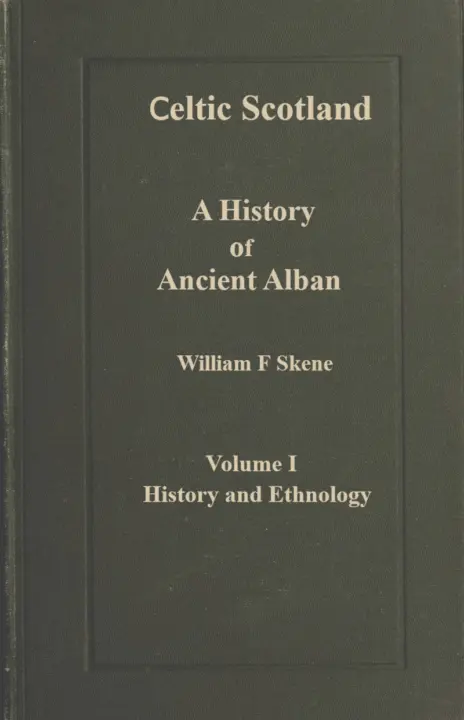
"Celtic Scotland: A History of Ancient Alban" by William F. Skene is a historical account written in the late 19th century. The work delves into the early civil history, ethnology, and the complex cultural landscape of ancient Scotland, known as Alban, during the Celtic period. This meticulous exploration aims to sift through historical inaccuracies to present a clearer picture of Scotland's early historical narratives. At the start of the book, the author outlines the challenging task of revisiting early Scottish history by critically evaluating the sources and narratives that have long been accepted. He expresses a desire to discard the elaborate but often inaccurate histories constructed by earlier writers, such as John of Fordun, in favor of a more authentic representation based on trustworthy authorities. The initial chapters introduce key historical events such as the Roman invasions and the political landscape of ancient Britain, establishing the groundwork for a nuanced discussion of the various tribes and their interactions with one another and with invading forces.
Introduction adapted from the source catalogue; source summaries may be automatically generated.
Free to read · English · 191,540 words · No account needed
MAKE TIME FOR A GOOD BOOK
On by default. Untick to stop anonymous reading totals. Each page counts after 10 seconds in view. How this works.
Anonymous counting is on unless you have switched it off.
The aggression, however, which he provoked in the north brought a formidable competitor into the field, and was destined to terminate more fatally for him. The details of this war are preserved to us in the Orkneyinga Saga; and though its authority is not unexceptionable, and the events it records are not to be found elsewhere, the narrative still carries with it an air of truth, and it fills a blank in the meagre records of the time which supplies in a great measure a clue to their real character. In this narrative the king who succeeded Malcolm appears under the strange designation of Karl or Kali Hundason,[575] that is, either the Churl, or Kali the son of the hound; and from the appellation here given to Duncan’s father, we learn that the Hundi Jarl or the Hound Earl, who fought with Sigurd the Stout, earl of Orkney, could have been no other than Crinan, the warlike lay abbot of Dunkeld. On Sigurd’s death the islands of Orkney fell to his three sons, Sumarlidi, Einar, and Brusi, among whom they were divided; while Thorfinn, his son by the daughter of King Malcolm, received from his grandfather Caithness and Sutherland, with an earl’s title. The last of the three brothers among whom the Orkneys were divided died, however, a few years before the death of King Malcolm;[576] and when his grandson Duncan succeeded him, Thorfinn had been for some years in possession of the entire earldom of Orkney. Duncan seems to have considered that Thorfinn having become earl of Orkney, he might resume possession of Caithness, or at least demand tribute from it. Thorfinn, on the other hand, considered that it was his inheritance from King Malcolm through his mother, and that he had obtained it before Duncan inherited the kingdom. Thus, says the Saga, they became open enemies and made war on each other. Duncan took the initiative, and bestowed Caithness with the title of earl upon a relation of his own, Moddan, said to be his sister’s son, who proceeded immediately to the north and collected forces in Sutherland. Earl Thorfinn on his part raised the men of Caithness, and on being joined by Thorkell Fostri with an army from the Orkneys, Moddan retired before his superior forces. Thorfinn then subdued the districts both of Sutherland and Ross, and after plundering in the district south of them, returned to Caithness and remained at Dungallsbae or Duncansby, with five war-ships and their crews, the rest of the army returning to Orkney. Moddan then sought the king, whom he found at Berwick, then probably on his return from his unsuccessful invasion of Northumbria, and told him the result of his expedition. Duncan organised a more formidable attack. He sent Moddan by land with a considerable force to make his way to Caithness, and he himself sailed from Berwick with a naval force, consisting of eleven warships and a numerous army. His intention was by landing on the north of Caithness to place Earl Thorfinn between the two armies, but the latter anticipated his plan by sailing out in his own ships and attacking Duncan’s fleet in the Pentland Firth. Though the latter fleet was superior in numbers, the Scots could not stand against the fierce onslaught of the Norwegians, and after an obstinate conflict gave way before them, and fled south into the Moray Firth, where Duncan landed and proceeded south to collect a new army. Thorfinn remained in the north till he was again joined by Thorkell Fostri with the Orkneymen, and then went south into the Moray Firth in pursuit of Duncan, and began to plunder the districts on its southern shore. In the meantime, Moddan, who had no one to oppose him, appears to have occupied Caithness with his army, and took up his quarters at Thurso, where he remained waiting for reinforcements, which he expected to receive from Ireland. Thorfinn, hearing this, again anticipated him. He remained himself in Scotland, and continued plundering the country, while he sent Thorkell north with a portion of the army. The people of Caithness were in his interest, and thus Thorkell succeeded in surprising Moddan in Thurso, where he came by night, set fire to the house in which Moddan was, and slew him. His men then surrendered, and Thorkell went from thence to the Moray Firth to rejoin Thorfinn with all the men he could collect in Caithness, Sutherland, and Boss, and found him in Myrhaevi or Moray. King Duncan now collected as large an army as he could assemble from the rest of Scotland; or, as the Saga expresses it, ‘as well from the south as the west and east of Scotland, and all the way south from Satiri or Kintyre, and the forces for which Earl Moddan had sent, also came to him from Ireland.[577] He sent far and near to chieftains for men, and brought all this army against Earl Thorfinn.’ Earl Thorfinn appears to have been stationed at Torfness or Burghead, where the Borg was which his ancestor Sigurd had built to enable the Norwegians to maintain their footing in Moray, and here the great battle took place which was to decide this contest. Thorfinn first attacked the Irish division, who were immediately routed, and never regained their position. King Duncan then brought his standard forward against Earl Thorfinn, and the fiercest struggle took place between the Scots and the Norwegians; ‘but,’ says the Saga, ‘it ended in the flight of the king, and some say he was slain.’ Earl Thorfinn then drove the fugitives before him through Scotland, and laid the land under him wherever he went, and all the way south to Fife.[578]
Your reading position is saved on this browser. Take it to another device with a library code. Reading pages adapt to text, rather than matching a printed edition.
BEHIND THE BOOK
This eBook is for the use of anyone anywhere in the United States and most other parts of the world at no cost and with almost no restrictions whatsoever. You may copy it, give it away or re-use it under the terms of the Project Gutenberg License included with this eBook or online at www.gutenberg.org. If you are not located in the United States, you will have to check the laws of the country where you are located before using this eBook. Read the source licence.
The original source file, including credits and licence, is retained by this library. Request an original-format copy at no charge. Please include the book title and Project Gutenberg identifier #71258.
KEEP YOUR CURIOSITY GOING
Cécile Tormay

Moritz Busch
John L. Ransom
Frances Wright
Cécile Tormay

Mabel Potter Daggett