THE CLASSIC COLLECTION✦An outlaw’s diary: the CommuneCLASSIC FREE BOOKS
An outlaw’s diary: the Commune
Cécile Tormay
THE CLASSIC COLLECTION · 1890
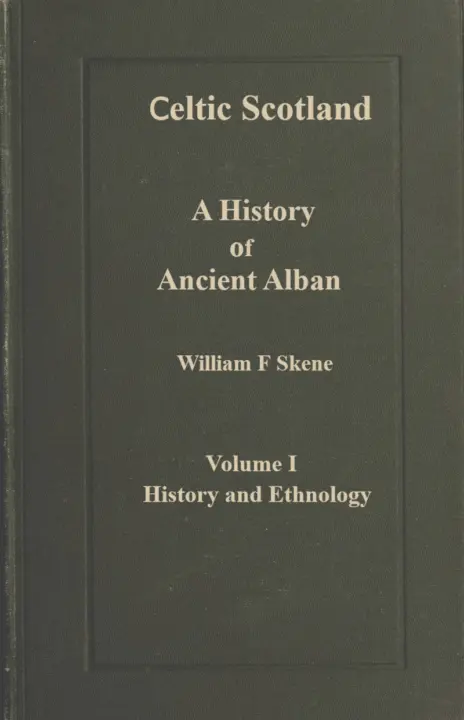
"Celtic Scotland: A History of Ancient Alban" by William F. Skene is a historical account written in the late 19th century. The work delves into the early civil history, ethnology, and the complex cultural landscape of ancient Scotland, known as Alban, during the Celtic period. This meticulous exploration aims to sift through historical inaccuracies to present a clearer picture of Scotland's early historical narratives. At the start of the book, the author outlines the challenging task of revisiting early Scottish history by critically evaluating the sources and narratives that have long been accepted. He expresses a desire to discard the elaborate but often inaccurate histories constructed by earlier writers, such as John of Fordun, in favor of a more authentic representation based on trustworthy authorities. The initial chapters introduce key historical events such as the Roman invasions and the political landscape of ancient Britain, establishing the groundwork for a nuanced discussion of the various tribes and their interactions with one another and with invading forces.
Introduction adapted from the source catalogue; source summaries may be automatically generated.
Free to read · English · 191,540 words · No account needed
MAKE TIME FOR A GOOD BOOK
On by default. Untick to stop anonymous reading totals. Each page counts after 10 seconds in view. How this works.
Anonymous counting is on unless you have switched it off.
‘These men having been well instructed in the wisdom of their ancestors ... unless the king of Scotland should consent to do homage for it to the king of England ... and chiefly because the means of access to that district for the purposes of defence are very difficult, and its possession not very profitable.... Kenneth, however, assented to this decision, and sought and obtained it on the understanding that he was to do homage for it; and he did homage accordingly to King Eadgar, and further was obliged to promise under pledges, in solemn form, that he would not deprive the people of that region of their ancient customs, and that they should still be allowed to use the name and language of the Angles. These conditions have been faithfully observed to the present day, and thus was settled the old dispute about Louthion, though a new ground of difference still often arises.’[528]
The older English chroniclers know nothing whatever of this cession of Lothian by King Eadgar to Kenneth, and it is quite inconsistent with the account given by Simeon of Durham himself of how the Scottish kings acquired it. The Saxon Chronicle, though it mentions the cession of Cumbria to Malcolm, has no hint of this transaction, while the Pictish Chronicle presents us with a totally different picture of the relations between Kenneth and the two earls who shared the Northumbrian territories between them. There he appears only as endeavouring to wrest the country north of the Tees from one of them. We may therefore dismiss this tale as having no foundation in fact, and as one of those spurious narratives arising out of the controversy as to the dependence of Scotland. That the kings of Alban of the line of Kenneth mac Alpin asserted some claim to the territory south of the Firth of Forth seems however to have some foundation, otherwise it is difficult to account for the fact that they no sooner become possessed of the Pictish throne than, instead of consolidating their power over the Pictish kingdom, they at once attack Saxonia or the Northumbrian districts on the south side of the Firth of Forth. Kenneth, the founder of their house, is said to have invaded it six times. Giric is said to have conquered Bernicia. We find Constantin, son of Aedh, in alliance with the northern Saxons, and in conjunction with Anlaf Cuaran invading Northumbria. Malcolm, son of Donald, overruns the country as far as the Tees. Edinburgh and the district around it are given up by the Angles to Indulph, and Kenneth, of whom we are treating, twice repeats a similar invasion; but if these invasions of Northumbria were connected with any supposed claim to its possession, it was not Lothian alone but the whole of Bernicia that they claimed. Upon what right such a claim could have been based, whether upon the extent to which the previous kings of the Picts had obtained possession of part of that territory, or whether upon some ground peculiar to their dynasty, and involving, as Wallingford asserts, the assertion of a hereditary right, it is difficult to say. There is no doubt that not long before the accession of Kenneth mac Alpin to the Pictish throne the kingdom of Northumbria seems to have fallen into a state of complete disintegration, and we find a number of independent chiefs, or ‘duces’ as they are termed, appearing in different parts of the country and engaging in conflict with the kings and with each other, slaying and being slain, conspiring against the king and being conspired against in their turn, expelling him and each other, and being expelled. Out of this confusion, however, one family emerges who appear as lords of Bamborough and for a time govern Bernicia. Galloway, with which Kenneth’s family was connected, and out of which he emerged to claim the Pictish throne, was nominally a part of Bernicia, and under Anglic rule; and it is not impossible that among the chiefs who at this time appear to have asserted their position against the king of Northumbria, and to have practically ruled over different districts, one of Scottish descent, either from his connection with Galloway or from some connection in the female line with the Northumbrians, may have for the time obtained such a right to the rule over Bernicia as might give rise to a claim on the part of his descendants;[529] but be this as it may, we may hold it as certain that no cession of any part of this territory, in addition to what had been acquired by Indulph, had been made at this time to Kenneth son of Malcolm.
Your reading position is saved on this browser. Take it to another device with a library code. Reading pages adapt to text, rather than matching a printed edition.
BEHIND THE BOOK
This eBook is for the use of anyone anywhere in the United States and most other parts of the world at no cost and with almost no restrictions whatsoever. You may copy it, give it away or re-use it under the terms of the Project Gutenberg License included with this eBook or online at www.gutenberg.org. If you are not located in the United States, you will have to check the laws of the country where you are located before using this eBook. Read the source licence.
The original source file, including credits and licence, is retained by this library. Request an original-format copy at no charge. Please include the book title and Project Gutenberg identifier #71258.
KEEP YOUR CURIOSITY GOING
Cécile Tormay

Moritz Busch
John L. Ransom
Frances Wright
Cécile Tormay

Mabel Potter Daggett