THE CLASSIC COLLECTION✦An outlaw’s diary: the CommuneCLASSIC FREE BOOKS
An outlaw’s diary: the Commune
Cécile Tormay
THE CLASSIC COLLECTION · 1890
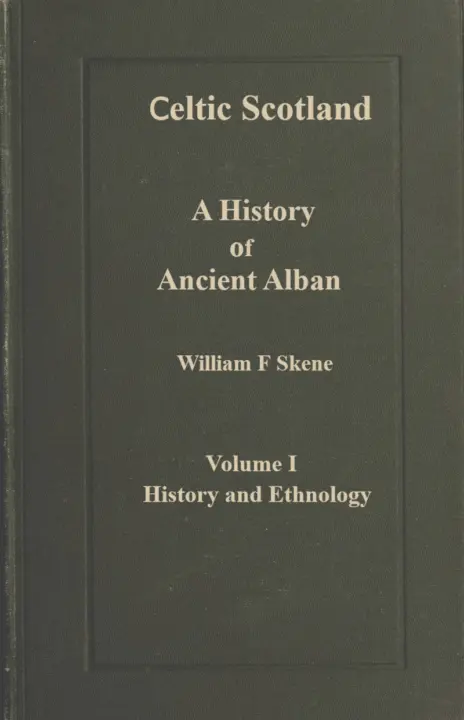
"Celtic Scotland: A History of Ancient Alban" by William F. Skene is a historical account written in the late 19th century. The work delves into the early civil history, ethnology, and the complex cultural landscape of ancient Scotland, known as Alban, during the Celtic period. This meticulous exploration aims to sift through historical inaccuracies to present a clearer picture of Scotland's early historical narratives. At the start of the book, the author outlines the challenging task of revisiting early Scottish history by critically evaluating the sources and narratives that have long been accepted. He expresses a desire to discard the elaborate but often inaccurate histories constructed by earlier writers, such as John of Fordun, in favor of a more authentic representation based on trustworthy authorities. The initial chapters introduce key historical events such as the Roman invasions and the political landscape of ancient Britain, establishing the groundwork for a nuanced discussion of the various tribes and their interactions with one another and with invading forces.
Introduction adapted from the source catalogue; source summaries may be automatically generated.
Free to read · English · 191,540 words · No account needed
MAKE TIME FOR A GOOD BOOK
On by default. Untick to stop anonymous reading totals. Each page counts after 10 seconds in view. How this works.
Anonymous counting is on unless you have switched it off.
These fair prospects, however, were soon to be overcast, for his old enemy Penda, the pagan king of the Mercians, having resolved to renew the struggle and make a second attempt to crush the Christian kingdom of the Northumbrians, Osuald appears to have anticipated the attack, and was killed in a great battle with the Mercians, which was fought at a place called by Bede Maserfelth, but to which the continuator of Nennius gives the name of Cocboy, on the 8th day of August in the year 642. It is believed to have taken place at Oswestry, formerly Oswaldstree, in Shropshire. Thus perished a king who was looked upon as the greatest and most Christian ruler of the Northumbrians, in the ninth year of his reign and the thirty-eighth of his age.[321]
[Sidenote: A.D. 642-670.
Osuiu, his brother, reigns twenty-eight years.]
Osuald was succeeded by his brother Osuiu, then only about thirty years old, and during the first twelve years of his reign he had to maintain a struggle for very existence with the victorious king of the Mercians, who appears, as on the former occasion, to have combined with the Britons, as Tighernac records a battle between Osuiu and the Britons early in his reign.[322] Bede tells us that he was also exposed to much trouble by his own son, Alchfrid, and also by Oidiluald, the son of his brother Osuald, who may have thought he had a better right to the throne. Osuiu placed governors over the province of Deira, the first being Osuini, son of that Osric who had reigned a few months over Deira after the death of Aeduin, and restricted his own immediate rule to his hereditary province of Bernicia, where he had trouble enough to maintain himself; for we find during the episcopate of Aidan, who died in 651, the army of the Mercians, under Penda, ravaging the country of the Northumbrians far and near, and attacking the royal city of Bamborough, and not being able to take it either by assault or by siege, Penda encompassed it on the land side with the materials of the wooden houses in the neighbourhood, which he had broken up and set on fire with a view to burn the town; and Bede tells us that Aidan, who was in one of the Farne Islands, perceived the flames and smoke blown by the wind above the city walls, and by his prayers produced a change of wind, which blew them back on the besiegers, and obliged them to raise the siege.[323] On another occasion, some years after Aidan’s death, we find Penda again coming into this part of Bernicia with his hostile army, destroying all he could with fire and sword, and burning the village and church in which Aidan died, and which was a royal residence not far from Bamborough.[324] It is plain from these incidental notices that Penda and his army had Bernicia very much at their mercy, and were continually in the occupation of the country; and their irruptions became so intolerable at last, that Osuiu offered him a very large gift of royal ornaments and money to purchase peace if he would cease to ravage and destroy the provinces of his kingdom, but Penda refused to grant his request, and resolved to destroy and extirpate all his nation;[325] and so desperate became his position, that he appears to have taken refuge in the insular city of Giudi in the Firth of Forth. Penda followed him with his army, composed both of Mercians and of Britons, and Osuiu was compelled to ransom the city by giving Penda all the riches which were in it and in the neighbouring region as far as Manau, which he distributed among the kings of the Britons who were with him; but having raised a small army, and the enemy, who enormously outnumbered them, probably not anticipating an attack, and being in a false security, Osuiu fell upon them unexpectedly in the night and entirely defeated them; Penda himself and the thirty royal commanders who were with him being slain, and Catgabail, king of Guenedotia or North Wales, alone escaping. Bede tells us that this battle took place on the 15th of November in the thirteenth year of King Oswiu’s reign, that is in the year 654, and that it was fought near the river Winuaed, which overflowed its banks so that many more were drowned in the flight than were destroyed by the sword, and that the war was thus brought to a conclusion in the region of Loidis; on the other hand, the continuator of Nennius says that Penda was slain in the plain of Gai, and that it was called the slaughter of the plain of Gai, and places it evidently between the city Judeu, by which Bede’s insular city of Giudi on the Firth of Forth can alone be meant, and Manau, which lay between the Pentlands and the Roman wall. There is no doubt that on the only other occasion on which Bede mentions the region of Loidis[326] he means Leeds, but it is equally certain that Lothian was likewise called the province of Loidis; and if we suppose that Bede here means the northern province of Lothian and not the district of Leeds, it at once reconciles the two accounts. That this is the probable view we may gather from this, that Leeds was in Deira, and a battle fought there is inconsistent with the extent to which it is evident Penda had invaded the kingdom. On the other hand, Florence of Worcester tells us that Penda’s attack was upon Bernicia. It was here that we find Penda from time to time ravaging the country, and it was this kingdom which was more immediately under the rule of Osuiu.[327] The word Winuaed means Battleford, and the river meant by it is probably the Avon, which divides the province of ‘Loidis’ from the district of ‘Calatria,’ called in the Irish Annals ‘Calathros,’ and by the Britons ‘Catraeth’—a district comprehending the parishes of Falkirk, Muiravonside, and Polmont; and traces of the name may still be found in the Fechtin’ Ford about a mile above Manuel, and the Red Ford half a mile farther up.
Your reading position is saved on this browser. Take it to another device with a library code. Reading pages adapt to text, rather than matching a printed edition.
BEHIND THE BOOK
This eBook is for the use of anyone anywhere in the United States and most other parts of the world at no cost and with almost no restrictions whatsoever. You may copy it, give it away or re-use it under the terms of the Project Gutenberg License included with this eBook or online at www.gutenberg.org. If you are not located in the United States, you will have to check the laws of the country where you are located before using this eBook. Read the source licence.
The original source file, including credits and licence, is retained by this library. Request an original-format copy at no charge. Please include the book title and Project Gutenberg identifier #71258.
KEEP YOUR CURIOSITY GOING
Cécile Tormay

Moritz Busch
John L. Ransom
Frances Wright
Cécile Tormay

Mabel Potter Daggett